
It's time to upgrade your browser

Your current browser is no longer supported on llbean.com. Please upgrade to one of the following for a smoother, safer shopping experience with us:

Dining Chairs

Find dining chairs that complement your table and suit your space. Browse the selection and compare chair dimensions, seat height and design details to choose seating that fits your dining area and personal style.
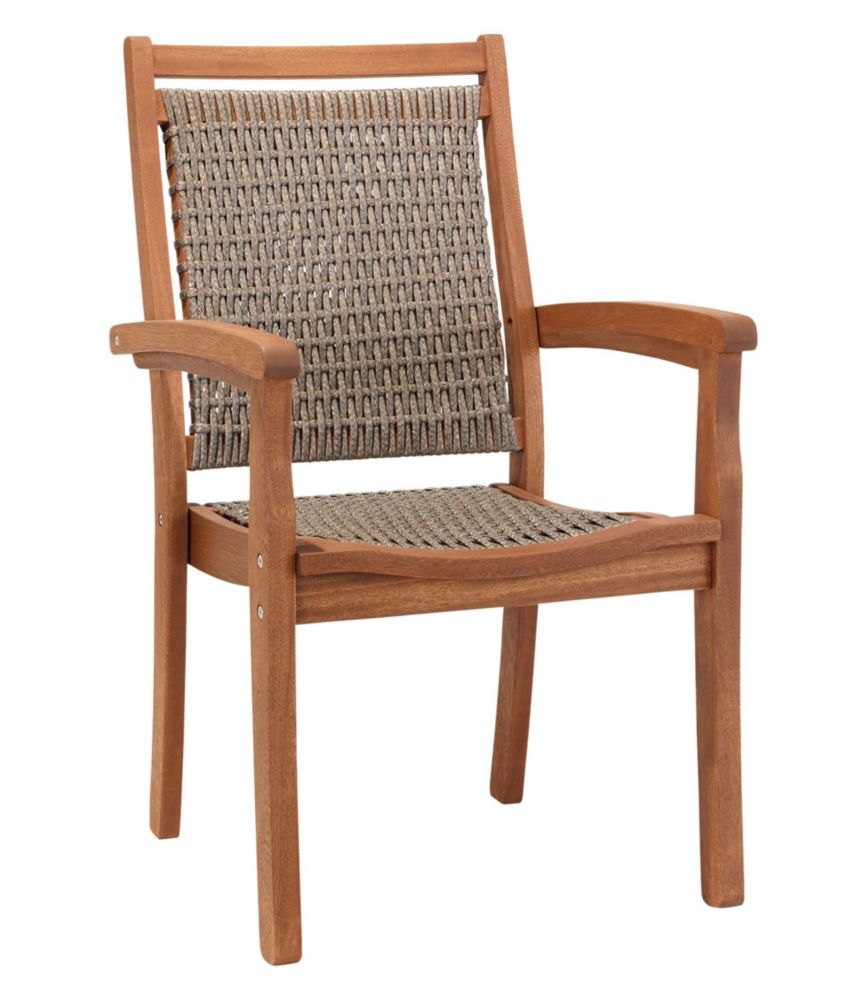
Wicker Eucalyptus Dining Chair
Outdoor Interiors Wicker Eucalyptus Dining Chair
A tan outdoor dining chair with weather-resistant resin wicker, durable eucalyptus hardwood, and stainless steel hardware.
(0)
$320 $320
SALE
$320 $320
SALE
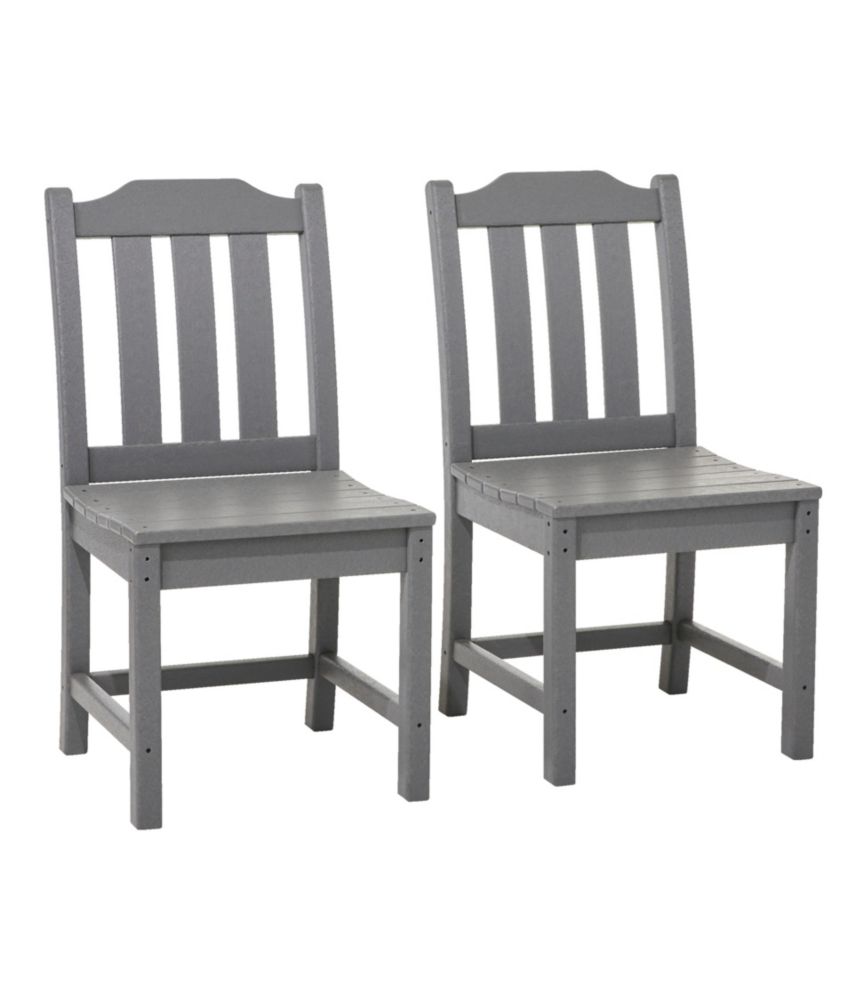
All-Weather Armless Chair, Set of Two
L.L.Bean All-Weather Armless Chair, Set of Two
A gray dining chair set made from durable HDPE lumber with stainless-steel hardware, requiring no assembly.
(0)
$500 $500
SALE
$500 $500
SALE
Eucalyptus Storage 7-Piece Dining Set
Outdoor Interiors Eucalyptus Storage 7-Piece Dining Set
A tan eucalyptus dining set with a foldable table, six chairs, beige cushions and convenient storage.
(0)
$2000 $2000
SALE
$2000 $2000
SALE

Dining Chairs

Dining chairs shape the look of a dining space just as much as the table at its center. Their backs create a visible rhythm around the tabletop, while their proportions help establish whether the arrangement feels understated, traditional, or more relaxed. Choosing a style starts with the relationship between those pieces rather than treating each chair as a separate decision. A table with a substantial base may look balanced beside chairs with a clearly defined outline; a table with a quieter profile leaves more room for distinctive chair shapes. Neither approach requires everything to match exactly. Repeating a curve, a color, or a similar degree of detail can give the arrangement a sense of connection without making every element identical. For a familiar, timeless look, simple lines and restrained details provide a natural starting point. More pronounced curves or an open back can change the visual character of the setting, especially when the chairs are visible from an adjoining room. The table’s shape matters, too. A round tabletop creates a different relationship between neighboring chair backs than a long rectangular one, so the overall composition deserves as much attention as an individual silhouette. Picture the chairs pushed in around the table, not just standing alone in a photograph. Their height relative to the tabletop, the amount of each back that remains visible, and the spacing between them all contribute to the finished look. Nearby furniture offers another point of reference: a sideboard, cabinet, or shelving unit may already establish the room’s strongest lines. Dining chairs can echo those lines or offer a deliberate contrast. The goal is a setting that feels considered without feeling overly arranged, with enough consistency to bring the room together and enough personality to reflect the people who gather there. Even a small detail, such as a rounded top edge repeated elsewhere in the room, can make separate pieces feel connected. That kind of thoughtful coordination often matters more to the overall look than an exact match.

Scale and fit bring those visual choices into focus. Dining chair dimensions are most useful when considered alongside the table’s height, its underside, and the placement of its legs or base. Seat height alone does not describe the whole relationship; overall width, depth, back height, and the position of any arms also deserve attention. An arm’s highest point may determine how a chair lines up with the table edge, while a seat’s width affects the spacing between place settings. The table base can influence that spacing as well, particularly where legs or supports occupy part of the area beneath the top. A useful comparison includes the entire arrangement rather than simply dividing the length of the tabletop by the number of chairs. Think about the difference between the chairs tucked in and the chairs pulled back for dining, along with the surrounding space near a wall, cabinet, or doorway. Those relationships are specific to the room, which makes actual measurements more informative than a photograph alone. A chair that appears modest beside a large table may have quite different proportions beside a smaller one. Likewise, a high back can become a prominent part of the room’s appearance, while a lower profile changes how much of the tabletop and background remain visible. For a coordinated group, consistent proportions create a steady outline around the table. A mixed arrangement calls for a little more visual connection: similar back heights, related shapes, or a shared color can keep the grouping intentional. Different chairs at the ends of a rectangular table can establish a distinct composition, but their dimensions still need to be considered with the table and neighboring seats. The best starting point is the dining arrangement as a whole, including both the number of places and the space each one occupies. This keeps the decision grounded in the room rather than in a single appealing detail, and gives style and fit equal attention before the final choice.

Color adds another layer to that balance, connecting dining chairs with the table, walls, and surrounding furnishings. A close color match creates one kind of continuity, while contrast makes the individual outlines more noticeable. Neither needs to be dramatic. A small difference in tone can distinguish the chairs from the table without breaking the connection between them. For a lighter visual contrast, white chairs offer another direction to consider alongside the room’s existing palette. The effect depends on what surrounds them: pale walls create a different composition than deeper colors, and a patterned rug introduces another element to balance. When several colors are already present, repeating one established shade can make the dining area feel connected to the rest of the home. When the palette is quieter, shape and proportion may become the defining details instead. Appearance is only part of the decision, however. The specifications and care directions for each chair provide important context beyond the photographs. Care routines should follow those individual directions rather than a general assumption that every dining chair can be treated the same way. It is worth considering those requirements alongside the household’s usual routine, just as dimensions deserve consideration alongside the room’s layout. Clear product details also make comparisons more meaningful, especially when two designs look similar at first glance. A closer look at measurements, care information, and photographs from different angles can reveal distinctions that a single front view does not show. For a shared household decision, agreement on the table arrangement, preferred silhouette, and overall palette gives everyone a practical starting point. Quality and timeless style remain worthwhile priorities, but the final choice is personal: dining chairs should belong visually with the table and feel like part of the home. A considered combination of proportions, details, and color gives the dining space a clear identity without requiring every surrounding piece to follow exactly the same style.

FAQs