It's time to upgrade your browser

Your current browser is no longer supported on llbean.com. Please upgrade to one of the following for a smoother, safer shopping experience with us:

Living Room Tables

Find living room tables that complement your furniture and fit your space. Browse the selection with your room’s style in mind, and compare table height and dimensions with your sofa and chairs, leaving enough room to move comfortably around each piece.

Read More
All-Weather Square Side Table
L.L.Bean All-Weather Square Side Table
A gray, two-shelf outdoor table made from HDPE lumber and stainless steel, built for year-round weather.
(403)
$160 $160
SALE
What customers like:
Easy to assemble
Weather resistant
Sturdy
Durable
Well made
$160 $160
SALE
All-Weather Round Side Table
L.L.Bean All-Weather Round Side Table
A green, marine-grade side table made from HDPE lumber and stainless steel for year-round outdoor use.
(397)
$130 $130
SALE
What customers like:
Easy to assemble
Good quality
Sturdy
Beautiful color
Well made
$130 $130
SALE
Rustic Wooden Hall Console Table
L.L.Bean Rustic Wooden Hall Console Table
A tan solid-pine console table with five drawers, slim profile, and low-shine lacquer finish.
(0)
$680 $680
SALE
$680 $680
SALE
Eucalyptus Farmhouse Table
Outdoor Interiors Eucalyptus Farmhouse Table
A tan eucalyptus hardwood farmhouse table with stainless steel hardware, weather resistance, and an umbrella hole.
(0)
$630 $630
SALE
$630 $630
SALE
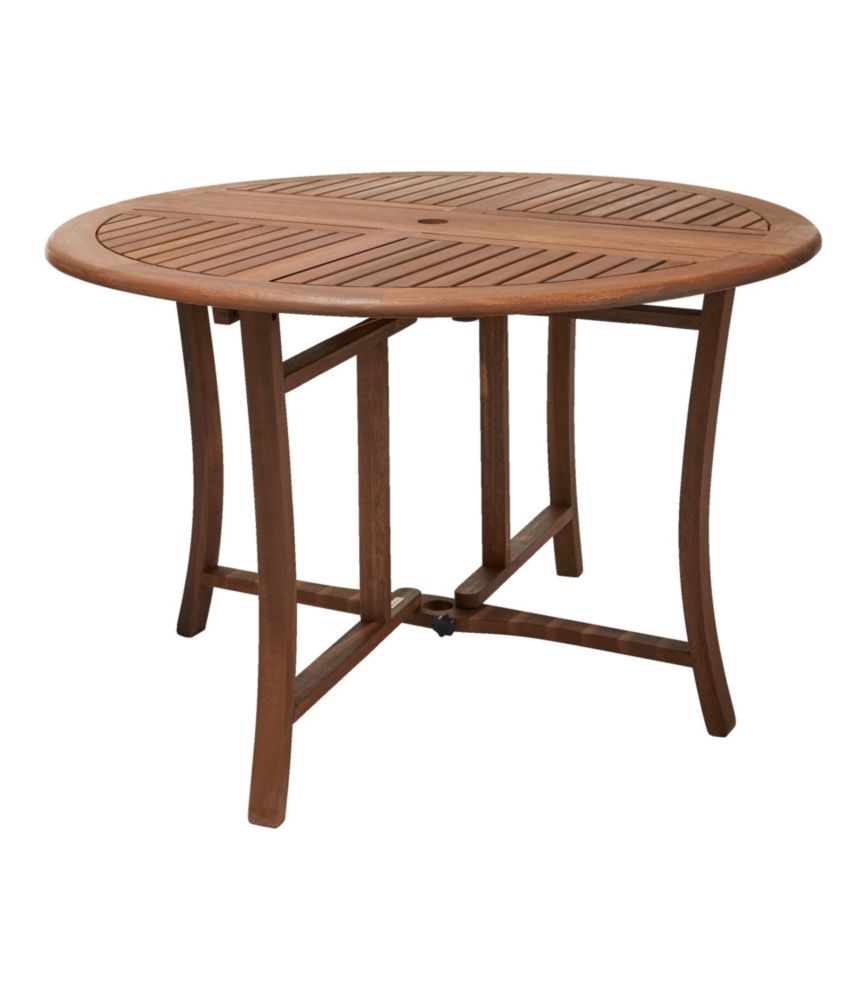
Eucalyptus Folding Table, Round
Outdoor Interiors Eucalyptus Folding Table, Round
A tan, sustainably harvested eucalyptus hardwood table with stainless steel hardware, weather resistance, and folding storage.
(0)
$480 $480
SALE
$480 $480
SALE
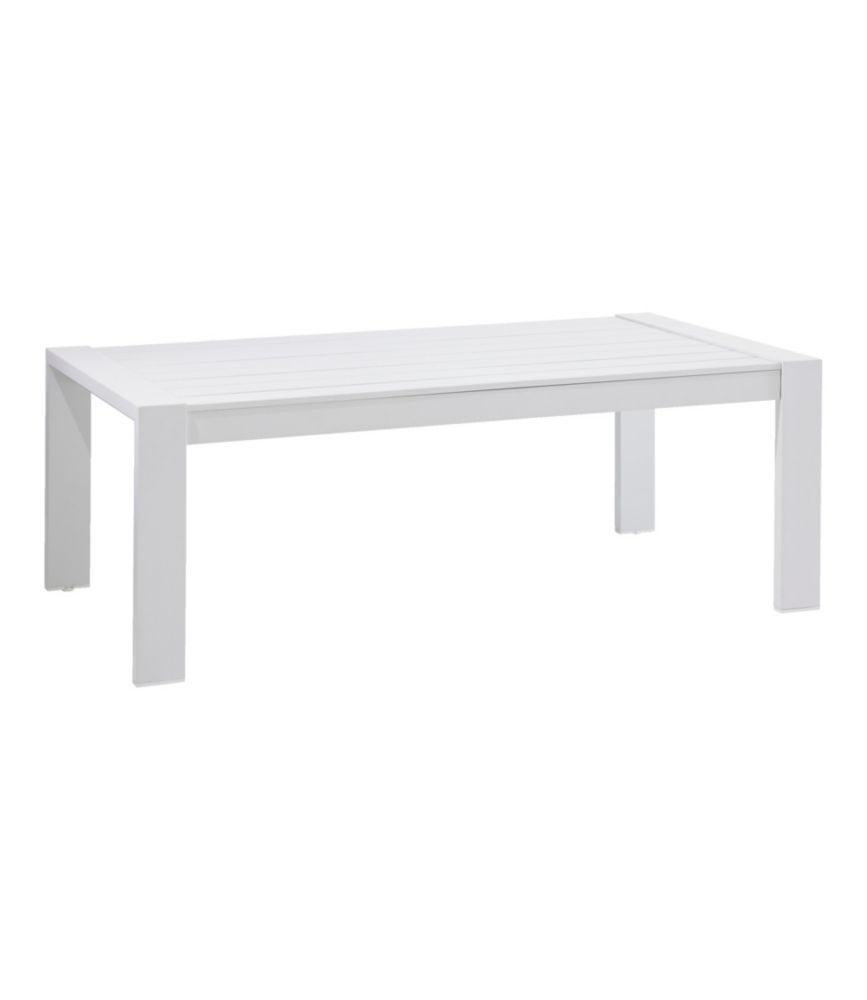
White Aluminum Deep Seating Coffee Table
Outdoor Interiors White Aluminum Deep Seating Coffee Table
A lightweight, weather-resistant white aluminum coffee table with powder coating, adjustable footpads and stainless steel hardware.
(0)
$430 $430
SALE
$430 $430
SALE

Living Room Tables

Living room tables are part of what gives a room its character, helping the furniture feel like a considered whole rather than a collection of separate pieces. Their proportions, lines and placement can make a familiar space feel more settled, whether the room centers on a generously sized sofa or a pair of favorite chairs. The best visual fit is not always an exact match to everything already there. A table with a simple outline can offer a quiet contrast to patterned upholstery, while a more defined shape can add interest alongside furniture with understated details. That balance leaves space for the things that make a home personal: a photograph from a family trip, a much-loved piece of artwork or the colors that appear throughout the house. Living room tables can follow those existing cues without repeating every detail. A shared color, a similar curve or a consistent sense of scale may be enough to connect the room. For a space with several substantial pieces, a table with a less prominent profile may feel more in keeping with the arrangement. In a room with simpler furnishings, a stronger silhouette may provide a welcome point of interest. Neither approach requires a complete change of style. Often, the most appealing rooms develop gradually, with furniture chosen at different times and brought together through thoughtful proportions. Classic design offers a useful starting point because it leaves room for individual taste rather than demanding that every piece belong to a matching set. A living room can feel inviting with a restrained palette or a lively mix of colors, with symmetrical placement or a more relaxed arrangement. Tables belong within that larger picture. Their relationship to the seating, the open floor and the room’s architectural details matters just as much as how they look on their own. Looking at the collection with those relationships in mind keeps the focus on furniture that feels at home in the space, rather than a piece that stands apart from everything around it.

Scale is one of the clearest differences to consider when comparing living room tables. A photograph can show the outline and overall style, but the listed height, width and depth tell a more complete story about how a table relates to the furniture already in the room. Two designs that look similar on a screen may have noticeably different proportions in person. The width of the sofa, the height of its arms and the distance between neighboring chairs all provide useful points of reference. In a compact living room, the open space around furniture can be as visually important as the furniture itself. In a larger room, a table that looks substantial on its own may seem much smaller once it becomes part of the full arrangement. Shape adds another layer to that comparison. Rounded outlines create a different visual rhythm from straight edges, while the relationship between the top and the base affects how prominent a table appears. Those details are worth considering from more than one viewpoint, including the doorway and the main seating area. A room rarely presents itself from the single angle shown in a furniture photograph. Existing features also matter: the edge of a rug, a fireplace surround, a wide window or an opening into another room can influence the balance of the arrangement. For tables positioned beside seating, Side Tables offer a related category to explore, with the same attention to proportion and visual connection. Product descriptions remain important when comparing any design, particularly for exact measurements, construction details and care instructions. Those details deserve their own consideration rather than assumptions based on appearance. A narrow outline does not tell the full story of a table’s dimensions, just as a familiar style does not establish how it should be cared for. Bringing the room’s measurements together with the individual product information makes the comparison more concrete, while keeping personal preference firmly part of the decision.

The character of a living room often comes from the relationship between its pieces, not from how closely they match. Tables can echo an established style while adding a little contrast, giving the arrangement enough consistency to feel connected without making it look overly coordinated. In a room with many curves, a straightforward outline may offer definition; beside more angular furniture, a rounded form may introduce a different note. Color works in much the same way. Similar tones can create a quieter composition, while contrast can make the shape of a table more noticeable. The right balance depends on the whole room, including wall color, upholstery, artwork and the other furnishings that remain in place. A photograph of the existing space can be a useful companion when browsing, especially when an appealing design looks different from the furniture at home. It helps bring attention back to the room itself: the details worth repeating, the elements that already stand out and the areas where a simpler choice might feel more natural. There is no need for every table in a living room to have an identical outline. Pieces can relate through proportion or color while retaining their own character, much like chairs that belong together without being exactly alike. That approach suits homes shaped over time, where a familiar sofa might sit near a recently chosen chair and artwork collected across many years. For a first living room, a few clear style preferences can provide direction without setting rigid rules for every future choice. For an established room, a table can become part of what is already there without requiring the rest of the furniture to change. The aim is a space that reflects the people who share it, not a display that feels too carefully arranged to be personal. Living room tables are best considered within that everyday setting, with attention to their individual details and the larger composition around them. Thoughtful choices in scale, shape and style allow the room to retain its familiar character while feeling a little more complete.
Read More

FAQs