It's time to upgrade your browser

Your current browser is no longer supported on llbean.com. Please upgrade to one of the following for a smoother, safer shopping experience with us:

Cork Handle Hiking Poles

Shop cork handle hiking poles and compare trekking pole options with your preferred handle material. Review each product’s length, weight and adjustability details to help narrow the selection and choose poles that suit your hiking plans.
Read More
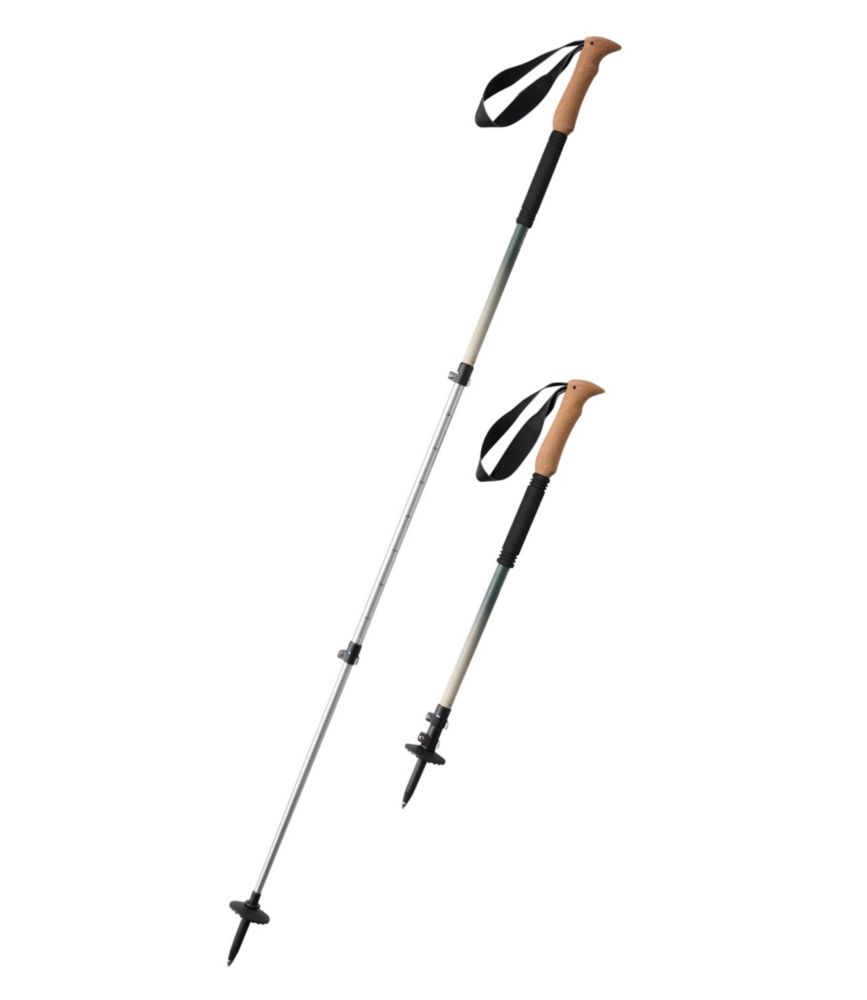
Pathfinder PRO Trekking Poles, Compact
L.L.Bean Pathfinder PRO Trekking Poles, Compact
A pair of green aluminum trekking poles with cork grips and a secure Powerlock 3.0 adjustment system.
(0)
$120 $120
SALE
$120 $120
SALE
Pathfinder PRO Trekking Poles
L.L.Bean Pathfinder PRO Trekking Poles
A pair of durable green aluminum trekking poles with cork grips and a secure Powerlock 3.0 system.
(0)
$120 $120
SALE
$120 $120
SALE
Rapid River Wading Staff
L.L.Bean Rapid River Wading Staff
A lightweight, adjustable carbon fiber wading staff with a durable cork grip and neoprene carrying case.
(0)
$140 $140
SALE
$140 $140
SALE
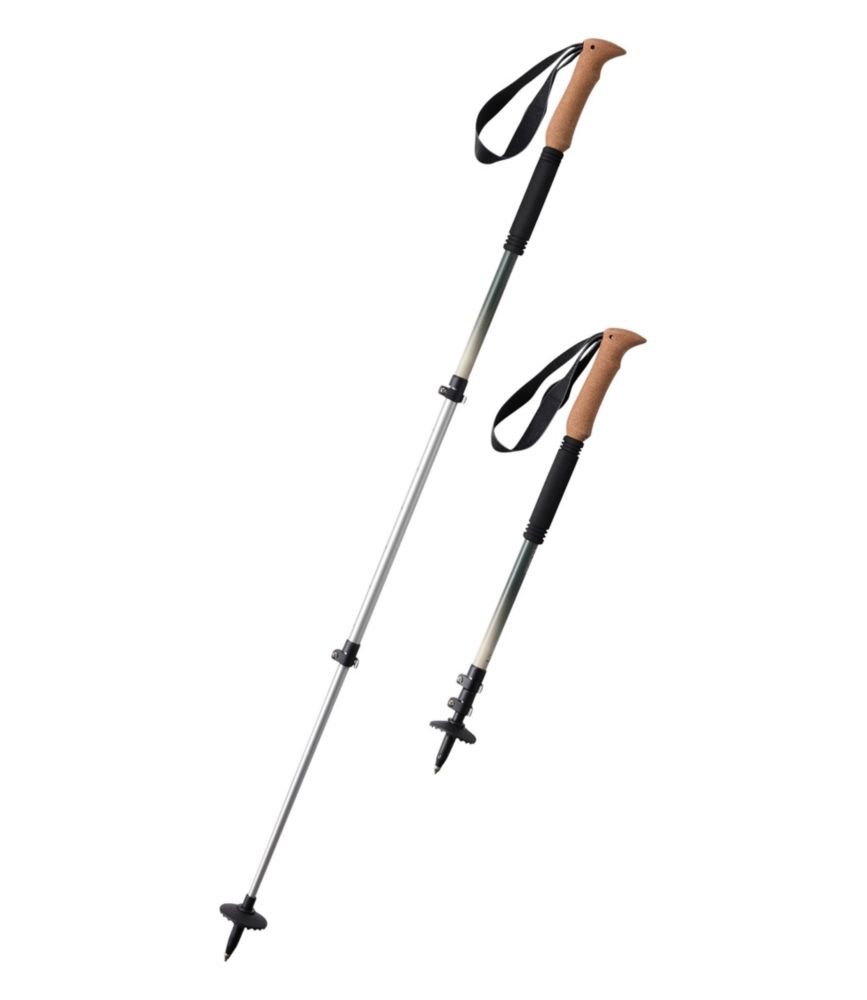
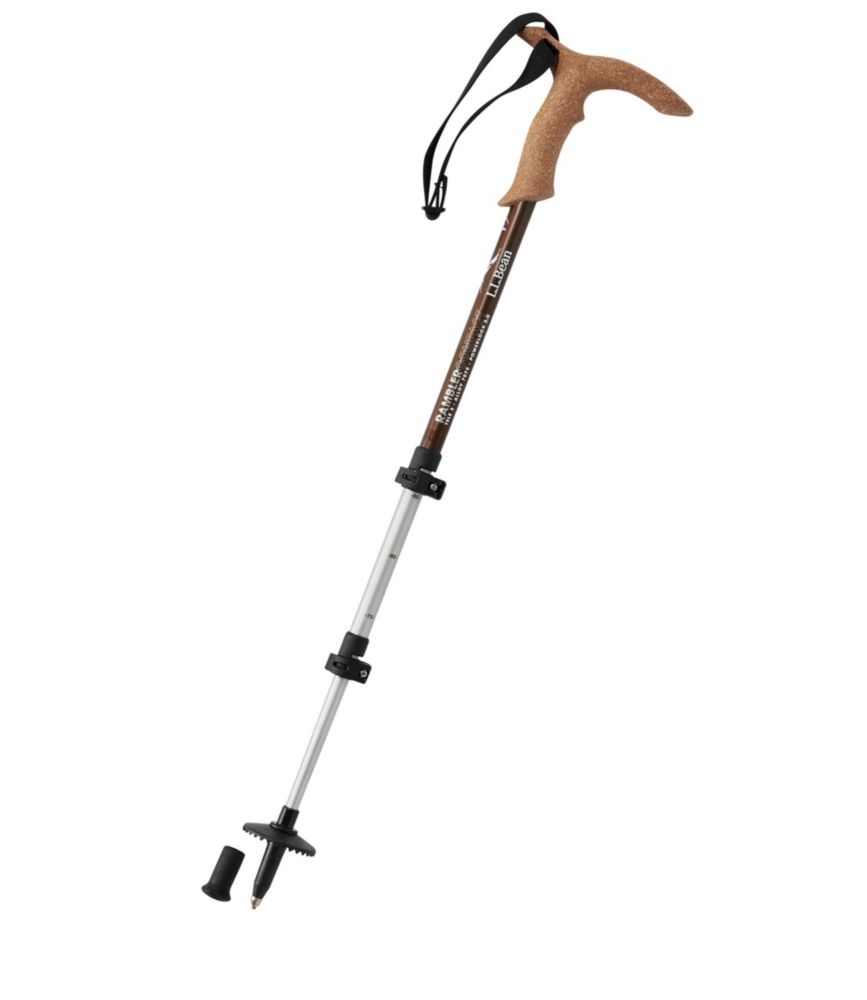
L.L.Bean Rambler Compact PowerLock 3.0 Hiking Staff
L.L.Bean L.L.Bean Rambler Compact PowerLock 3.0 Hiking Staff
A lightweight, sturdy hiking staff with a comfortable cork grip and secure PowerLock 2.1 system.
(196)
$79.95 $79.95
SALE
What customers like:
Comfortable grip
Easy to stow
Lightweight design
$79.95 $79.95
SALE

Cork Handle Hiking Poles

Cork handle hiking poles bring a distinctive material choice to a familiar piece of hiking equipment. The name identifies the material at the handle, not the construction of the entire pole, making the grip a useful starting point for comparing designs. For hikers who prefer cork, that detail can help narrow the selection while leaving room to consider the shape, dimensions, and overall design of each pair. A handle is a personal point of contact: its contours, circumference, and length all deserve attention alongside the rest of the pole. Two designs described as having cork handles may look quite different, and the material name alone does not tell the whole story of how either will feel in someone’s hand. Close-up photographs and listed measurements can provide a clearer sense of those differences than a broad description. Some hikers arrive with a well-established preference after years of outings; others are choosing poles for the first time and want a straightforward way to compare the details. Both approaches belong here. Hiking can mean following a familiar woodland path with a friend, setting out early with family, or making time for a route that has been on the calendar for weeks. The appeal is often as much about those shared moments as the destination: a conversation beside a trail marker, a pause to look across a valley, or the quiet stretch before the group gathers again. Within that experience, equipment choices are individual rather than one-size-fits-all. Cork handle hiking poles offer a focused category to explore without making the handle material the only consideration. The most relevant choice is one whose stated specifications, sizing information, and intended hiking use align with the person carrying it. That keeps the comparison grounded in the whole design, rather than asking a single material detail to stand in for everything that matters.

Fit involves more than choosing a pole by its appearance or matching it to someone’s height without checking the sizing information. The listed pole length, any stated adjustment range, and the manufacturer’s fit recommendations provide important context, while handle dimensions help distinguish designs that may otherwise seem similar. For someone replacing a familiar pair, comparing those measurements with existing equipment can make differences easier to understand. A hiker who has a clear preference for a particular handle shape may give that detail more weight than someone whose first concern is the overall length. Neither preference needs to be universal to be useful. Construction deserves the same attention: cork describes the handle material, while the product specifications explain the rest of the design. The exact composition and placement of materials are details to confirm in an individual description rather than infer from the category name or a photograph. Where a design includes adjustable sections, the accompanying information should explain how they operate; where dimensions are listed for storage, those measurements offer another concrete point of comparison. These are useful distinctions for someone looking at equipment beside a hiking pack at home or deciding how a pair will fit among the belongings taken to a trailhead. Weight is another specification that can be compared directly without assuming that all cork handle designs share the same overall weight. For a separate selection organized around that consideration, Lightweight Hiking Poles provides a related category to explore. Within either selection, individual descriptions remain the best place to confirm measurements and construction details. A clear comparison brings together the handle, the sizing information, and the complete design instead of treating any one feature as a guarantee of suitability. It also leaves room for personal preference, whether the poles are for a longtime hiker with a familiar routine or someone beginning to make hiking a more regular part of time spent outside.

Care and long-term ownership are worth considering alongside fit and design. Cork handles are one part of a complete piece of equipment, so cleaning and storage decisions should follow the instructions supplied for the particular poles. A care method recommended for one component should not automatically be treated as appropriate for every other part. The manufacturer’s guidance is the right reference for cleaning the handles, checking the condition of the equipment, and putting it away between outings. Durability is likewise a matter of the complete construction and its care, not a promise that can be drawn from the word “cork” alone. Any stated maintenance requirements, warranty terms, or replacement-part information can add useful context when comparing individual designs. Those details may feel less immediate than the appearance of a handle, but they help make the choice a considered one. For someone returning to hiking after time away, reviewing familiar equipment preferences can be part of the enjoyment of getting ready again. For a regular hiking companion, cork handle hiking poles may also be a thoughtful gift when the recipient has expressed an interest in that handle material. Knowing the person’s sizing needs, preferred grip shape, and existing equipment is more helpful than guessing from how often they hike. A gift can acknowledge a shared interest without making assumptions about someone’s experience or ambitions: the friend who always remembers a favorite trail junction, the relative who enjoys planning the next family outing, or the partner who values an unhurried afternoon outside. Across the cooler months and beyond, those connections give hiking equipment its personal meaning. Choosing carefully is less about assembling an impressive set of gear and more about finding details that suit an individual’s plans and preferences. A focused selection of cork handle hiking poles makes that comparison more manageable, bringing the defining handle material together with the specifications and care information needed to consider the whole purchase.
Read More

FAQs