It's time to upgrade your browser

Your current browser is no longer supported on llbean.com. Please upgrade to one of the following for a smoother, safer shopping experience with us:

Collapsible Trekking Poles

Find collapsible trekking poles by comparing how each design collapses, its listed dimensions and sizing information. As you browse the selection, check whether poles are sold individually or as a pair, and review adjustment details to help choose the right option for you.
Read More
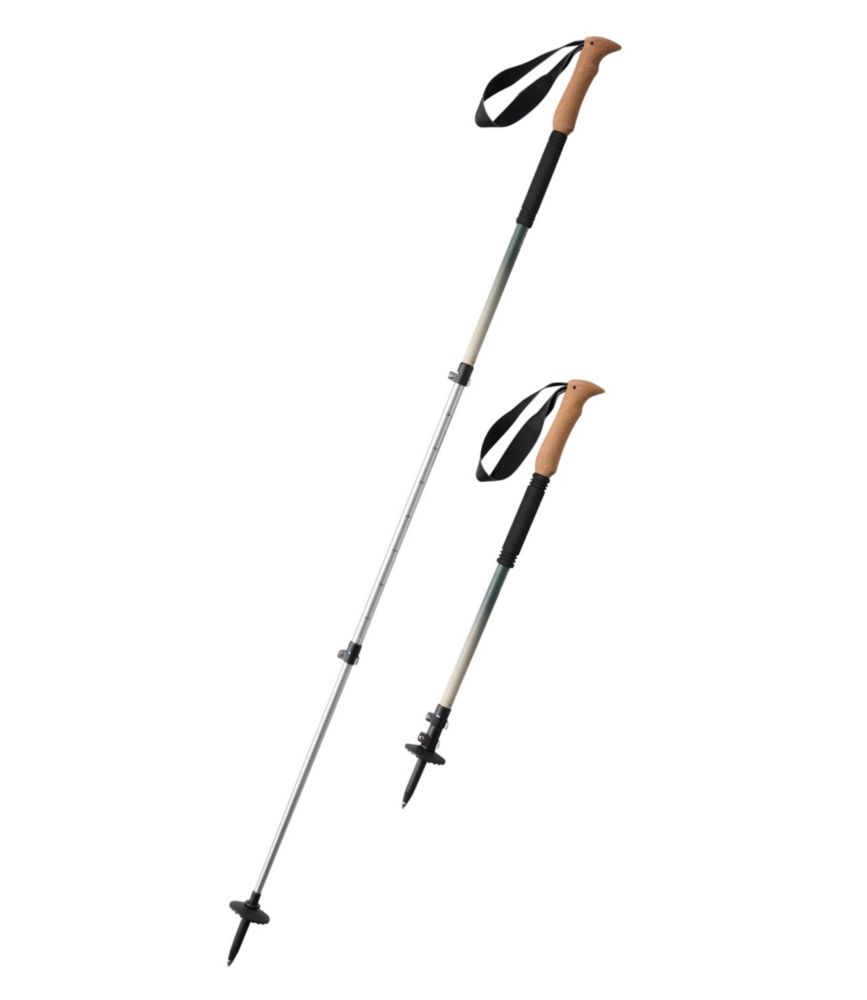
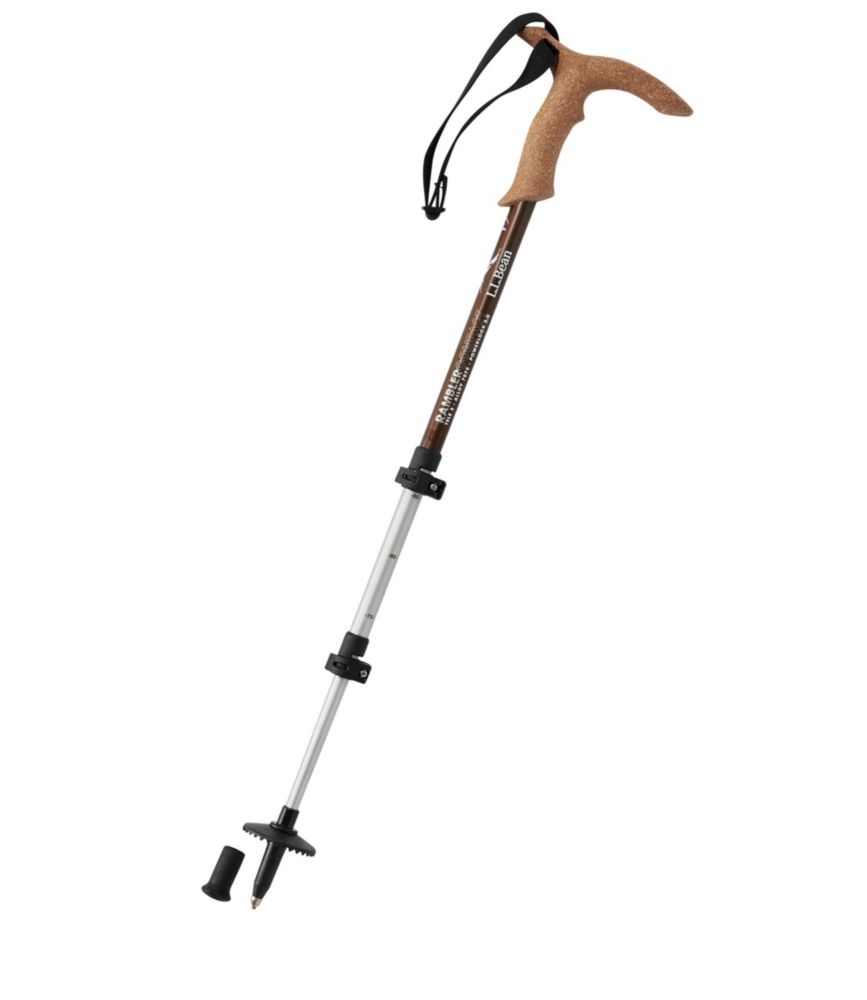
L.L.Bean Rambler Compact PowerLock 3.0 Hiking Staff
L.L.Bean L.L.Bean Rambler Compact PowerLock 3.0 Hiking Staff
A lightweight, sturdy hiking staff with a comfortable cork grip and secure PowerLock 2.1 system.
(196)
$79.95 $79.95
SALE
What customers like:
Comfortable grip
Easy to stow
Lightweight design
$79.95 $79.95
SALE
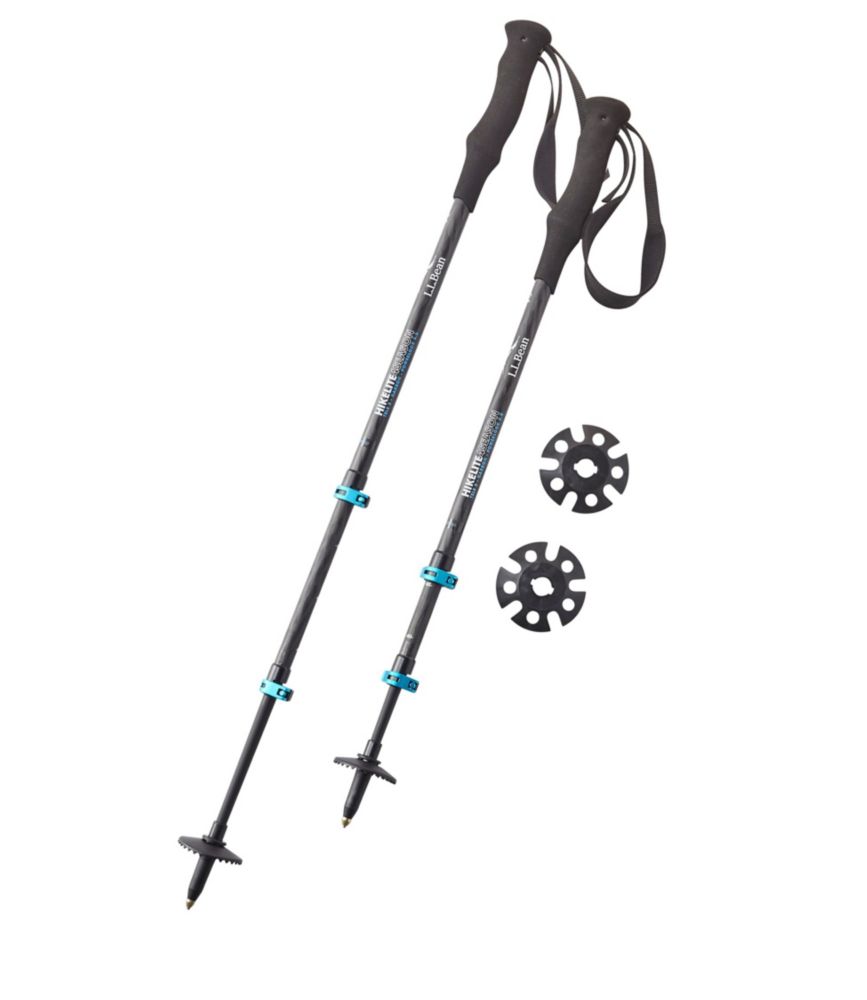
Women's Hikelite 4 Season Carbon Compact Hiking Poles
L.L.Bean Women's Hikelite 4 Season Carbon Compact Hiking Poles
A lightweight pair of hiking poles with carbon fiber and aluminum construction, featuring foam grips and nylon straps.
(0)
$170 $170
SALE
$170 $170
SALE
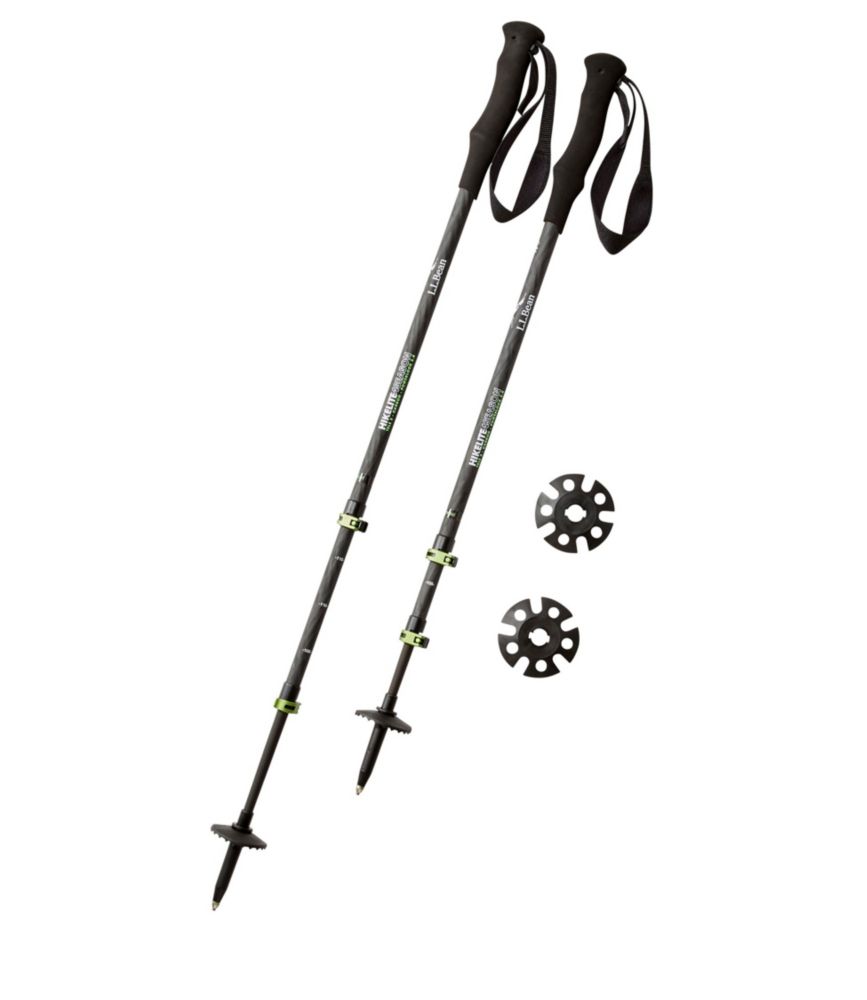
L.L.Bean Hikelite Four-Season Carbon Hiking Poles
L.L.Bean L.L.Bean Hikelite Four-Season Carbon Hiking Poles
A lightweight, full-size carbon composite hiking pole with durable PowerLock 3.0 adjustment and EVA-foam handles.
(60)
$170 $170
SALE
$170 $170
SALE
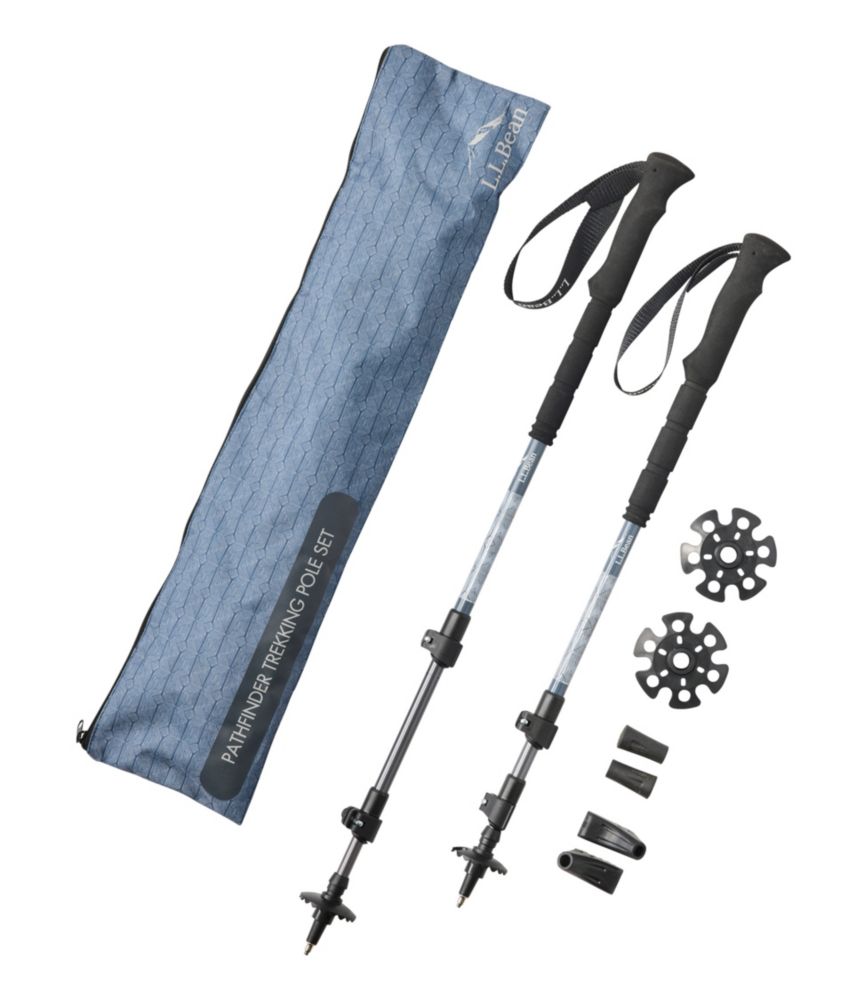
Pathfinder Trekking Pole Set
L.L.Bean Pathfinder Trekking Pole Set
A lightweight blue aluminum trekking pole set with adjustable shafts, foam grips, and multiple tip options.
(0)
$79.95 $79.95
SALE
$79.95 $79.95
SALE
Pathfinder PRO Trekking Poles, Compact
L.L.Bean Pathfinder PRO Trekking Poles, Compact
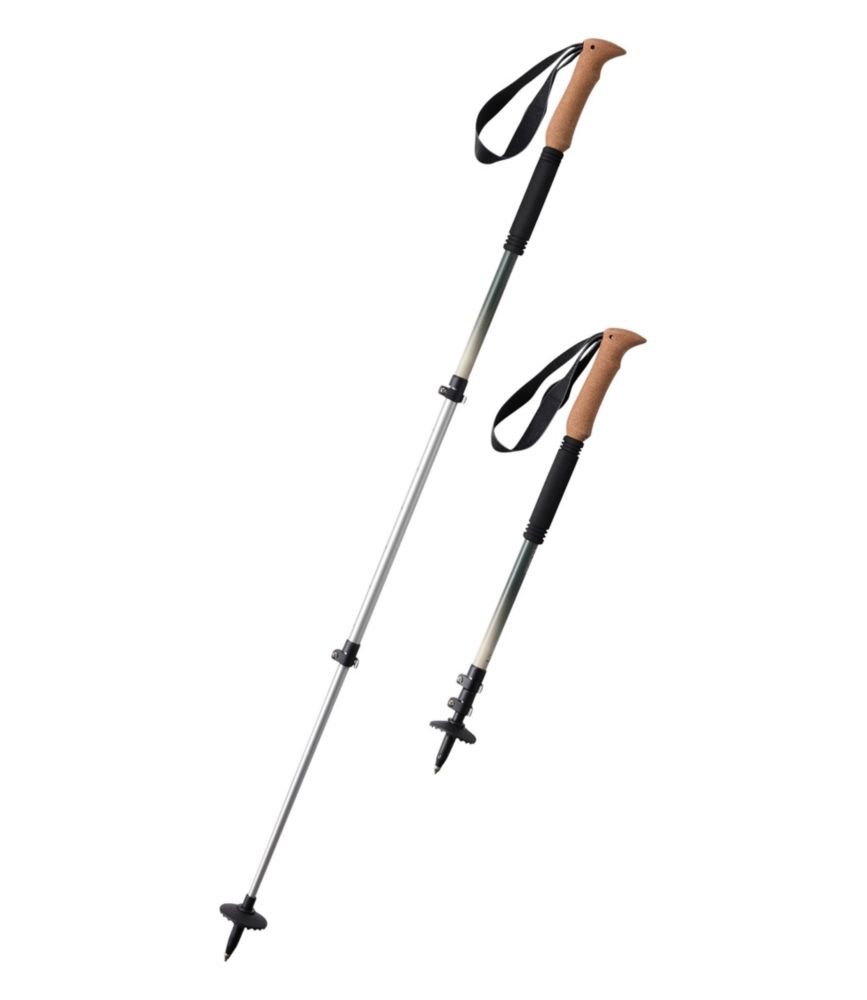
A pair of green aluminum trekking poles with cork grips and a secure Powerlock 3.0 adjustment system.
(0)
$120 $120
SALE
$120 $120
SALE
Pathfinder PRO Trekking Poles
L.L.Bean Pathfinder PRO Trekking Poles
A pair of durable green aluminum trekking poles with cork grips and a secure Powerlock 3.0 system.
(0)
$120 $120
SALE
$120 $120
SALE

Collapsible Trekking Poles

Collapsible trekking poles bring a practical choice to an outdoor gear collection: poles with sections that shorten or fold when they are not in use. That distinction is central to the category, but “collapsible” does not describe just one construction. In telescoping designs, sections slide inside one another; in folding designs, sections separate at designated joints and fold alongside each other. The individual product description establishes which design a pair uses and how it opens, closes, and secures. Collapsibility and length adjustment are also different features. A pole that folds for storage does not necessarily offer the same extended-length adjustment as a telescoping design, so both details deserve attention when comparing options. Listed collapsed dimensions provide a more useful reference than a photograph alone, particularly when there is a specific place waiting for the poles among the rest of the gear. A narrow shelf near the back door, a gear bin shared with a partner, or a designated compartment each presents a different space to work with. Comparing that space with the stated dimensions gives the selection a concrete starting point without assuming that every collapsible design will fit. Extended dimensions matter just as much: the shortest stored option is not automatically the right match for the person holding it. This makes the category less about finding one universally best design and more about finding a sensible combination of format, dimensions, and personal preference. For someone choosing a first pair, the distinction between folding and telescoping offers a clear way to understand the selection. For an experienced trekker replacing familiar gear, the same details help distinguish a close match from a design that operates differently. The shared appeal is straightforward: a full-length pole does not have to remain full length between outings. Beyond that common feature, the details of each design tell the more useful story.

Fit and handling give those dimensions their personal context. The appropriate pole length depends on the person and the manufacturer's sizing guidance, rather than on appearance or a general assumption that one size works for everyone. Where an adjustment range is listed, it describes the range for that particular design, not a promise that it will suit every member of a household. A pair chosen for one person should be evaluated for that person, even when other outdoor equipment is often shared. Grip shape, strap configuration, and the location of the adjustment controls are additional comparison points when they are shown in the product details. Close-up images can clarify where the hand rests and how the sections connect, while operating instructions explain the actual steps involved. Someone accustomed to one closure may prefer a familiar arrangement; another person may be comfortable learning a different mechanism. Neither preference needs to become a claim that one design is better for everyone. Materials and listed weight belong in the same considered comparison. The construction information identifies what an individual pole is made from, while the weight specification should clarify whether the measurement refers to a single pole or a pair. A material name alone does not establish the durability, feel, or suitability of the complete design, and a smaller collapsed measurement does not establish its weight. Looking at those details together creates a clearer picture than relying on a single feature. Appearance has a place, too, especially for people who like their outdoor gear to feel like a coordinated collection rather than an assortment of unrelated pieces. For a color-focused comparison, Black Trekking Poles offers a related category to explore alongside the dimensions and construction details that shape the decision. Color is a personal preference; fit and the documented features remain individual considerations. Taken together, these details turn a broad category into a more meaningful selection, whether the starting point is a particular collapsed size, a familiar style of grip, or the way the sections come together.

Care and long-term ownership are also part of choosing collapsible trekking poles, especially because moving sections and closures make the operating instructions worth keeping. The manufacturer's directions are the appropriate source for cleaning, drying, storage, inspection, and any permitted adjustments. A routine that suits one design may not suit another, and maintenance products should not be assumed appropriate without that guidance. The same applies to replacement components and accessories: compatibility belongs to the individual model, not to the category as a whole. Clear care information provides a useful basis for understanding what ownership involves, without treating any pole as maintenance-free or promising a particular lifespan. Durability is best considered through the documented construction, care requirements, and intended-use information together, rather than through broad descriptions such as “strongest” or “built for anything.” Trekking poles should be selected for the activities the manufacturer identifies, with no assumption that a collapsible format makes them appropriate for every outdoor setting. That distinction matters when the plans are still taking shape: an invitation from a friend, a familiar route revisited with a partner, or a stretch of time set aside to be outside. The people and the occasion may change, but the product details remain the reference for deciding what belongs with the rest of the equipment. As a gift, collapsible trekking poles can be a thoughtful consideration for someone who already enjoys trekking or has expressed interest in a pair. The most personal choice reflects what the recipient actually wants, including preferred dimensions, design, and handling, rather than guessing from enthusiasm for the outdoors alone. An existing pair can offer useful points of comparison when its owner has mentioned what they would keep or change. For a new purchase or a replacement, the goal is a choice that makes sense beyond the first impression: an understood mechanism, an appropriate size, and clear expectations for care. Those everyday details leave more attention for the reasons to head outside in the first place—the company, the surroundings, and the pleasure of making time for both.
Read More

FAQs