It's time to upgrade your browser

Your current browser is no longer supported on llbean.com. Please upgrade to one of the following for a smoother, safer shopping experience with us:

Hiking Poles for Steep Terrain

Shop hiking poles for steep terrain and compare the selection with your route in mind. Review each option’s sizing, features and intended use to help choose poles for the climbs and descents ahead.
Read More
Pathfinder PRO Trekking Poles
L.L.Bean Pathfinder PRO Trekking Poles
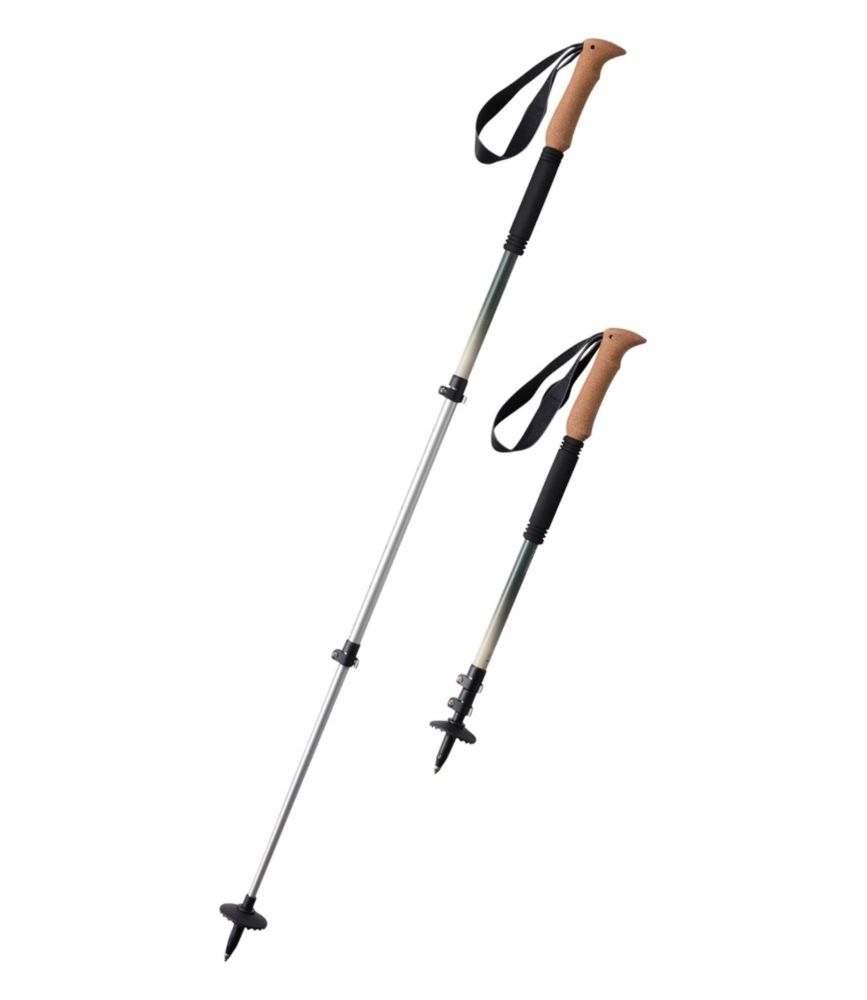
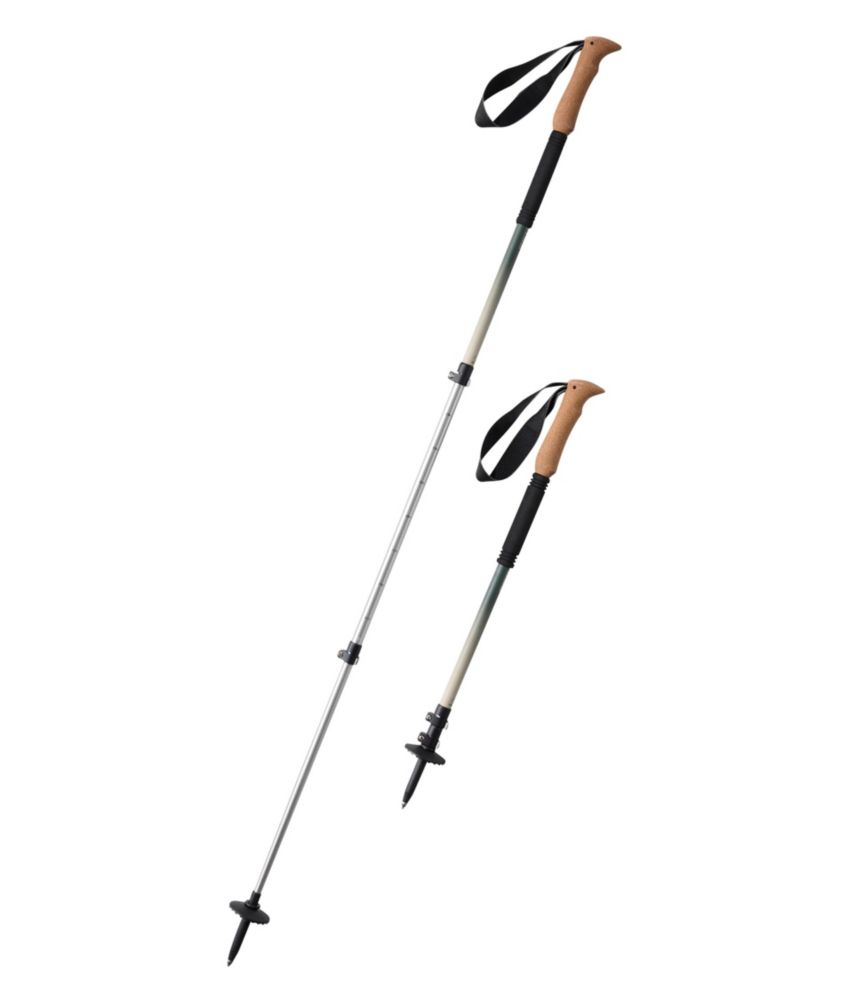
A set of green aluminum trekking poles with Powerlock 3.0, cork grips and foam extensions.
(0)
$120 $120
SALE
$120 $120
SALE
Pathfinder PRO Trekking Poles, Compact
L.L.Bean Pathfinder PRO Trekking Poles, Compact
A green aluminum trekking pole set with three-piece shafts, Powerlock 3.0 locking, and cork comfort grips.
(0)
$120 $120
SALE
$120 $120
SALE
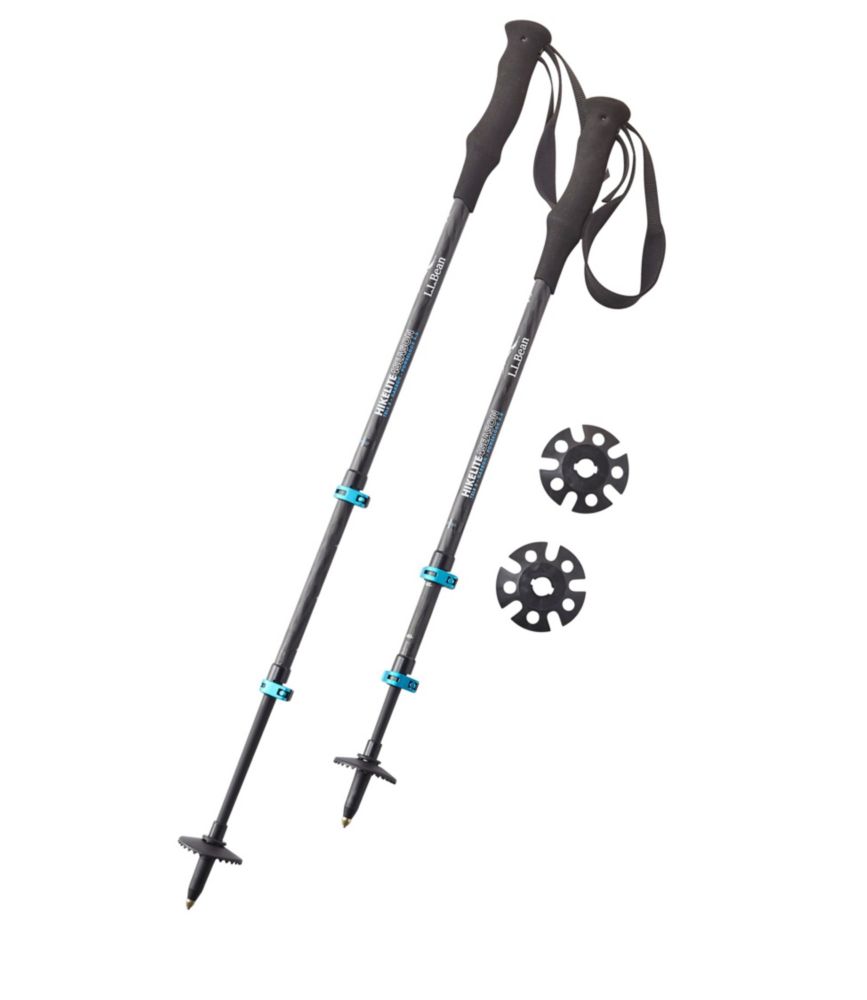
Women's Hikelite 4 Season Carbon Compact Hiking Poles
L.L.Bean Women's Hikelite 4 Season Carbon Compact Hiking Poles
A black hiking-pole set with carbon-fiber and aluminum shafts, foam grips, and snow baskets.
(0)
$170 $170
SALE
$170 $170
SALE
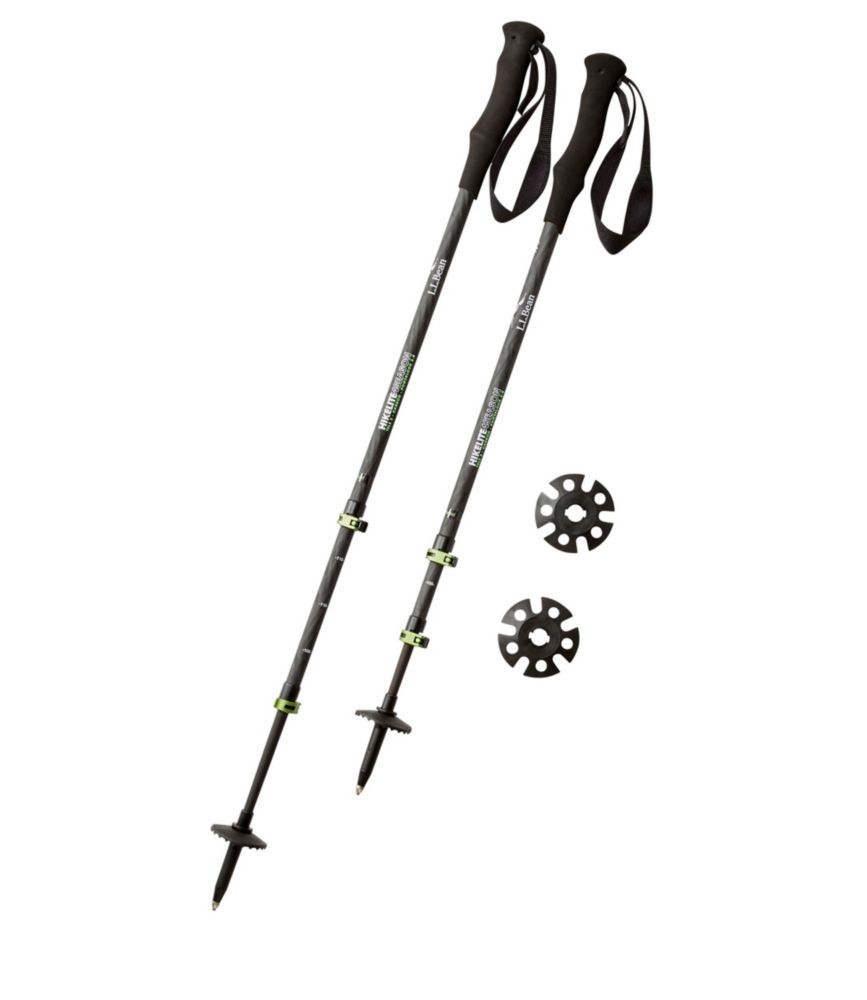
L.L.Bean Hikelite Four-Season Carbon Hiking Poles
L.L.Bean L.L.Bean Hikelite Four-Season Carbon Hiking Poles
Black hiking poles with ultralight carbon composite construction, aluminum sections, tungsten tips and interchangeable four-season baskets.
(60)
$170 $170
SALE
$170 $170
SALE
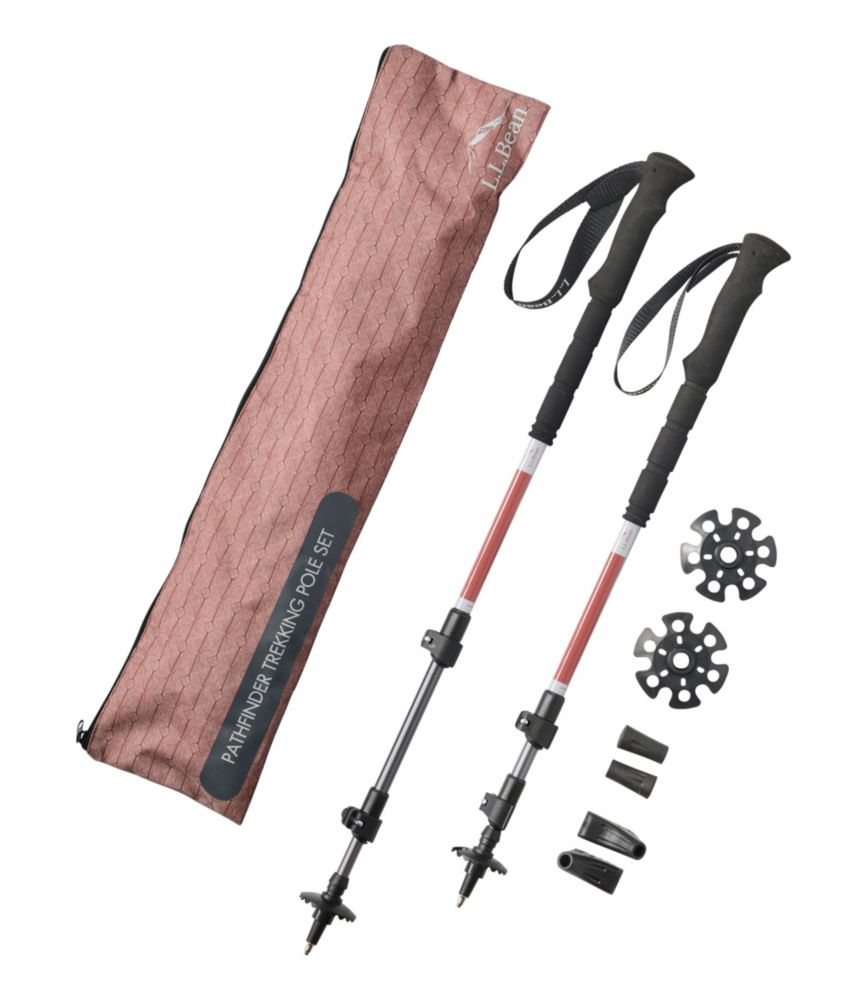
Pathfinder Trekking Pole Set
L.L.Bean Pathfinder Trekking Pole Set
A red aluminum trekking pole set with adjustable three-piece shafts, baskets, rubber tips, and carrying bag.
(0)
$79.95 $79.95
SALE
$79.95 $79.95
SALE
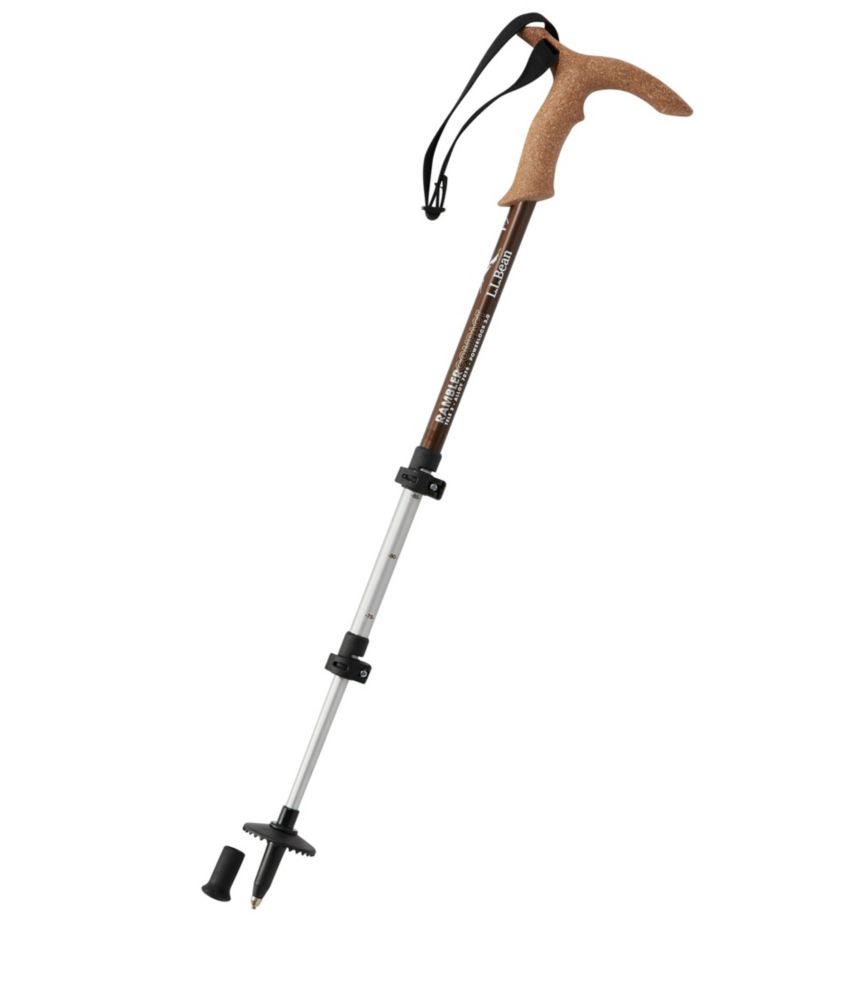
L.L.Bean Rambler Compact PowerLock 3.0 Hiking Staff
L.L.Bean L.L.Bean Rambler Compact PowerLock 3.0 Hiking Staff
A brown telescoping hiking staff with 7075-T6 aluminum, cork grip, PowerLock system, and rubber walking tip.
(196)
$79.95 $79.95
SALE
What customers like:
Comfortable grip
Easy to stow
Lightweight design
$79.95 $79.95
SALE

Hiking Poles for Steep Terrain

Hiking poles for steep terrain belong on a considered gear list for routes where elevation shapes the day: the long climb beyond a trail junction, the switchbacks winding toward an overlook, and the descent that follows a well-earned pause at the top. Choosing a pair starts with the hiking itself, including the routes that draw you outside and the details that matter to you when comparing equipment. A favorite hillside loop can feel just as meaningful as a much-anticipated mountain outing, and neither requires a particular level of experience to be worth preparing for thoughtfully. Some hikers arrive knowing exactly what they liked about a previous pair of poles. Others are considering poles for the first time after taking an interest in trails with more elevation change. This collection brings hiking poles into focus for that shared interest in steep terrain, while leaving room for different preferences and approaches to getting outside. Picture a familiar trail that rises steadily through the trees, with occasional openings that reveal how far the path has climbed. The appeal might be the view, the conversation with a hiking companion, or simply the pleasure of following the trail farther than last time. Those experiences provide useful context for shopping without making every hike sound like an expedition. The right selection is a personal one, shaped by the hiker, the route, and the product’s stated purpose—not by how ambitious an outing sounds. For someone replacing well-used equipment, familiar details may carry more weight than a different design. For a newer hiker, clear product information and a straightforward comparison may be the most useful starting points. Hiking poles are worth considering with that same practical mindset: pay attention to the details of each option, take personal preferences seriously, and choose for the hiking you actually plan to do.

When comparing hiking poles for steep terrain, individual specifications tell a more useful story than broad descriptions alone. Length, sizing guidance, listed weight, construction details, and the configuration described on the product page can help distinguish one option from another. Read those details together rather than treating a single measurement as the deciding factor. A hiker replacing a familiar pair might begin with its measurements and note what felt right or what they would prefer to change. Someone shopping for a first pair may want to spend more time with the manufacturer’s sizing information before narrowing the selection. Hand contact is another personal consideration: look closely at the handle’s stated dimensions and shape, and use an opportunity to try the poles in person when possible. If a design includes adjustments, review the instructions for that specific model rather than assuming every mechanism works the same way. The same care applies to understanding what comes with a purchase and whether any separately listed components are compatible. These are concrete distinctions that help make a collection easier to compare without relying on appearances alone. Durability also deserves attention at the individual-product level. Construction information, care requirements, and any stated limitations provide a firmer basis for a decision than assuming that one design will suit every hiker or every steep route. For care, follow the manufacturer’s directions for cleaning, inspection, and storage; those directions should remain the reference for the poles you choose. It is worth reading them before purchasing, especially if a particular maintenance routine would be unfamiliar. Think about how the equipment fits into your ordinary preparations, from checking it before leaving home to putting it away afterward. A useful comparison ultimately connects the specifications to the person who will use the poles, keeping fit, ownership, and intended use part of the same decision.

Personal style can have a place in that decision, too, alongside the more detailed comparison of specifications. Some hikers enjoy choosing equipment with a consistent look; others care more about finding a familiar shape or matching the preferences developed over years on the trail. If color is part of your selection, Black Trekking Poles offers a related collection to explore while keeping individual sizing and product details in view. Appearance can help narrow a search, but it should not stand in for understanding the equipment. That distinction is especially useful when hiking poles are being considered as a gift. A friend who regularly talks about a favorite uphill route, a partner who enjoys planning hikes together, or a family member replacing an older pair may appreciate a gift connected to an activity they already love. Before choosing, find out whether the recipient has particular sizing needs, a preferred design, or experience with poles that they would like to repeat. An established preference is valuable information, not a detail to work around for the sake of a surprise. For a newer hiker, choosing together can make the gift more personal and leave space to compare unfamiliar options without pressure. There is no need to frame the purchase around reaching a higher summit or taking on a harder trail. The occasion can be as simple as celebrating a shared interest in hiking and looking forward to another day outside. Steep terrain gives this collection its focus, but the people browsing it bring many different stories: a regular weekend walking partnership, an interest in exploring local elevation, or a return to a much-loved route with a friend. Keeping those real experiences in mind makes the selection process more grounded. Look for clear information, consider the recipient or intended user, and let the details of each pair guide the choice. Thoughtful equipment decisions begin with an honest picture of the hiking ahead and the preferences of the person heading out.
Read More

FAQs