It's time to upgrade your browser

Your current browser is no longer supported on llbean.com. Please upgrade to one of the following for a smoother, safer shopping experience with us:

Waterproof Women's Shoes

Find waterproof women's shoes in a style that suits you. Browse the selection by design and fit, and check each pair’s product details for waterproof construction, sizing and care information to help choose the right pair.
Read More
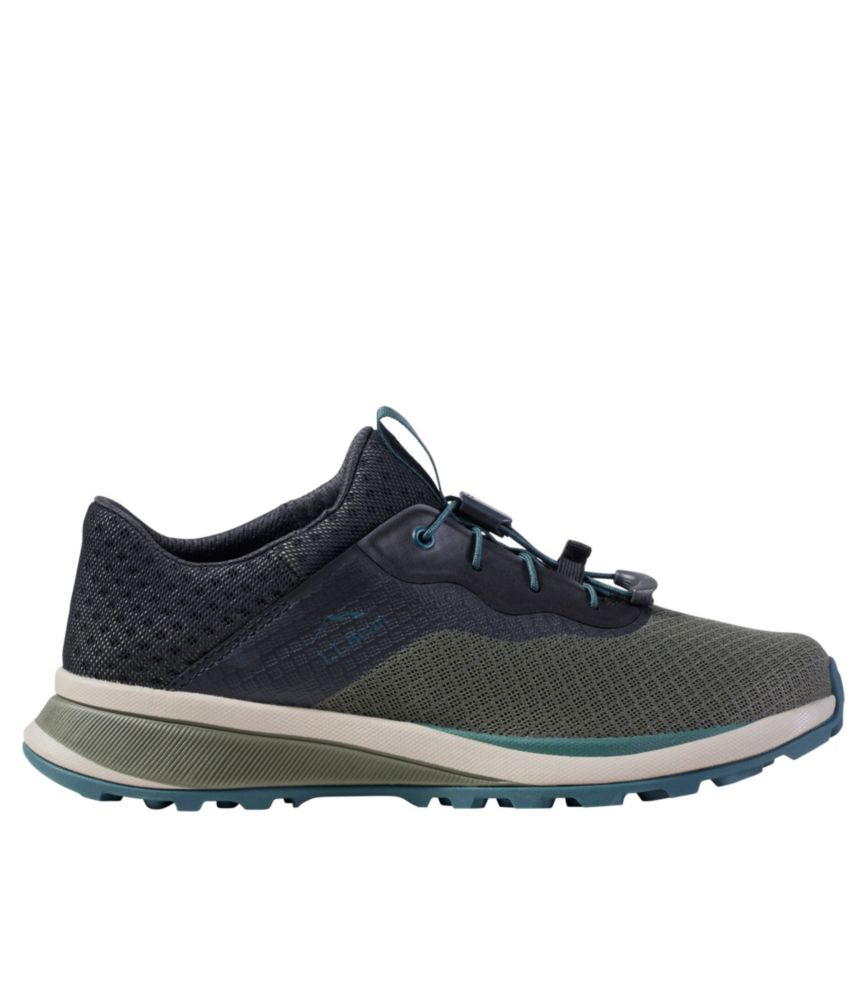
Women's Elevation H2O Shoes
L.L.Bean Women's Elevation H2O Shoes
A quick-drying green nylon and neoprene water shoe with breathable mesh and a grippy VertiGrip outsole.
(0)
$99.95 $64.99
SALE
$99.95 $64.99
SALE
Women's Trail Model X Waterproof Hiking Shoes
L.L.Bean Women's Trail Model X Waterproof Hiking Shoes
A gray suede and rubber hiking shoe featuring waterproof protection, breathable mesh panels, and enhanced wet-surface traction.
(0)
$110 $110
SALE
$110 $110
SALE
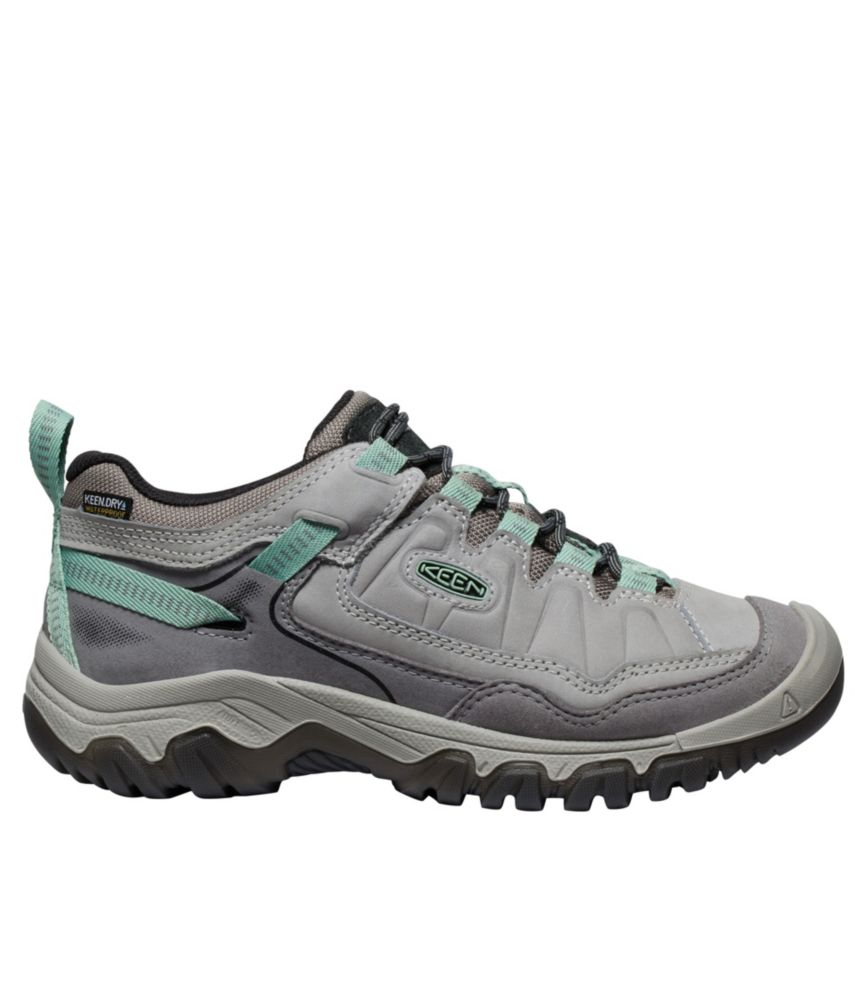
Women's Keen Targhee IV Waterproof Hiking Shoes
Keen Women's Keen Targhee IV Waterproof Hiking Shoes
A waterproof leather hiking shoe with recycled laces, Eco Anti-Odor, and durable traction for all-terrain adventures.
(0)
$170 $170
SALE
$170 $170
SALE
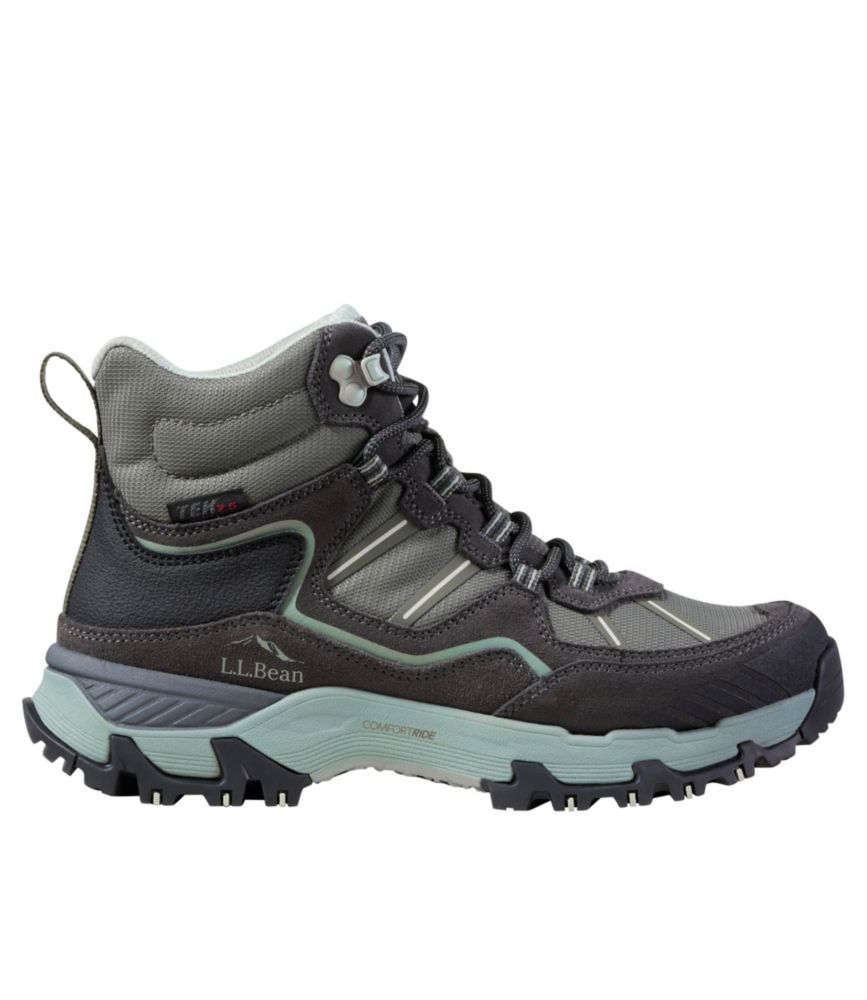
Women's Trail Model X Waterproof Hiking Boots
L.L.Bean Women's Trail Model X Waterproof Hiking Boots
A gray suede leather hiking boot with waterproof features and enhanced traction for wet conditions.
(0)
$120 $120
SALE
$120 $120
SALE
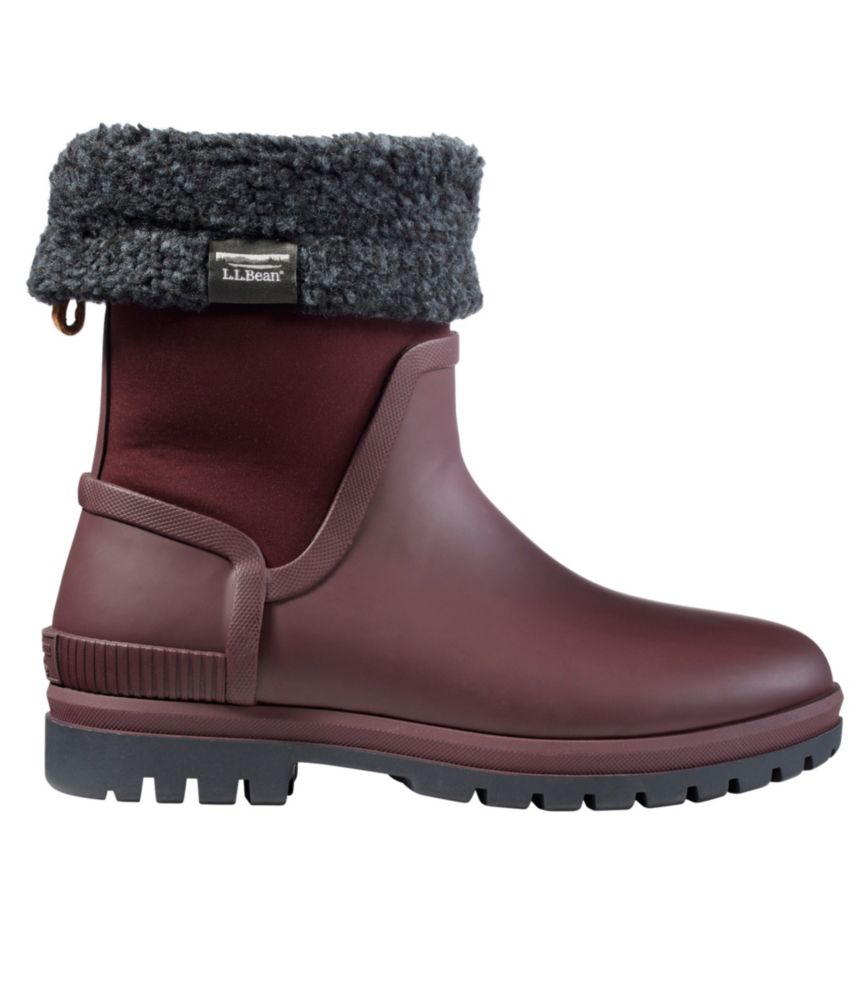
Women's Rugged Winter Wellie® Boots, Waterproof
L.L.Bean Women's Rugged Winter Wellie® Boots, Waterproof
A waterproof brown boot featuring suede, rubber, and neoprene with cozy fleece lining and grippy outsole.
(0)
$120 $120
SALE
$120 $120
SALE

Waterproof Women's Shoes

Waterproof women’s shoes bring a practical feature to a familiar part of the wardrobe, with waterproof construction as the starting point rather than the whole story. The right pair should also feel like a natural match for personal style, preferred fit, and the clothes already hanging by the door. Shape, proportions, and small design details all contribute to that choice: a rounded profile has a different look from a more streamlined silhouette, and understated detailing creates a different impression from prominent stitching or contrasting accents. Comparing those elements helps narrow the selection without letting appearance stand in for product information. Waterproof describes a particular attribute; it does not mean that every shoe shares the same materials, construction, care requirements, or intended purpose. Each description provides the details that distinguish one design from another. A shoe labeled water-resistant should not be treated as interchangeable with one labeled waterproof, and neither label tells the full story of fit. Even within waterproof footwear, the placement of the opening and the limits stated in the product information matter. Water can still enter over the top of a shoe, so the waterproof designation should not be read as permission to step into water of any depth. For a broader look at the category, the waterproof shoes collection provides another place to explore. Within women’s footwear, the most useful comparisons remain straightforward: how the shoe is shaped, how its sizing is described, what its construction includes, and whether its stated purpose matches the reason for choosing it. Those details make the selection more personal than simply picking a familiar size or a favorite color. They also keep the focus on shoes that belong in an existing wardrobe, rather than a pair that requires an entirely different approach to getting dressed.

Fit deserves just as much attention as the waterproof label, especially because a size number is only one part of how a shoe feels on the foot. Length, width, toe shape, and the space across the top of the foot work together, and two shoes marked with the same size can feel different. Published measurements and fit notes offer a more useful starting point than assuming that every design follows the shape of a pair already owned. Socks belong in that comparison, too. Trying shoes with the socks intended for them gives a clearer sense of the available room than trying them with an unfamiliar thickness. Any inserts normally worn should also be considered, with the product details checked for information about the footbed before assuming a particular arrangement is possible. During an indoor try-on, toes should have room to move without the foot sliding around, and the heel should not repeatedly lift with each step. Pressure across the toes or the top of the foot is worth noticing immediately rather than dismissing as something that will necessarily disappear. Fastening details, where included, are another point of comparison, but an adjustable closure cannot make up for a shape that does not suit the foot. These are individual fit considerations, not features guaranteed by waterproof construction. Personal preferences matter alongside measurements: some women favor a closer outline, while others prefer the appearance of a roomier shape. Looking at the shoe from above as well as from the side can help clarify that preference. The relationship between footwear and clothing is equally individual. A hem that falls over the shoe creates a different balance from one that leaves the full silhouette visible. Paying attention to those familiar details makes it easier to choose waterproof women’s shoes for their overall place in a wardrobe, not solely for the wording on the label.

Materials and care are best understood through the information provided for each pair, since waterproof women’s shoes are a category rather than a single construction method. The waterproof designation alone does not identify the upper, lining, sole, or the process used to assemble them. Reading the listed materials provides a clearer picture of what is being selected, while close-up photographs help show surface texture, seams, and finishing details. Neither appearance nor a material name, on its own, establishes how long a shoe will last. Durability depends on the particular construction, how frequently the shoes are worn, the conditions they encounter, and whether their care instructions are followed. Care directions should therefore be part of the comparison before purchase, not something discovered only after the first cleaning is needed. Check the recommended cleaning method, any restrictions on cleaning products, and the stated drying instructions. Do not assume that waterproof footwear is machine-washable or that a treatment intended for one pair is appropriate for another. Keeping the original care information makes those decisions simpler later. Intended use also belongs at the individual product level: waterproofing does not, by itself, establish suitability for a particular activity, surface, or temperature. A specific purpose calls for a description that expressly addresses it, rather than an assumption based on the shoe’s appearance. The same thoughtful approach helps when choosing footwear as a gift. A recipient’s usual size is helpful, but preferred width, familiar fit, and personal style provide a fuller picture. Someone who has already identified a preferred shape or shared detailed sizing information is easier to choose for than someone whose footwear preferences are unknown. Whether selected personally or given with care, waterproof women’s shoes deserve the same attention to everyday details as any other well-considered wardrobe choice. Clear product information, a fitting that is not rushed, and care requirements that feel manageable all help make the decision grounded and straightforward. The result is a selection based on the whole shoe, with waterproof construction as one clearly understood part of the choice.
Read More

FAQs