It's time to upgrade your browser

Your current browser is no longer supported on llbean.com. Please upgrade to one of the following for a smoother, safer shopping experience with us:

Slim Fit Oxford Shirts

Shop slim fit Oxford shirts for a closer-to-the-body silhouette and timeless style. Browse the selection, then check each shirt’s size and fit details to help you choose a fit that feels right for you.

Read More
Men's Comfort Stretch® Oxford Shirt, Slightly Fitted
L.L.Bean Men's Comfort Stretch® Oxford Shirt, Slightly Fitted
A blue cotton-blend Oxford shirt with stretch fabric that wicks moisture and dries quickly.
(251)
$74.95 $34.99
SALE
What customers like:
High material quality
Well-made
Cute print
Great appearance
Comfortable
$74.95 $34.99
SALE
Men's Signature Premium Pima Cotton Oxford Shirt, Slim Fit
L.L.Bean Men's Signature Premium Pima Cotton Oxford Shirt, Slim Fit
A slim-fit Oxford shirt in 100% Pima cotton with a button-down collar and untucked hem.
(0)
$89 $74.99
SALE
$89 $74.99
SALE
Men's Sunwashed Oxford Shirt, Slightly Fitted, Stripe
L.L.Bean Men's Sunwashed Oxford Shirt, Slightly Fitted, Stripe
A blue striped cotton oxford shirt washed for softness, featuring a button-down collar and fitted silhouette.
(0)
$69.95 $69.95
SALE
$69.95 $69.95
SALE
Men's Sunwashed Oxford Shirt, Slightly Fitted, Plaid
L.L.Bean Men's Sunwashed Oxford Shirt, Slightly Fitted, Plaid
A soft green plaid oxford shirt in 100% cotton, featuring a button-down collar and slightly fitted silhouette.
(0)
$69.95 $69.95
SALE
$69.95 $69.95
SALE
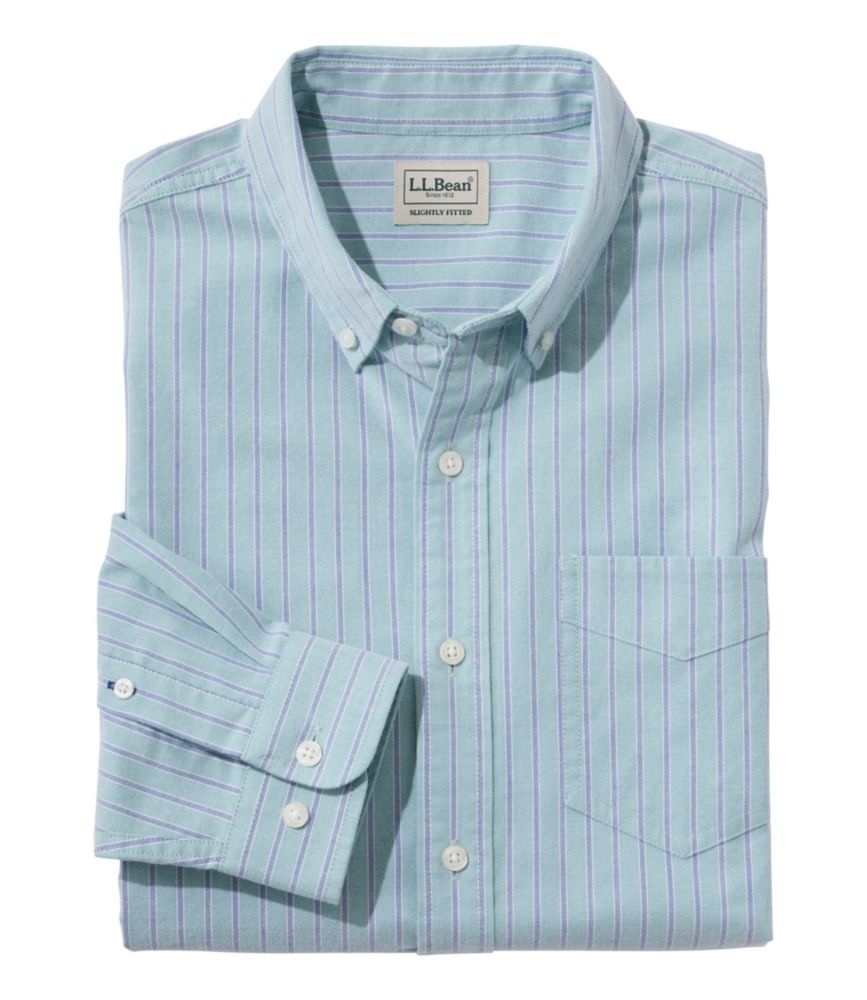
Men's Comfort Stretch® Oxford Shirt, Slightly Fitted, Stripe
L.L.Bean Men's Comfort Stretch® Oxford Shirt, Slightly Fitted, Stripe
A green striped cotton-blend shirt with stretch, moisture-wicking performance, and an easy untucked design.
(0)
$74.95 $62.99
SALE
$74.95 $62.99
SALE

Slim Fit Oxford Shirts

Slim fit Oxford shirts bring a closer silhouette to a familiar shirt style, pairing classic proportions with a more defined shape through the chest and waist. The appeal is in the balance: a shirt that looks neat without making the fit feel like the whole outfit. “Slim fit” generally describes a cut closer to the body than a traditional, fuller fit, but it does not mean that the smallest possible size is the right choice. Size and cut work together, and the best match depends on individual measurements and preferences. Someone who prefers less fullness at the sides may appreciate a slim silhouette, while someone who likes a roomier shirt may want to compare the measurements carefully before choosing. Oxford shirts have an enduring place in a wardrobe because their recognizable style leaves plenty of room for personal expression. Collar shape, cuff proportions and the line of the shirt front all contribute to the overall look. A closer cut can make those details more noticeable, particularly when the shirt is worn on its own. With straight-leg jeans, the contrast is between a defined shirt shape and a simpler line below; with chinos, the look can feel more coordinated without becoming elaborate. Neither combination needs a long list of accessories. A belt, a favorite pair of shoes and a considered choice of proportions can be enough. The important distinction is between a shirt that follows the body and one that pulls against it. A smooth front, a collar that sits as intended and sleeves that fall at the preferred length matter more than the fit name alone. For shoppers drawn to classic clothing with a closer silhouette, slim fit Oxford shirts offer a clear starting point: familiar shirt styling, less fullness and an emphasis on how the garment sits rather than on extra detail.

Fit is often easiest to understand by comparing a prospective shirt with one that already feels right. Chest, waist, neck and sleeve measurements provide more useful information than a size letter by itself, especially when moving from a fuller cut to a slim fit. A shirt can be close through the waist yet still need a different sleeve length, or sit neatly across the chest while feeling too narrow at the shoulders. These are separate parts of the fit, not reasons to assume that sizing up or down will solve everything. Shoulder seams are a helpful reference point when assessing the overall shape, while the buttoned front shows how much room there is through the torso. Visible pulling between buttons or pronounced tension across the back can indicate that the cut is closer than the wearer prefers. Equally, excess fabric gathered at the waist may suggest a fuller shape than intended. A natural fit check includes standing, sitting and reaching forward, since the shirt should be assessed beyond a single still pose. Sleeve length also deserves attention: cuffs should land where the wearer wants them, rather than being judged only by how the shirt looks with the arms held straight at the sides. The neckline matters whether the preference is to leave the top button open or fasten it. Shirt length is another separate consideration. A slim fit label does not establish where the hem will fall, so listed dimensions and product photographs are useful when deciding between a tucked and untucked look. Tucking emphasizes the waistline and the relationship between shirt and trousers; leaving the shirt untucked puts more attention on the hem and its proportions. The choice is personal, but the actual shirt length should support it. Shoppers comparing related silhouettes can also explore Fitted Oxford Shirts, using the measurements and fit descriptions to understand the differences rather than treating similar names as interchangeable.

Choosing a slim fit Oxford shirt also involves the details that become important after the first try-on. Fabric composition, care directions and construction information are worth reading in the individual description, alongside the measurements. Those details help distinguish shirts that may look similar in photographs without assuming that every Oxford shirt has the same fabric, finish or care requirements. Personal preferences matter here: some shoppers pay close attention to the feel of a fabric, while others place more emphasis on the collar shape, sleeve proportions or how a shirt fits into an existing wardrobe. Care should follow the garment’s label, including its washing, drying and ironing directions where provided. There is no need to substitute a general rule for the instructions attached to the shirt. For someone who prefers a straightforward clothing-care routine, reviewing those directions before choosing is simply part of finding a good match. Quality is also best considered through the available details rather than through the fit name alone. Clear construction information, close views of the collar and cuffs, and an accurate fit description give shoppers more to work with than a broad promise about how a shirt will wear. In an established wardrobe, a closer-cut Oxford shirt can be chosen around familiar pieces instead of requiring a completely different style. The width of a trouser leg, the position of a waistband and the shape of a jacket all affect the visual balance. A person who favors simple combinations may prefer to keep the shirt as the main point of interest; someone who enjoys more detail may give greater attention to the collar and cuffs. As a gift, fit deserves particular care. Knowing the recipient’s usual shirt measurements and preference for a closer silhouette is more useful than relying on a general clothing size. A well-chosen shirt reflects the recipient’s taste, not just the giver’s. The lasting appeal of slim fit Oxford shirts is their combination of recognizable styling and a more defined cut, with the final choice resting on proportion, personal preference and the details of the individual garment.
Read More

FAQs