It's time to upgrade your browser

Your current browser is no longer supported on llbean.com. Please upgrade to one of the following for a smoother, safer shopping experience with us:

Knit Dresses

Explore knit dresses with timeless style and the quality you expect from L.L.Bean. Browse the selection and compare lengths, silhouettes and fit details to find a dress that suits your wardrobe and personal style.

Read More
Women's Summer Knit Dress
L.L.Bean Women's Summer Knit Dress
A black A-line jersey-knit dress with stretch, faux-surplice styling, and an empire waist for flattering comfort.
(627)
$54.95 $34.99
SALE
What customers like:
Versatile for various activities
Flattering fit
Comfortable and stylish
Great for hot weather
Lightweight and soft
$54.95 $34.99
SALE
Women's Signature Castine Cotton Popover Dress
L.L.Bean Women's Signature Castine Cotton Popover Dress
A flowing blue cotton-dobby dress with a fit-and-flare silhouette, elasticized waist and cuffs, split neckline, and pockets.
(0)
$119 $59.99
SALE
$119 $59.99
SALE
Women's Cloud Gauze Short-Sleeve Shift Dress, Stripe
L.L.Bean Women's Cloud Gauze Short-Sleeve Shift Dress, Stripe
A lightweight white cotton shift dress in crinkled gauze with colorful stripes, pockets, and Henley neckline.
(0)
$79 $49.99
SALE
$79 $49.99
SALE
Women's Rocky Coast Slub-Knit Splitneck Dress
L.L.Bean Women's Rocky Coast Slub-Knit Splitneck Dress
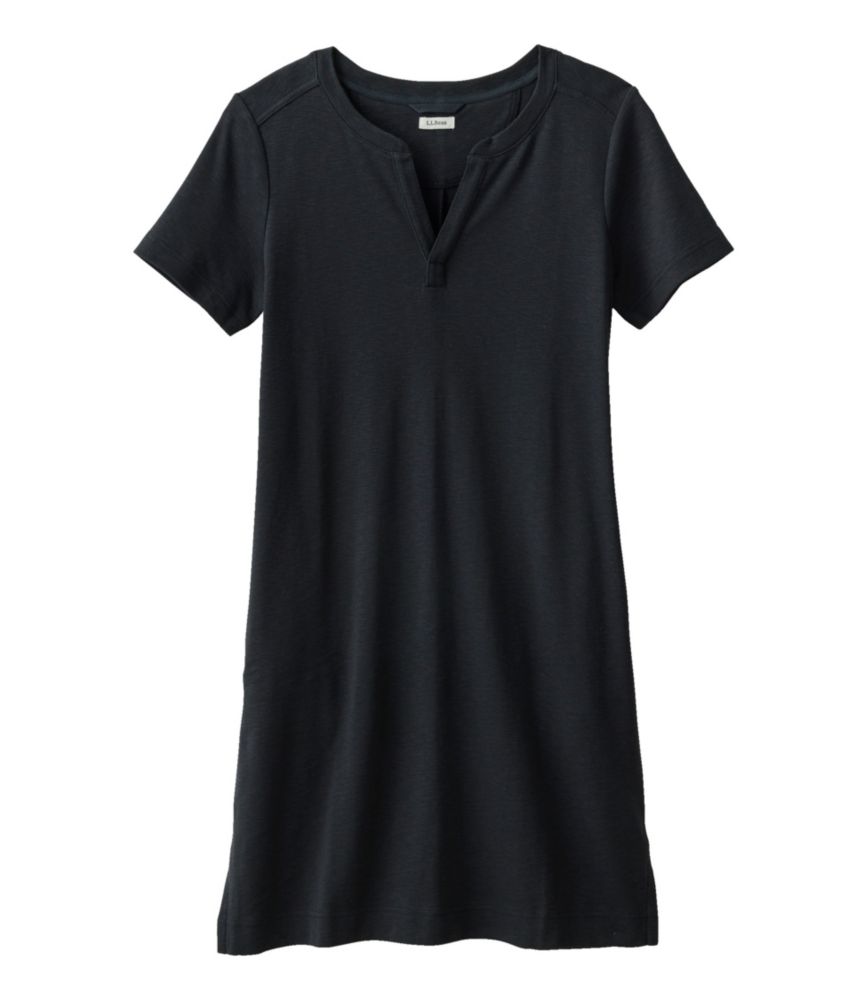
A black cotton slub-knit dress with a split neckline, side-seam pockets, and side slits.
(0)
$69 $33.99
SALE
$69 $33.99
SALE
Women's Summer Knit Dress, Three-Quarter-Sleeve Scoopneck
L.L.Bean Women's Summer Knit Dress, Three-Quarter-Sleeve Scoopneck
A flattering black midi dress in soft, stretchy jersey-knit with three-quarter sleeves and a scoopneck.
(0)
$59.95 $39.99
SALE
$59.95 $39.99
SALE

Knit Dresses

Knit dresses bring a familiar favorite into a single, considered piece, with a look that can be understated, expressive or somewhere in between. The term “knit” describes fabric formed from connected loops of yarn, rather than threads woven across one another. That construction is the starting point, but it does not tell the whole story of a dress. Shape, proportions, neckline and surface detail all contribute to its character, making the full design more useful to consider than the category name alone. For someone drawn to timeless style, an uncluttered silhouette may hold more appeal than a dress with several competing details. Someone who enjoys a little definition might look for a distinct waistline or a skirt shape that contrasts with the bodice. Neither approach needs elaborate styling: the interest can come from the dress itself and the balance of the finished outfit. Length is another important part of that balance. Above-the-knee, knee-length, midi and maxi describe general proportions, but the same labeled length can fall differently on people of different heights. A listed measurement offers a clearer reference than the name alone. Necklines and sleeves deserve the same attention, especially when comparing a dress with favorites already in the closet. A higher neckline creates a different visual frame than an open one, while sleeve length changes the relationship between the upper and lower portions of the silhouette. Looking at those elements together helps narrow the choices without relying on a passing trend. The goal is a knit dress that feels like a natural expression of personal style, whether that means simple lines, a distinctive pattern or an interesting detail. A useful starting point is the dress already reached for most often: note its length, the placement of its waist and the features that make it feel like a personal favorite. Those observations can be more helpful than choosing by size or color alone.

Fit is best considered through measurements and the intended silhouette, not just the number on a label. A straight shape, a defined waist and a fuller skirt each create a different outline; deciding which proportions appeal most gives the comparison a clear starting point. Check the size chart alongside any fit notes, paying attention to bust, waist and hip measurements rather than assuming that a familiar size will translate exactly. Where garment measurements are provided, compare them with a similar dress laid flat, following the same measuring method. Shoulder placement, sleeve length and the position of a waist seam can be just as important as overall length. For example, a waist detail that looks centered in a photograph may sit differently on a shorter or longer torso. Looking closely at front, side and back views can help clarify the design, while remembering that a photograph shows the dress on one person rather than predicting an identical result for everyone. Fabric information deserves a separate look. “Knit” identifies construction, not a single fiber composition, fabric weight or care routine, so the individual description and label are the right places to find those details. Rather than assuming every knit dress will behave alike, compare the information given for each design and consider which characteristics matter most personally. Small finishing details are worth noticing, too: the shape of a cuff, the treatment of a neckline and the placement of seams all contribute to the overall appearance. When trying a dress on, check how its proportions look while standing and sitting, and whether its neckline, sleeves and hem fall where expected. This is also the moment to decide how much space is preferred through the bodice and skirt. A good choice begins with an honest sense of personal preference, not a rule that every dress must follow the same silhouette. The most useful comparison is between the design as described and the shape the wearer actually wants.

Styling a knit dress can be a matter of proportion rather than adding more pieces. A simple necklace may echo the neckline; a belt, if desired, can introduce a visual break at the waist. Footwear changes the outline as well, so it helps to picture the hem beside the shoes already in the wardrobe instead of considering the dress in isolation. A photograph of a favorite outfit can make that comparison surprisingly concrete, showing whether the preferred look is tonal, patterned or built around contrast. These small decisions leave room for individuality without making dressing feel like a project. For a gift, that same attention to the recipient’s established taste is more meaningful than guessing at a completely different style. Notice whether the person usually chooses longer or shorter hems, defined or unstructured shapes, and subtle or prominent patterns, then check sizing information carefully. Personal preference also matters when distinguishing between dress categories. Those looking specifically for sleep dresses can explore women’s soft knit sleep dresses as a separate starting point. Once a dress is chosen, its own care label should guide washing, drying and storage decisions; a general category description cannot replace those instructions. Read the label before the first wash, and check any directions about shaping or drying rather than carrying over a routine from another garment. If long-term upkeep is a priority, consider those requirements before choosing, alongside the fabric details and construction information provided. Keeping track of what works in an existing wardrobe can help with future choices, too: the most useful notes are often practical ones about preferred measurements, neckline shapes and care routines. Taken together, those details make browsing knit dresses more personal and less dependent on a single photograph. They keep the focus on considered design, a familiar sense of style and a dress chosen for the person who will wear it.
Read More

FAQs