It's time to upgrade your browser

Your current browser is no longer supported on llbean.com. Please upgrade to one of the following for a smoother, safer shopping experience with us:

Children's Down Jackets

Find children’s down jackets from L.L.Bean and explore the selection with your child’s style in mind. Check each jacket’s sizing, fit information and product details to help narrow your choices.

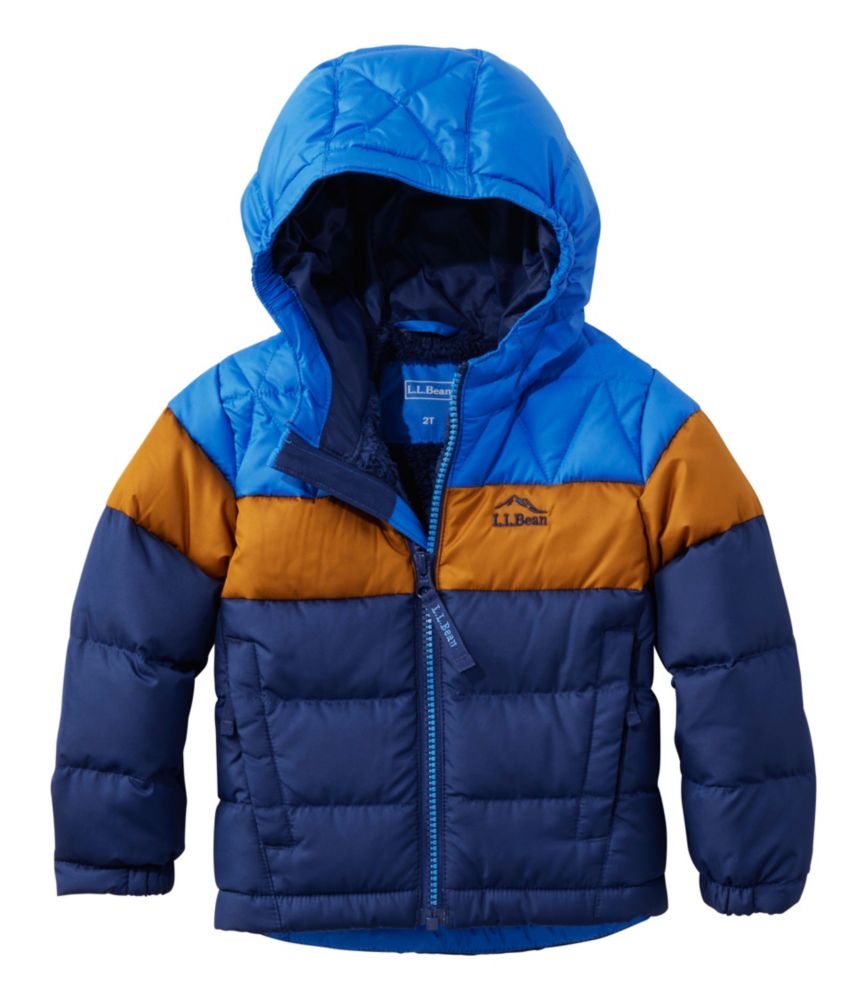
Kids' Bean's Down Jacket, Colorblock
L.L.Bean Kids' Bean's Down Jacket, Colorblock
A blue kids’ down jacket with 650-fill DownTek insulation, recycled shell, fleece lining, and reflective accents.
(891)
$120 $89.99
SALE
What customers like:
Great value
Good quality
Moisture resistant
Cute design
Excellent warmth
$120 $89.99
SALE
Infants' and Toddlers' Ultralight 650 Down Jacket
L.L.Bean Infants' and Toddlers' Ultralight 650 Down Jacket
A pink toddler down jacket with recycled nylon shell, insulated hood, and water-resistant 650-fill DownTek insulation.
(554)
$140 $140
SALE
$140 $140
SALE
Kids' Bean's Down Jacket
L.L.Bean Kids' Bean's Down Jacket
A pink kids’ down jacket with water-resistant recycled polyester, 650-fill DownTek insulation, and cozy fleece lining.
(872)
$120 $84.99
SALE
What customers like:
Lightweight and easy to layer
Warmth and insulation
Attractive color
Durable construction
Soft and comfortable lining
$120 $84.99
SALE
Kids' Ultralight 650 Down Jacket
L.L.Bean Kids' Ultralight 650 Down Jacket
A red kids’ down jacket with a recycled nylon shell, 650-fill water-resistant insulation, and cozy hood.
(554)
$170 $170
SALE
$170 $170
SALE
Infants' and Toddlers' Bean's Down Jacket, Colorblock
L.L.Bean Infants' and Toddlers' Bean's Down Jacket, Colorblock
A brown colorblocked toddler down jacket with water-repellent nylon ripstop, 650-fill insulation, and cozy fleece lining.
(240)
$110 $110
SALE
What customers like:
Very warm
Good fit
Cozy lining
$110 $110
SALE
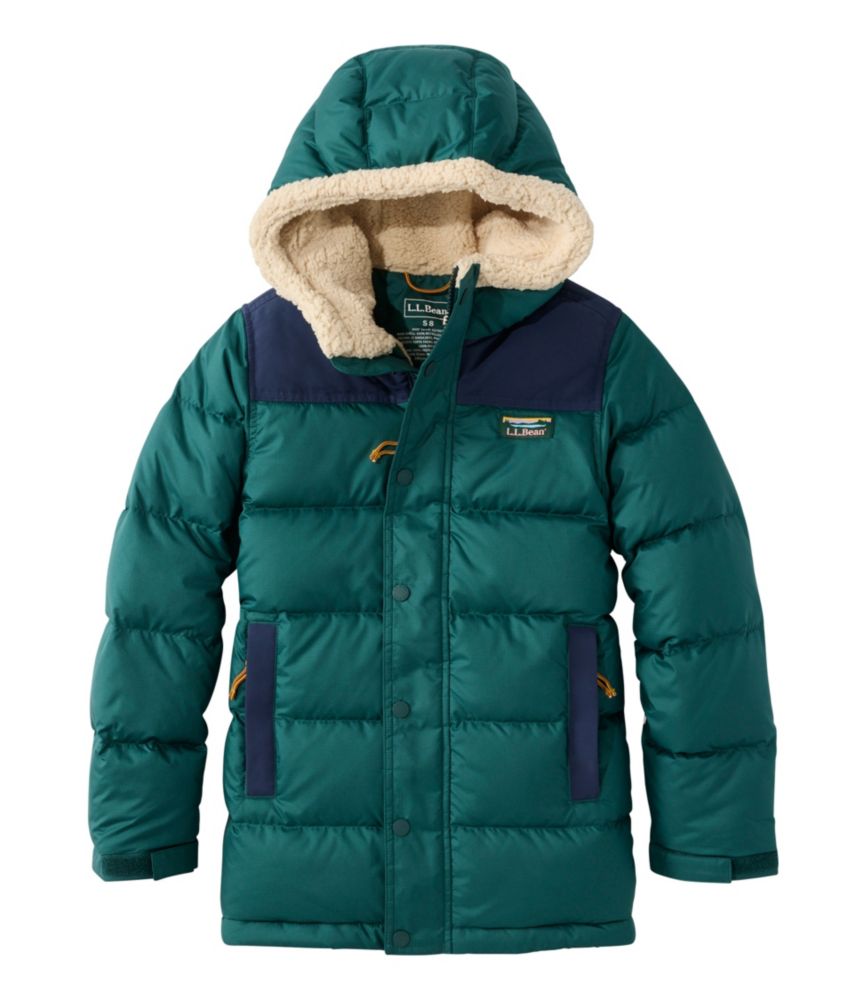
Kids' Mountain Classic Down Parka
L.L.Bean Kids' Mountain Classic Down Parka
A green kids’ down parka with 650-fill water-repellent insulation, sherpa lining, and water-resistant recycled polyester shell.
(0)
$180 $180
SALE
$180 $180
SALE
Kids' Ultralight 650 Down Jacket, Colorblock
L.L.Bean Kids' Ultralight 650 Down Jacket, Colorblock
A kids’ multicolor down jacket with recycled nylon shell, water-resistant 650-fill insulation, hood, and packable design.
(136)
$170 $170
SALE
$170 $170
SALE
Kids' Waterproof Ultralight Down Jacket
L.L.Bean Kids' Waterproof Ultralight Down Jacket
A blue kids’ waterproof down jacket with 650-fill insulation, windproof recycled fabric, hood, and zippered pockets.
(0)
$250 $250
SALE
$250 $250
SALE
Kids' Popham Puffer Jacket
L.L.Bean Kids' Popham Puffer Jacket
A green kids’ puffer jacket with recycled polyester shell, 650-fill duck down insulation, and weather-resistant protection.
(0)
$130 $96.99
SALE
$130 $96.99
SALE
Kids' Quilted Summit Ski Jacket
L.L.Bean Kids' Quilted Summit Ski Jacket
A red kids’ ski jacket with recycled polyester shell, DownTek down insulation, hood, and powder skirt.
(0)
$200 $99.99
SALE
$200 $99.99
SALE

Children's Down Jackets

Children’s down jackets are jackets made with down fill and sized for children, with the choice coming down to more than a size on a label. The overall shape, length, and details all contribute to finding something a child feels good wearing. Some children have a clear idea of the look they like; others are more interested in how a jacket feels when they try it on. Giving those preferences a place in the decision makes the selection more personal. A favorite jacket might have an understated appearance or a more distinctive pattern, but the best starting point is the child rather than an assumption about what children generally prefer. Down describes the fill, not the complete material composition, so the full description is important when comparing jackets. Fit deserves the same attention. Children do not all grow at the same pace or have the same proportions, and an age designation alone does not tell the whole story. Current measurements, considered alongside the relevant size chart, provide a more useful reference than the size of a jacket purchased previously. Height and chest measurements are helpful details to have ready, along with a sense of the jacket length the child prefers. When trying on a jacket, look at where the shoulders sit, where the sleeves end, and how the front lies when closed. Trying it over the clothing the child expects to wear underneath adds context without relying on guesswork. Room to grow is a familiar consideration for families, but a substantially larger size is not automatically the better choice. The fit should make sense for the child wearing it, not simply offer the largest possible size. A sleeve that extends well beyond the hand or a shoulder seam that sits far from the shoulder is worth a second look against the size guidance. Together, these details help turn a broad category into a more thoughtful choice.

Personal style can matter just as much to children as it does to adults, even when their preferences are expressed in wonderfully specific ways. One child may care most about the outline of the jacket, while another notices the stitching before anything else. Looking at the front, back, and side views gives a fuller impression than a single photograph. Proportion is especially useful to consider: the relationship between the body length and sleeves, the shape around the shoulders, and the appearance of the neckline can all influence whether a design feels like a good match. These are visual choices rather than reasons to assume that one jacket will perform like another. For families comparing appearances, Children's Quilted Jackets offers a related category to explore, with the individual descriptions remaining the place to check composition and construction. A familiar look can be appealing, but there is also room for a child to choose something different from what a sibling or parent would pick. Including children in that conversation need not make the decision complicated. Asking which shape they prefer, whether they like the length, or what they notice in the photographs gives them a meaningful voice. When a down jacket is intended as a gift, those same preferences are useful clues. A parent or caregiver can confirm measurements and help distinguish a favorite style from one that only looks similar. It is worth checking the size information rather than relying on a remembered age or guessing from a recent photograph. For relatives choosing a gift, a brief conversation about fit and taste can be more helpful than trying to surprise everyone with every detail. The thoughtfulness lies in choosing for the particular child: their proportions, their preferences, and the little details they are likely to notice first. That personal attention gives the selection meaning without requiring matching choices for every child in the family.

Care is another part of choosing children’s down jackets thoughtfully, particularly for the person who will be reading the label and handling the laundry. The presence of down does not establish a single care routine for every jacket. Full material information and the garment’s care directions should guide decisions about washing, drying, and any additional treatment. Before choosing, it helps to understand those requirements and consider how they fit into the household’s usual routine. A familiar laundry habit is not a substitute for the instructions attached to the garment, and care advice for a different jacket may not apply. Keeping the label readable and referring back to it removes the need to remember every detail. Materials deserve that same close reading: down is one part of the description, while the complete composition provides the broader picture. Construction details, where documented, are also worth considering when durability is a priority, rather than judging lasting quality from a photograph alone. Families who hope to keep a jacket for a younger sibling can consider that intention alongside fit, style, and care, without treating a future hand-me-down as a certainty. Children grow differently, preferences change, and the condition of a previously worn garment needs its own assessment. The same practical approach applies to deciding whether an existing jacket still fits. Looking again at sleeve position, shoulder placement, and overall length is more informative than assuming last year’s size remains right. Choosing a jacket does not need to become a complicated project, but a few concrete details make the decision more grounded. A measurement written down, a close look at the photographs, a child’s opinion, and a careful reading of the material and care information each answer a different part of the question. Considered together, they make it easier to select a down jacket with a clear understanding of its fit, appearance, and care requirements—and with the child’s own preferences at the center.

FAQs