It's time to upgrade your browser

Your current browser is no longer supported on llbean.com. Please upgrade to one of the following for a smoother, safer shopping experience with us:

Wood Fire Starters

Shop wood fire starters and compare available options for starting a wood fire. Review each product’s details and directions to find an option suited to your setup.

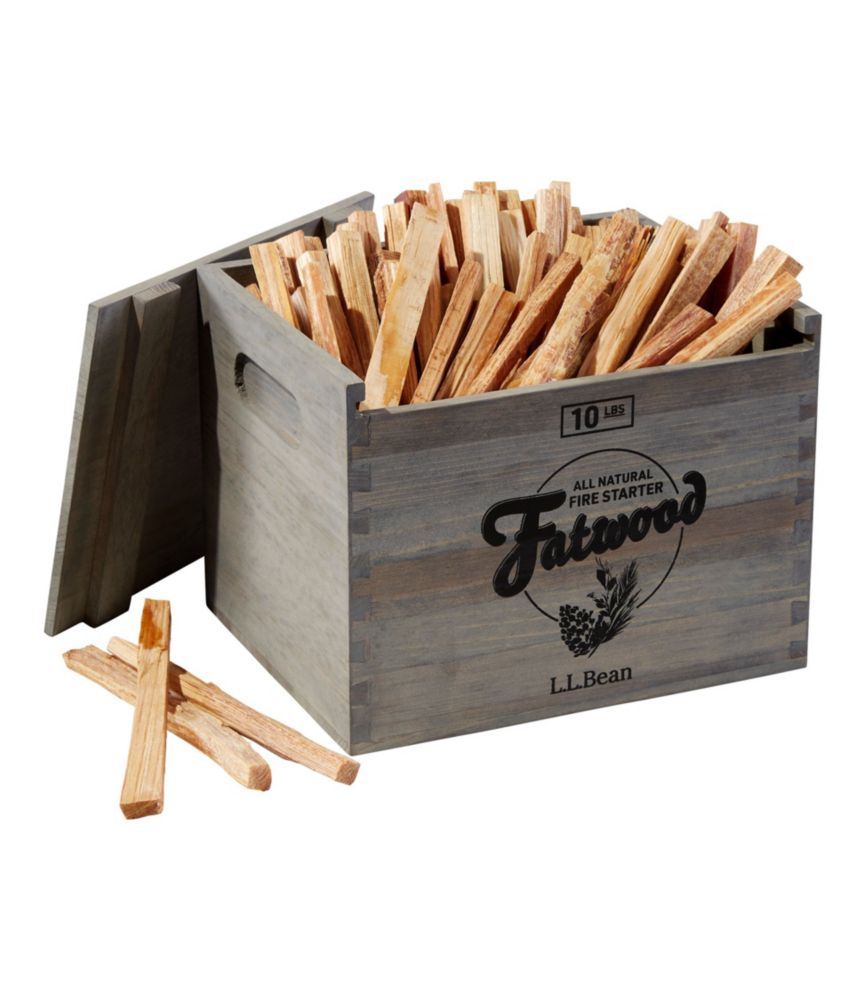
Fatwood Box
L.L.Bean Fatwood Box
A natural pine kindling box with resin-rich fatwood sticks for easy, long-burning fireplace and woodstove fires.
(951)
$69.95 $69.95
SALE
What customers like:
Catches fire quickly
High quality
Excellent craftsmanship
Dependable
Provides warmth
$69.95 $69.95
SALE
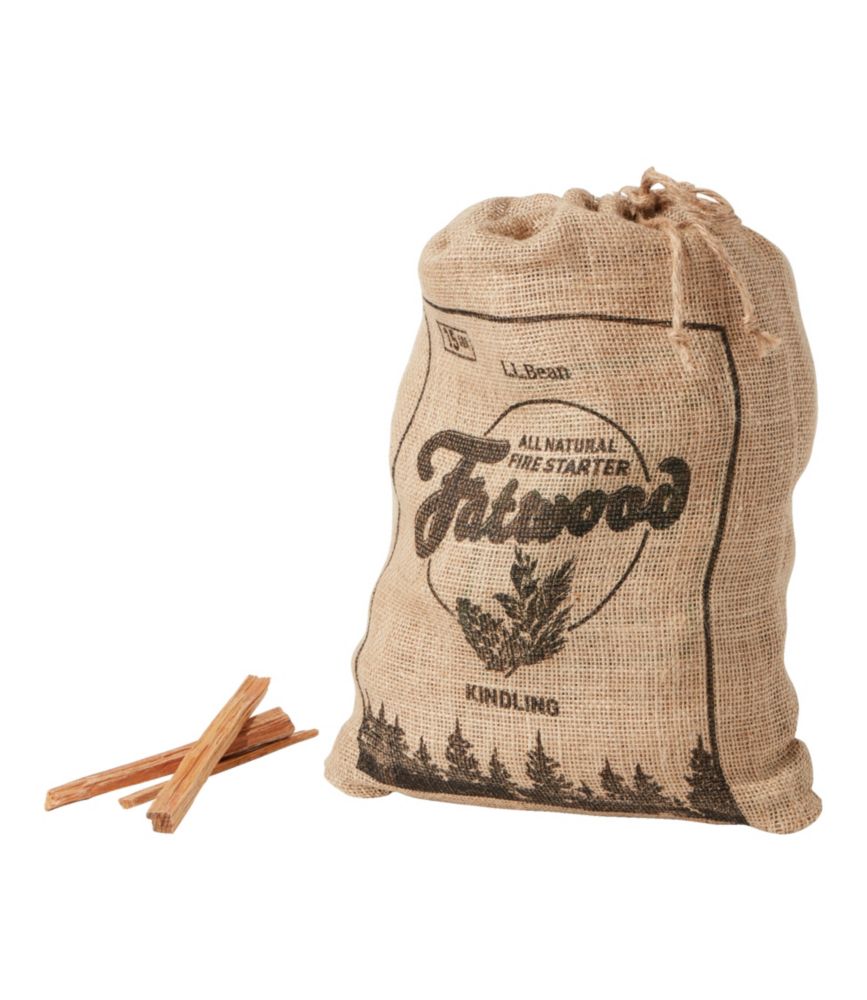
Fatwood Sack
L.L.Bean Fatwood Sack
A natural pine fatwood fire starter in a burlap sack, offering long-burning, chemical-free kindling.
(392)
$44.95 $44.95
SALE
What customers like:
Value for money
Lasts long
Easy to use
Natural
Great fire starter
$44.95 $44.95
SALE
Fatwood Crate
L.L.Bean Fatwood Crate
A refillable gray wooden crate of natural-resin fatwood kindling for easy, long-burning fires.
(270)
$74.95 $74.95
SALE
What customers like:
Attractive box
Feels traditional
Works well
Chemical-free
Dry kindling
$74.95 $74.95
SALE

Wood Fire Starters

Wood fire starters are products used to begin a wood fire, with each product’s directions explaining its intended use. Choosing them starts with a few practical details: what the package contains, how much is recommended for each fire, and whether the stated instructions match the way the fire will be prepared. Package count alone does not tell the whole story. The number of individual pieces and the recommended amount per use are separate details, and both deserve a look before making a selection. Dimensions matter, too, particularly when planning where supplies will be kept. A photograph can suggest scale, but listed measurements provide a clearer basis for comparison. Composition is another detail to check in the individual product description rather than assume from the name or appearance. The term “wood fire starters” describes the purpose of the category; it does not, by itself, establish everything a particular starter contains or how it should be handled. For someone who enjoys the familiar ritual of preparing a wood fire, these details are part of choosing thoughtfully. There is the wood to arrange, the instructions to review, and the satisfaction of having the necessary supplies together before beginning. A good comparison stays grounded in that actual routine rather than in broad promises. Consider how often wood fires are part of the household’s plans, how much space is set aside for supplies, and who will be responsible for reading and following the directions. A package intended for occasional use may involve different planning than supplies purchased for a more frequent routine, but the same principle applies: let the labeled information guide the choice. Clear product details make it possible to compare what is included without guessing about quantities, composition, or suitability. The most useful selection is one that makes sense for the person preparing the fire and the requirements of the intended setting, with compatibility confirmed before use.

Keeping wood fire starters organized begins with their own storage and handling instructions. Before deciding where a package belongs, check those directions and make sure the chosen location meets them. Keep identifying information and directions with the contents so that the next person using them has the same information as the person who made the purchase. An attractive container is not a substitute for labeled packaging or an appropriate storage location, and supplies should never be transferred simply for the sake of a tidier appearance without checking whether that is permitted. It is worth thinking beyond whether a package fits on a shelf. Consider whether its label will remain readable, whether it can be kept as directed, and whether the designated adult can check what is on hand without opening several packages. Follow all warnings, including instructions about children, pets, and separation from ignition sources. Care and durability are best considered at the individual product level: look for stated handling requirements, packaging guidance, and any storage limits rather than assuming every starter can be treated alike. If packaging becomes damaged or the directions are no longer readable, consult the manufacturer’s guidance before using the contents. These small checks help keep the routine grounded in the information supplied with the product. The wood supply is another part of the planning, and Outdoor Firewood Storage is a related category to explore. Treat the wood and the starters as separate storage decisions, each with its own requirements, rather than assuming everything belongs together. Picture the moment before a fire is prepared: supplies are accounted for, the package can be identified, and the directions are close at hand. That is a more useful goal than an elaborate arrangement. When more than one adult shares the task, an agreed place for supplies and a habit of keeping labels intact can make the preparation more consistent without adding unnecessary steps.

A wood fire often gives a gathering a natural center: chairs drawn into a loose circle, a familiar story told again, or a quiet pause between conversations. Fire starters are a practical part of preparing for that experience, not a replacement for suitable wood, proper preparation, or the instructions that apply to the fire itself. For an adult who enjoys tending wood fires, the appeal of a thoughtful selection lies in how well it fits an established routine. Someone who likes to keep supplies carefully organized may appreciate having the package details considered in advance; someone who prepares fires less often may place particular importance on clear directions that can be reviewed each time. Neither situation calls for assumptions about experience. Familiarity with one starter does not establish how another should be used, so a fresh look at the label remains worthwhile. The same care applies when considering wood fire starters as a gift. Start with what is known about the recipient’s setup and preferences, then confirm that the product’s stated use is appropriate. Keep the original packaging and instructions with the gift, and avoid presenting it in a way that hides important information. A practical gift feels personal when it reflects a real interest, whether that interest is the deliberate process of building a wood fire or the conversation that follows once everyone has settled nearby. Quality in this context is best judged through the specific information provided, not through appearance alone or a promise that one choice suits every situation. Look for details that answer the recipient’s likely questions about contents, quantity, handling, and storage. With those basics considered, the selection can remain straightforward and thoughtful. The focus stays where it belongs: on preparing a wood fire with care and making room for the simple pleasure of time spent together.

FAQs