
It's time to upgrade your browser

Your current browser is no longer supported on llbean.com. Please upgrade to one of the following for a smoother, safer shopping experience with us:

Women's Cotton Cable-Knit Cardigans

Explore women's cotton cable-knit cardigans, a classic sweater style defined by textured cable patterns. Browse the selection and compare each style’s fit, sizing and care details to find the right cardigan for your wardrobe.
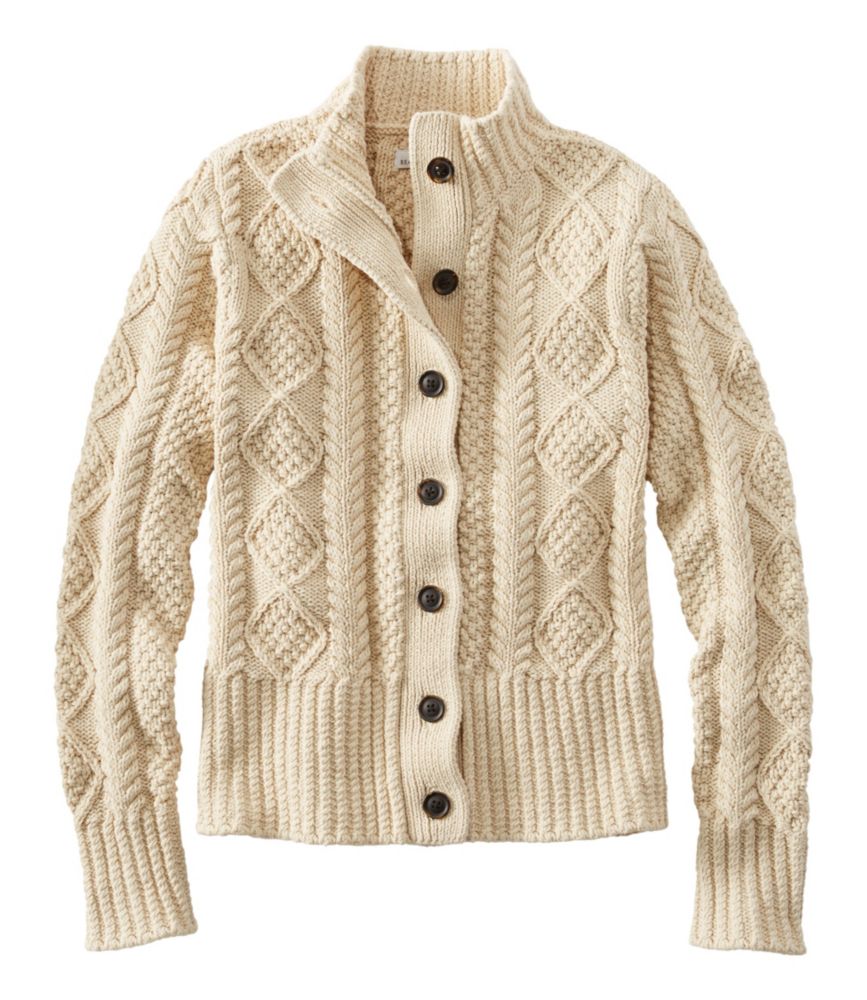
Women's Signature Cotton Fisherman Sweater, Short Cardigan
L.L.Bean Women's Signature Cotton Fisherman Sweater, Short Cardigan
A white cotton cardigan with authentic cable-knit patterns, fitted styling, ribbed trim, and button-front closure.
(751)
$140 $140
SALE
What customers like:
Great fit
Beautiful design
High quality
Warm and comfortable
Versatile for layering
$140 $140
SALE
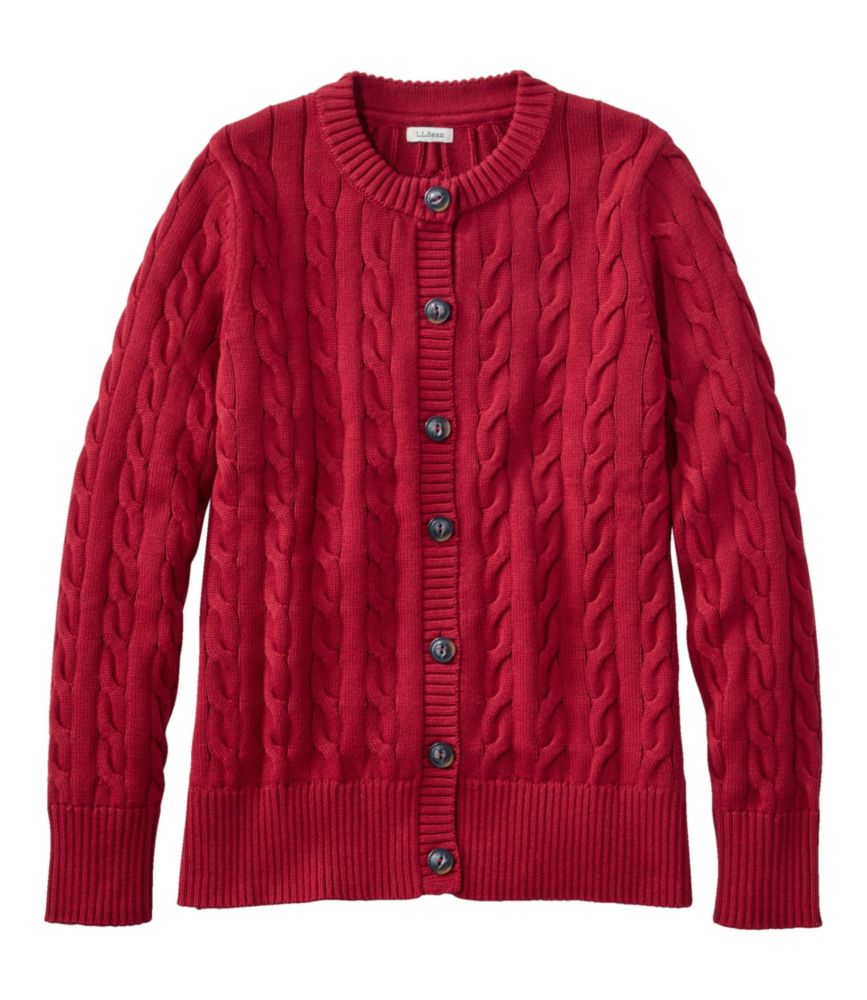
Women's The Original Double L® Sweater, Cable Cardigan
L.L.Bean Women's The Original Double L® Sweater, Cable Cardigan
A red cotton cable-knit cardigan with a button front, crewneck, ribbed trim, and softly shaped fit.
(0)
$89.95 $89.95
SALE
$89.95 $89.95
SALE
Women's Signature Cotton Fisherman Sweater, Short Cardigan Fair Isle
L.L.Bean Women's Signature Cotton Fisherman Sweater, Short Cardigan Fair Isle
A green cotton cardigan with button-front styling, fitted shorter length and open-stitch Fair Isle pattern.
(675)
$150 $125.99
SALE
$150 $125.99
SALE

Women's Cotton Cable-Knit Cardigans

Women's cotton cable-knit cardigans bring together a familiar sweater shape, the character of cotton and a pattern with a long-standing place in knitwear. Cable knitting crosses groups of stitches to form raised designs that resemble braids, twists or interlocking ropes. Those details give the surface its distinctive texture, making the knitting itself an important part of the look. A narrow cable creates a different visual rhythm from a broad braid, and the space between motifs matters, too. Closely arranged cables put more emphasis on pattern, while a cable framed by plainer stitches has a more defined outline. This balance of texture and simplicity is part of what gives cable-knit style its enduring appeal: there is plenty to notice without relying on a print or an elaborate decoration. The cardigan shape adds another element to that character, with a front opening that becomes part of the overall design. When comparing styles, details such as the neckline, front edge, cuffs and hem deserve as much attention as the cable pattern. A rounded neckline creates a different frame from a V-shaped opening, just as a clearly defined border changes the way the knitting looks at the edges. Buttons, where included, can blend into the design or provide a small contrasting detail. Cotton is also an important part of the description, though the full fiber composition belongs in the individual garment details. Checking those details gives a clearer picture than assuming that every cotton cardigan has the same composition or construction. The appeal of this category rests in that combination of recognizable elements and individual design choices. Even within a classic sweater style, the size of a cable, the shape of an opening and the proportions of a border can make a meaningful difference. Looking at the whole garment, rather than the cable motif alone, helps reveal whether its character feels understated, traditional or more expressive.

Fit gives a cotton cable-knit cardigan much of its personality. A closer outline keeps attention on the sweater's shape, while a roomier silhouette places more emphasis on its proportions and the way it sits alongside the rest of an outfit. Neither approach needs to be treated as the default; the useful distinction is how each relates to the clothes already in a wardrobe. Length is especially noticeable. A hem near the waist creates a different balance from one that extends farther over the hips, and that difference becomes clearer when considered with the rise and shape of a favorite pair of pants. Sleeve length, shoulder placement and the width through the body are equally worth comparing with a sweater whose fit already feels right. Where garment measurements are provided, they offer a more concrete reference than a size label alone. The front opening also changes the visual arrangement. Worn open, a cardigan leaves the color and shape beneath it visible; fastened, a button-front design gives the cable pattern a more continuous presence. A plain top can let that pattern stand out, while a collared shirt introduces another line at the neckline. With jeans, the contrast comes from the knitted surface against a simpler background. With a skirt or more tailored pants, proportion becomes the stronger consideration: where the hem falls, how the shapes meet and whether the overall outline matches the wearer's preferences. These are small distinctions, but they make a familiar sweater feel personal rather than prescribed. Color adds another choice without changing the underlying character of cable knitting. A close color pairing keeps the outfit visually connected, while a contrasting layer makes the cardigan's outline more apparent. For a broader look at the category, women's cardigans offer another point of comparison for neckline, silhouette and pattern. The most useful reference remains personal style, whether that means a clearly defined shape, generous proportions or details that quietly complement the rest of a wardrobe.

Care and construction deserve the same thoughtful attention as appearance, especially when choosing a cardigan intended to remain part of a wardrobe. Cotton content and a cable-knit pattern do not, by themselves, establish a washing method. The individual care label is the reference for washing, drying and any other recommended treatment, and it is worth reviewing before deciding whether a garment fits an established care routine. The same care instructions should remain the starting point after purchase rather than a general rule borrowed from another sweater. Knitwear can differ in its construction even when the broad description sounds similar. In photographs or in person, useful details to examine include the joins at the shoulders and sleeves, the finish along the front opening and the transitions between the patterned body and the edges. These details help explain how the design comes together; a cable pattern alone is not a measure of quality or a promise of durability. Clear construction information and specific care directions provide a sounder basis for making a considered choice. Personal preferences matter here as well. Someone who enjoys a restrained wardrobe may appreciate a cable pattern with a quieter presence, while someone drawn to texture may prefer the pattern to be the main visual feature. That distinction can also help when considering a cardigan as a gift. A familiar neckline, a preferred sweater length and a known size are more useful clues than guessing at a completely different style. Looking at a cardigan the recipient already enjoys can offer a practical reference for both proportions and details. There is no need to build the choice around a particular occasion. A cotton cable-knit cardigan can be appreciated for its recognizable design and the thought given to selecting it. Whether chosen for someone else or for a personal wardrobe, the strongest match brings together the desired cotton composition, a pleasing cable pattern, considered proportions and a care routine that makes sense for its owner.

FAQs