It's time to upgrade your browser

Your current browser is no longer supported on llbean.com. Please upgrade to one of the following for a smoother, safer shopping experience with us:

Winter Formal Wear

Explore winter formal wear with a focus on classic, timeless style for the season’s dressier occasions. Browse the selection with your event’s dress code in mind, and check individual item details and fit information to find pieces that work together.

Read More
Men's L.L.Bean Wool Peacoat
L.L.Bean Men's L.L.Bean Wool Peacoat
A black wool peacoat with double-breasted styling, wind resistance, water resistance, and Thinsulate insulation.
(559)
$330 $330
SALE
What customers like:
Fit
Quality
Warmth
Appearance
Versatility
$330 $330
SALE
Women's Classic Lambswool Peacoat
L.L.Bean Women's Classic Lambswool Peacoat
A tan women's peacoat in soft Italian lambswool with 40-gram Thinsulate insulation and button-front styling.
(1,129)
$280 $280
SALE
What customers like:
Fabric quality
Warmth
Classic style
Beautiful color
Versatility
$280 $280
SALE
Women's Classic Lambswool Polo Coat, Three-Quarter Length
L.L.Bean Women's Classic Lambswool Polo Coat, Three-Quarter Length
A tan lambswool polo coat with 40-gram Thinsulate insulation, smooth lining, and button-front closure.
(1,113)
$290 $290
SALE
What customers like:
High-quality wool material
Flattering fit
Exceptional warmth
Classic style
Beautiful color
$290 $290
SALE
Women's Classic Lambswool Duffel Coat
L.L.Bean Women's Classic Lambswool Duffel Coat
A tan wool duffel coat with low-bulk Thinsulate insulation, attached hood and toggle closures.
(1,051)
$300 $300
SALE
What customers like:
Attached hood for extra warmth
Durable and well-made
Stylish with cheerful colors
Soft and warm lambswool
Comfortable fit and size
$300 $300
SALE
Women's Bean's Boiled Wool Coat, Plaid
L.L.Bean Women's Bean's Boiled Wool Coat, Plaid
A plaid boiled-wool coat in a soft wool-nylon blend with a two-way zipper, stormflap, and high collar.
(0)
$300 $300
SALE
$300 $300
SALE
Women's Classic Lambswool Polo Coat, Three-Quarter, Pattern
L.L.Bean Women's Classic Lambswool Polo Coat, Three-Quarter, Pattern
A patterned women's lambswool polo coat with Thinsulate insulation, button front and wind- and water-resistant protection.
(67)
$290 $290
SALE
$290 $290
SALE
Women's Classic Lambswool Peacoat, Pattern
L.L.Bean Women's Classic Lambswool Peacoat, Pattern
A patterned peacoat in premium Italian lambswool with lightweight Thinsulate insulation and wind- and water-resistant protection.
(0)
$290 $290
SALE
$290 $290
SALE
Women's Bean's Boiled Wool Coat
L.L.Bean Women's Bean's Boiled Wool Coat
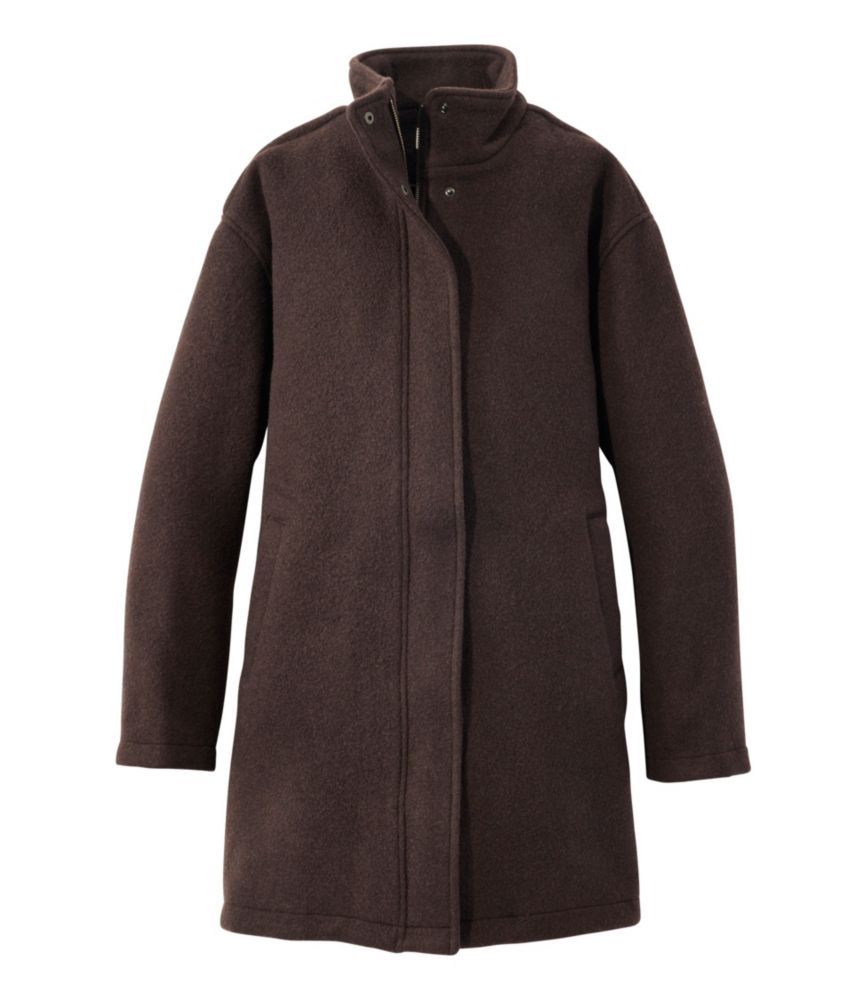
A warm brown wool-blend coat with a high collar, storm flap, and comfortable two-way zipper.
(0)
$300 $300
SALE
$300 $300
SALE

Winter Formal Wear

Winter formal wear brings a polished, occasion-focused approach to seasonal dressing, with personal style playing as much of a role as the invitation itself. The starting point is the level of formality: a clearly stated dress code carries more weight than assumptions about what winter attire should look like. Formal dressing can be understated or expressive, and a thoughtful outfit does not need an elaborate combination of details to feel complete. A consistent color palette, balanced proportions, and a clear sense of shape often make the strongest impression. Black and navy are familiar reference points in formal styling, while deep red, green, or other colors offer a different direction for someone who prefers a more distinctive palette. These are styling possibilities rather than rules, and winter does not require every outfit to follow the same dark color scheme. The relationship between colors matters more than the number of colors involved: closely related shades create one effect, while a deliberate contrast creates another. The same is true of proportion. An outfit with a more defined outline has a different character from one with a less structured shape, and either approach needs to be considered in relation to the event’s expectations. Details such as the neckline, sleeve length, and hemline help establish the overall impression without requiring every part of an outfit to compete for attention. At a formal gathering, the setting might include an entrance hall, a seated meal, and conversation around a table; the outfit remains part of that experience rather than its sole focus. The most personal choices often come from knowing which proportions and colors already feel familiar. Winter formal wear is not about adopting a completely different identity for an occasion. It is about giving an existing sense of style a more dressed-up expression, with enough attention to the details that the finished look feels considered rather than complicated.

Fit is an important part of that finished appearance, and the size on a label is only one piece of the picture. Individual measurements and fit descriptions provide more useful context than assuming every design follows the same proportions. Shoulder placement, sleeve length, the position of the waist, and the way a hem falls can each affect how an outfit looks. A proportion that works well on one person may sit differently on another, even when both usually select the same size. Personal preference matters, too: some people favor a closer outline, while others prefer more space between the clothing and the body. Neither preference should replace the stated measurements or the requirements of the occasion. A complete outfit also needs to be considered as a whole. An individual element may look different once it is combined with the rest of the ensemble, particularly when lengths or lines meet at an unexpected point. Seeing the full combination offers a clearer picture than judging each part separately. Standing in front of a mirror is only one view; sitting at a table, reaching forward, and turning provide additional information about fit. Those ordinary movements are worth considering before an event, without assuming that formal clothing has any particular flexibility or comfort feature. Material information belongs in the decision as well, but the word “winter” alone does not establish fabric composition, weight, or performance. Those details come from the individual product description. A photograph can show color and shape, while the accompanying information establishes facts that appearance alone cannot confirm. Care requirements deserve the same attention as measurements, especially when an outfit is intended to remain part of a wardrobe beyond a single occasion. Reading those details together creates a more complete understanding of a selection: how it is described, how its proportions relate to the wearer, and what care it requires. That approach keeps the emphasis on the actual clothing rather than assumptions attached to seasonal formalwear.

A winter formal wardrobe can also reflect a preference for continuity rather than a different look for every gathering. Familiar colors and proportions give later choices a useful reference point, while a change in the overall combination can create a distinct impression. This is where timeless style becomes a personal idea rather than a fixed set of rules. For one person, it may mean a restrained palette and minimal detail; for another, it may mean a recognizable color or a particular silhouette that feels consistently right. The event still sets the level of formality, but there is room for individual expression within that framework. The Winter Dresses page provides a related place to explore seasonal style, with individual descriptions remaining the source for material, fit, and care information. When considering formal clothing as a gift, knowing the recipient’s preferences and measurements matters more than imagining a look for them. Clothing for a particular occasion can be a personal choice, especially when the wearer has a clear idea of the shape, coverage, or color they prefer. A conversation about those preferences can be more useful than relying on a usual size alone. For clothing intended for repeated wear, care and durability should be evaluated through the information provided for each selection rather than inferred from its formal appearance. Cleaning, drying, pressing, and storage instructions may differ, so a familiar routine is not automatically appropriate for every piece. Allowing time for the specified care before an occasion also makes preparation less hurried. The same attention that goes into selecting an outfit can carry through to putting it away afterward, following its stated directions rather than a general rule for formal clothing. Together, these considerations keep winter formal dressing grounded in everyday decisions: an accurate understanding of the dress code, a fit that has been considered in context, a style that reflects the wearer, and care based on the actual product information. The result is an approach to formal attire that feels thoughtful, personal, and clear.
Read More

FAQs