It's time to upgrade your browser

Your current browser is no longer supported on llbean.com. Please upgrade to one of the following for a smoother, safer shopping experience with us:

Speedhook Boots

Explore speedhook boots with hook-style hardware as part of the lacing system. Compare the available styles, then check each pair’s sizing, fit guidance and product details to help narrow your choice.
Read More
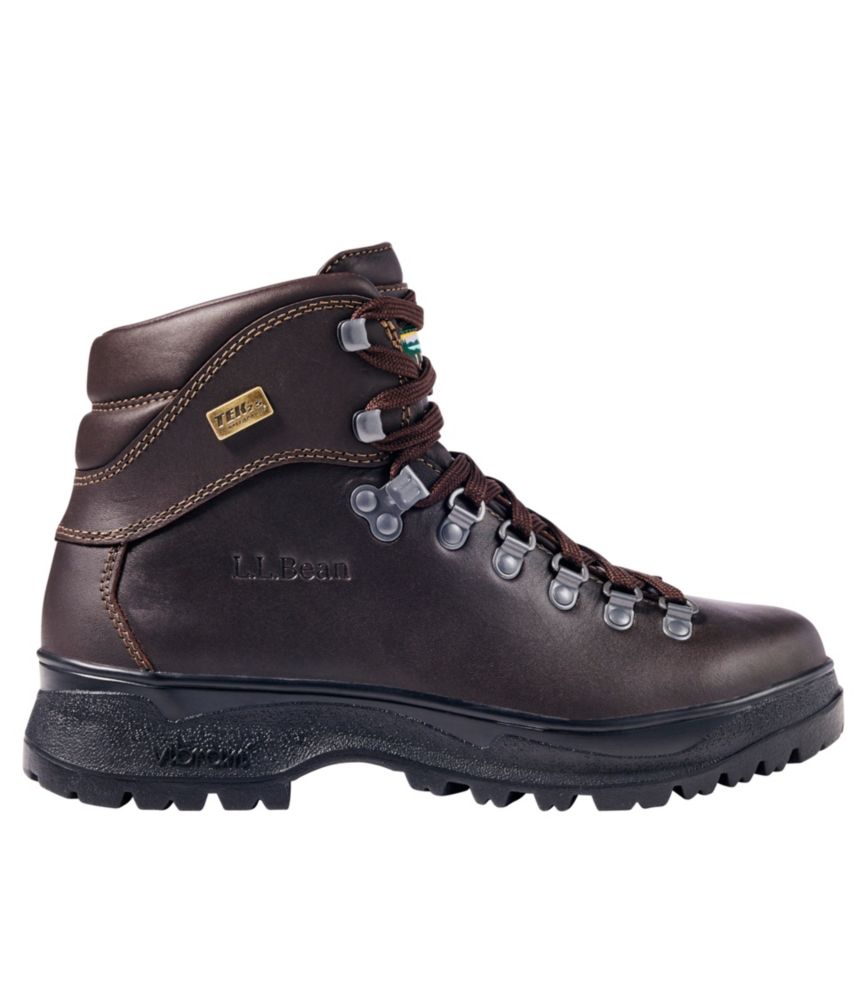
Men's Cresta II Waterproof Hiking Boots, Leather
L.L.Bean Men's Cresta II Waterproof Hiking Boots, Leather
A rugged brown leather hiking boot with waterproof protection, Vibram® sole, and cushioned EVA footbed.
(0)
$280 $280
SALE
$280 $280
SALE
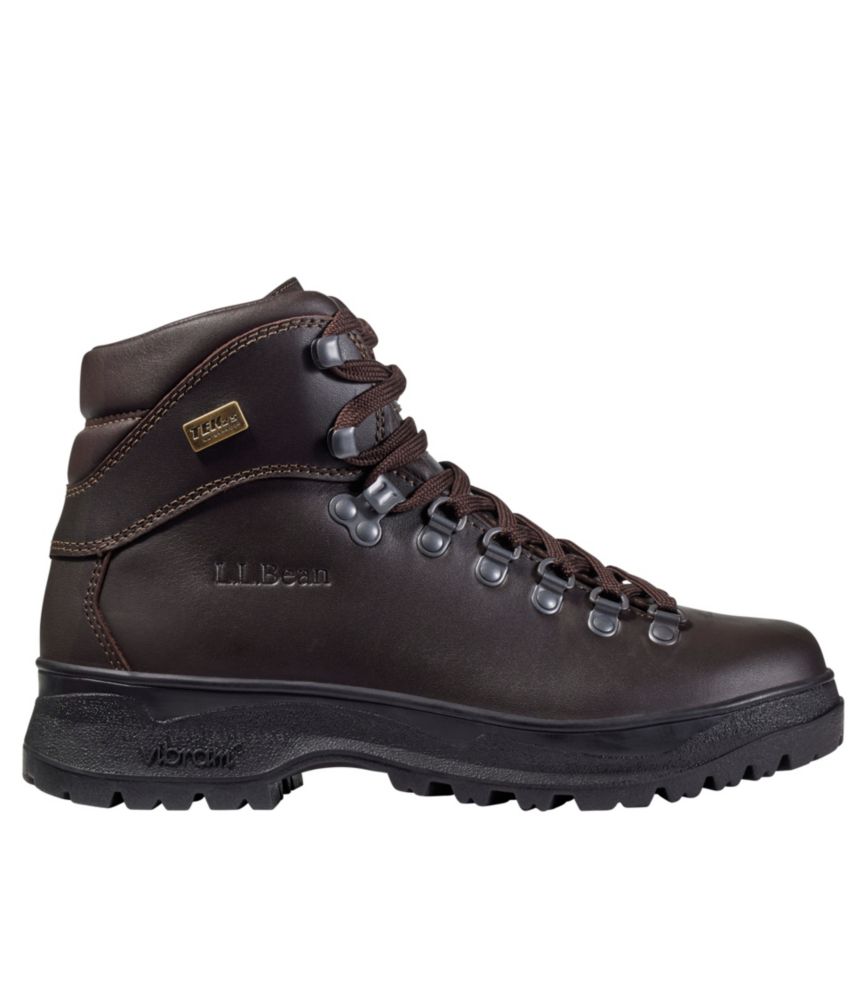
Women's Cresta II Waterproof Hiking Boots, Leather
L.L.Bean Women's Cresta II Waterproof Hiking Boots, Leather
A brown leather hiking boot with waterproof membrane, cushioned EVA footbed, and Vibram rubber sole for traction.
(0)
$280 $280
SALE
$280 $280
SALE
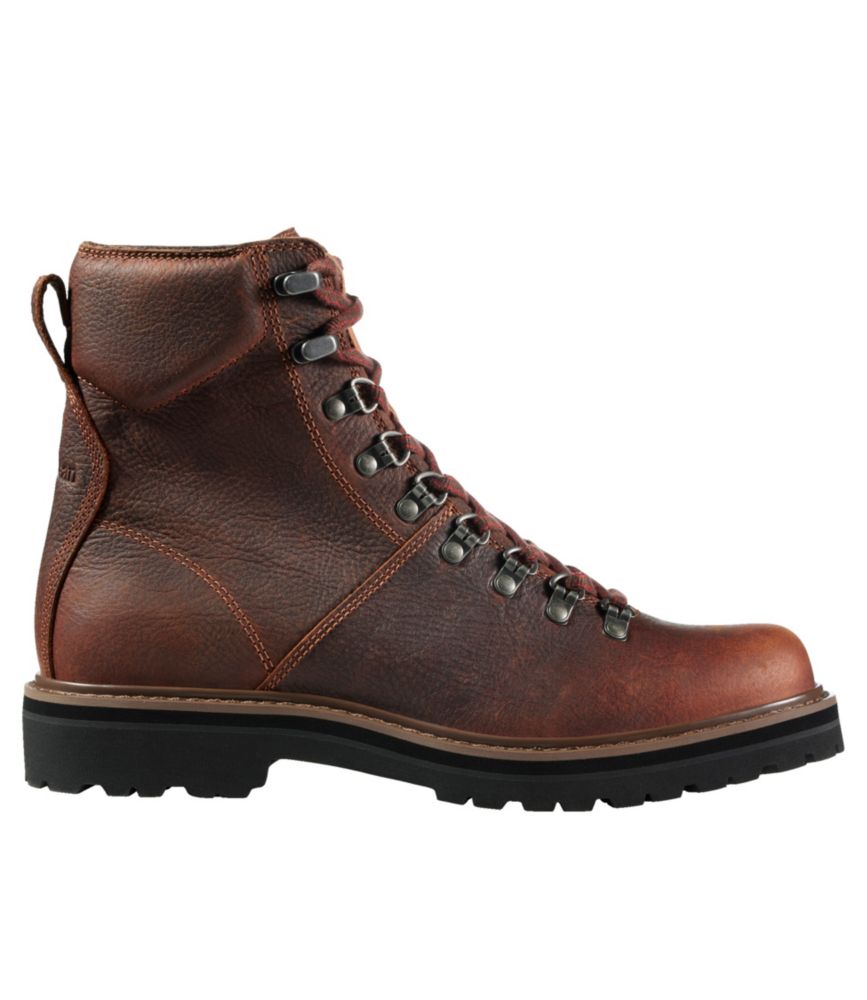
Men's Portland Boots, Lace-Up
L.L.Bean Men's Portland Boots, Lace-Up
A heritage-inspired dark russet leather boot with a Vibram® rubber outsole for durability and traction.
(0)
$200 $200
SALE
$200 $200
SALE
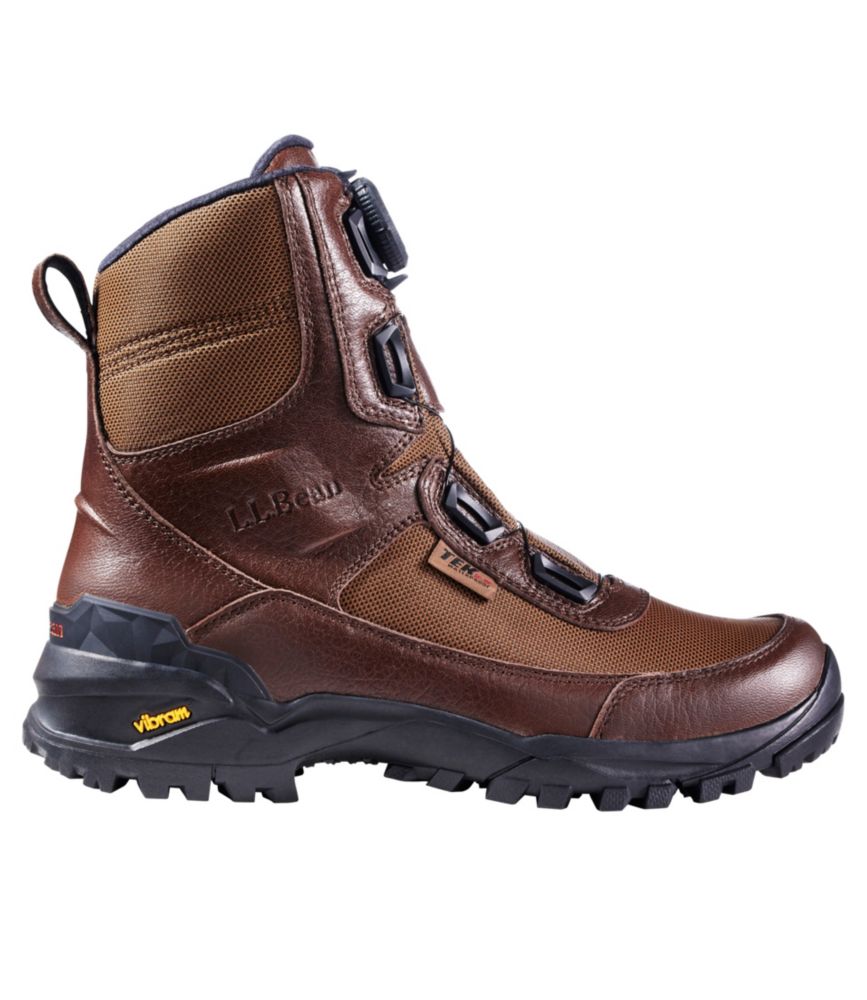
Men's BOA® Technical Upland Boot
L.L.Bean Men's BOA® Technical Upland Boot
A lightweight, waterproof upland boot in deepest brown leather with BOA lace system and PrimaLoft® insulation.
(0)
$280 $280
SALE
$280 $280
SALE
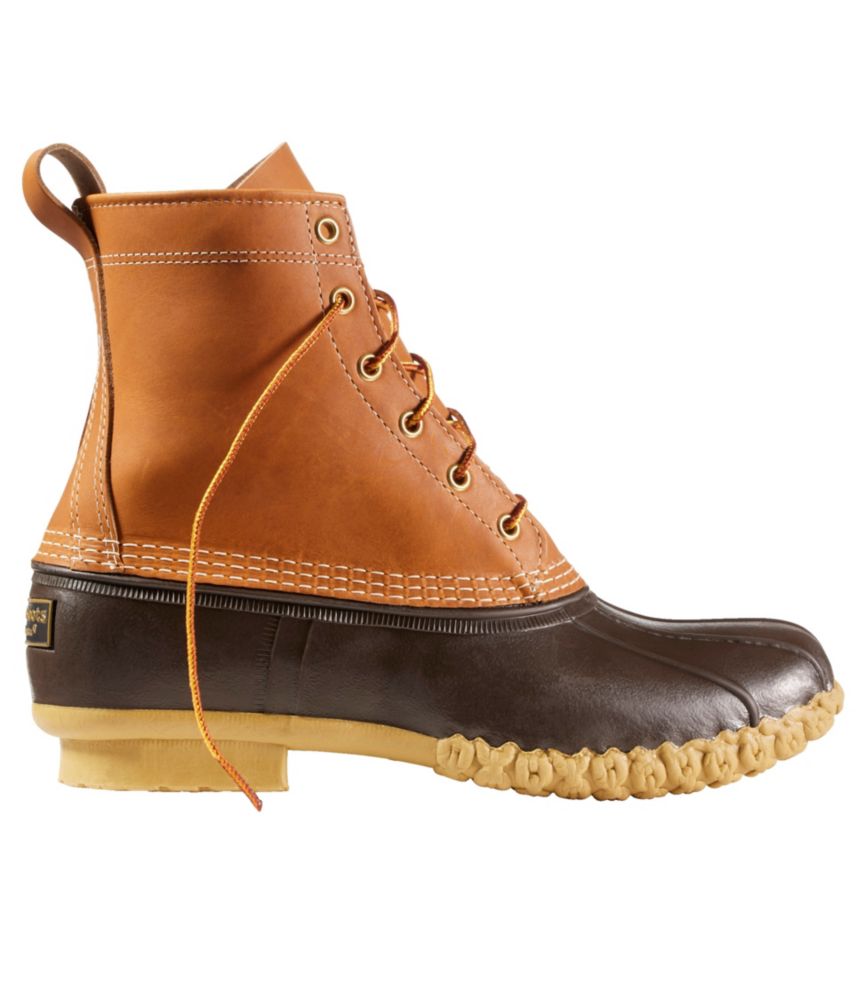
Men's Bean Boots, 8" Insulated
L.L.Bean Men's Bean Boots, 8" Insulated
A weather-ready, insulated boot with a leather upper and rubber bottom, perfect for wet conditions.
(0)
$180 $180
SALE
$180 $180
SALE
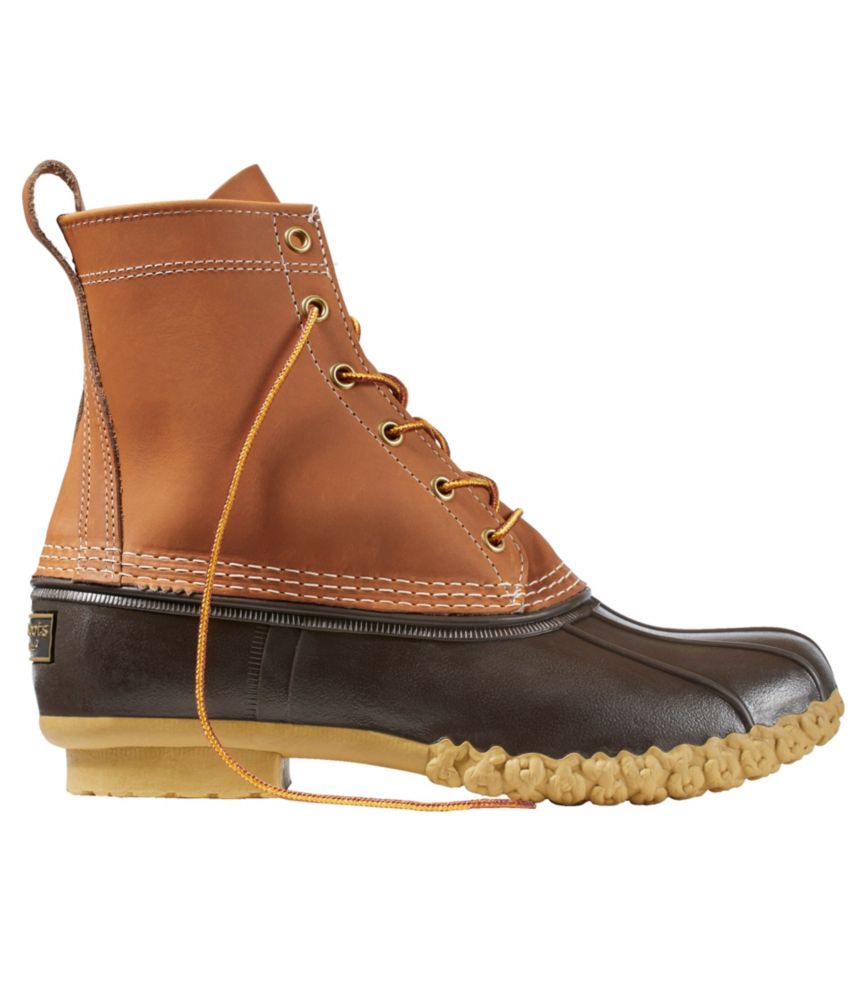
Men's Bean Boots, 8"
L.L.Bean Men's Bean Boots, 8"
A Maine-made, weather-ready boot with a supple leather upper and durable rubber outsole, perfect for wet conditions.
(0)
$150 $150
SALE
$150 $150
SALE

Speedhook Boots

Speedhook boots take their name from the open hooks used to hold the upper sections of the laces. Unlike a closed eyelet, which requires a lace end to pass through an opening, a speed hook receives the lace from the side: the lace crosses the boot’s tongue and wraps around the hook before continuing upward. This distinction identifies the lacing arrangement, not the boot’s material, weight, or intended purpose. A familiar configuration pairs closed eyelets over the lower foot with hooks farther up the shaft, creating a visible transition between the two types of hardware. When comparing boots with speed hooks, the placement and number of hooks are useful details to notice alongside the overall height and shape. A photograph showing the front of a boot can reveal how the laces travel, while a side view provides another perspective on the hardware and profile. The hooks are also part of the boot’s appearance, adding a small but distinctive detail to the lines formed by the laces, tongue, and upper. Some shoppers are drawn to that traditional lace-up character; others already know the arrangement from a favorite pair and want something with a similar design. Either way, speed hooks describe one part of the boot rather than everything it can do. Two pairs with similar hooks may differ considerably in their construction, proportions, and fit, so the shared feature is a starting point for comparison rather than a promise of identical characteristics. The appeal is in finding the combination that feels right for the person wearing it: a preferred silhouette, a familiar lacing layout, and details that suit an individual sense of style. For someone who appreciates the look of boots, even the spacing of the eyelets and the contrast between the laces and upper can help distinguish one design from another.

Fit deserves just as much attention as the hardware on speedhook boots. The hooks hold the laces, but they do not establish the shape of the toe box, the width through the forefoot, or the amount of room over the instep. Those differences matter when comparing a new pair with footwear that already fits well. A shopper with a higher instep may pay particular attention to pressure beneath the tongue, while someone whose heel tends to move inside boots may look closely at the stated fit and sizing information. Neither concern can be resolved by the presence of speed hooks alone. Trying boots with the socks expected to accompany them gives a more relevant impression than trying them with a substantially different thickness. With the heel settled into place and the tongue centered, the laces should follow the intended route without being pulled excessively tight to compensate for an unsuitable size. Standing and taking a few steps can help reveal toe crowding, uneven pressure, or movement that was less noticeable while seated. Fit is a combination of length, width, volume, and personal preference, not simply the number printed inside the boot. Overall proportions deserve a look, too: shaft height changes where the top edge sits on the leg, and the shape of that opening can affect how it feels against the wearer. For shoppers comparing another characteristic alongside the lacing design, Lightweight Boots offers a related category to explore; speed hooks alone do not indicate how much a boot weighs. Keeping those distinctions separate makes comparison more meaningful. The same approach applies to intended use. The stated purpose in an individual description is a better reference than the appearance of the hooks, since a familiar lace-up design does not establish suitability for a particular activity. Choosing by both fit and the full description keeps a small hardware detail in its proper place within the larger decision.

Materials, construction, and care provide further context when choosing speedhook boots, but none can be assumed from the category name. The individual description should identify what the upper and other components are made from and explain any relevant care requirements. That information matters beyond appearance: a cleaning method appropriate for one material may not be appropriate for another, and a preferred finish may call for its own care routine. A shopper who likes keeping footwear neatly maintained may consider those instructions as closely as the boot’s shape or lacing pattern. Durability likewise depends on more than the presence of hooks. Seams, soles, laces, and the way the hardware is attached all belong in the broader picture, without any single visible feature establishing how long a pair will last. Around the lacing area, routine attention can include checking for frayed sections of lace, a hook that has changed shape, or hardware that no longer sits as it originally did. A damaged hook is a reason to seek an assessment from a qualified footwear repair professional rather than assume that bending it back or adding replacement hardware will be appropriate. Repair options depend on the boot’s construction and condition. For regular care, following the supplied directions and keeping the lacing area free of accumulated debris is a straightforward place to begin. Speedhook boots can also be a thoughtful gift for someone who has expressed a preference for this style, especially when the giver knows the recipient’s usual size, preferred fit, and taste in boot height. An existing favorite pair can offer helpful clues about proportions and appearance, though sizing should still be checked for the pair being considered. The most personal choice is not necessarily the one with the most noticeable hardware; it is the one that reflects how the recipient likes footwear to look and feel. From the first comparison to the details of ongoing care, the hooks are one recognizable element in a choice shaped by the whole boot.
Read More

FAQs