It's time to upgrade your browser

Your current browser is no longer supported on llbean.com. Please upgrade to one of the following for a smoother, safer shopping experience with us:

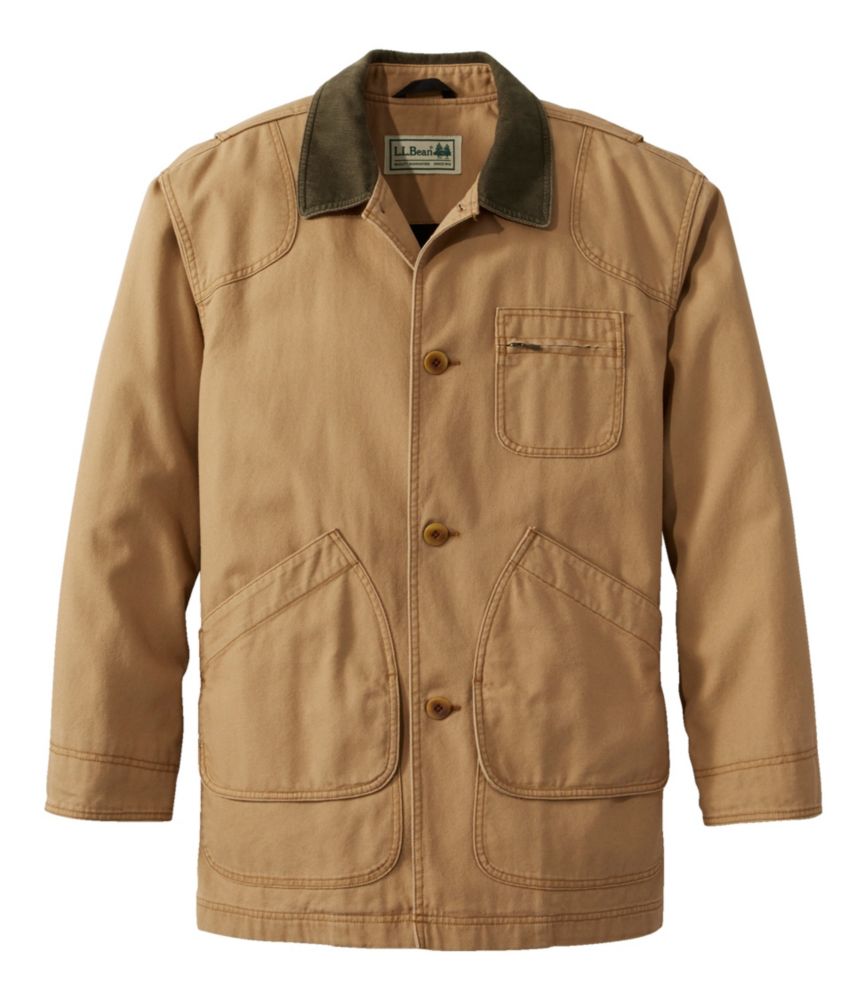
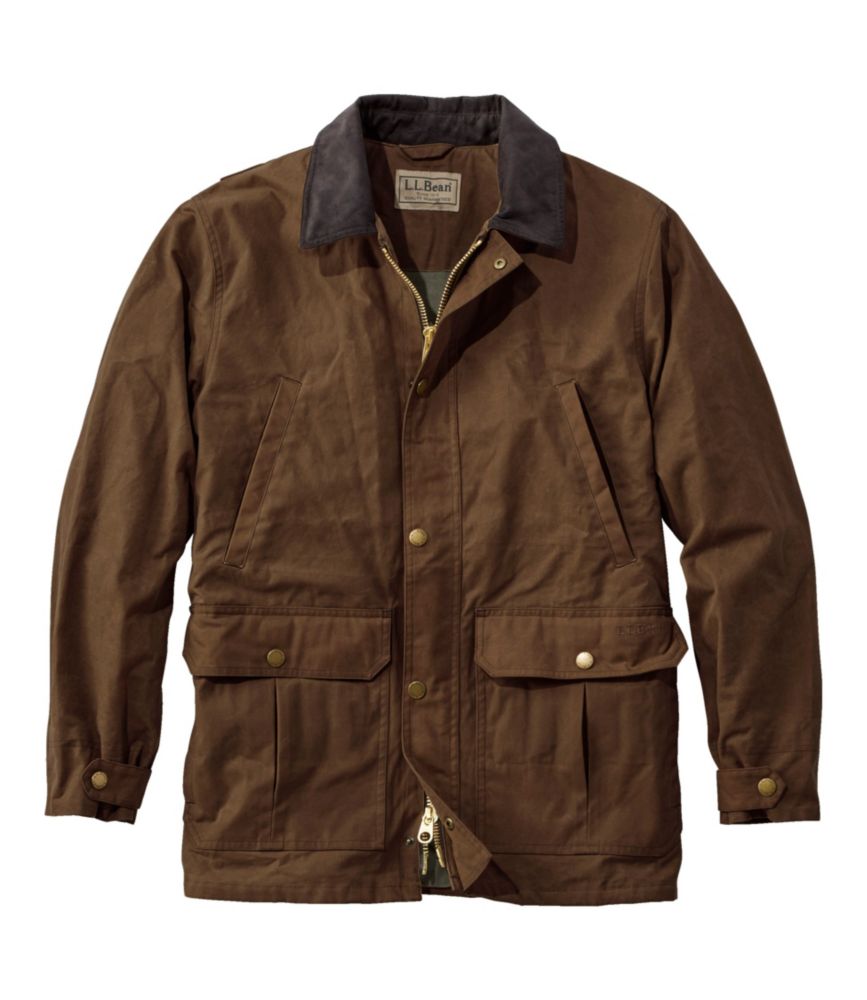
Men's Cotton Parkas

Explore men's cotton parkas with timeless style and the quality you expect from L.L.Bean. Compare fit, length and cotton content in individual product details to find the right parka for your wardrobe.
Read More
Men's Rugged Ridge Parka
L.L.Bean Men's Rugged Ridge Parka
A warm, weatherproof, and breathable parka with PrimaLoft insulation, featuring multiple pockets and an adjustable hood.
(2,085)
$220 $220
SALE
What customers like:
Perfect fit
Lightweight
Good quality fabric
Warmth
Lots of pockets
$220 $220
SALE
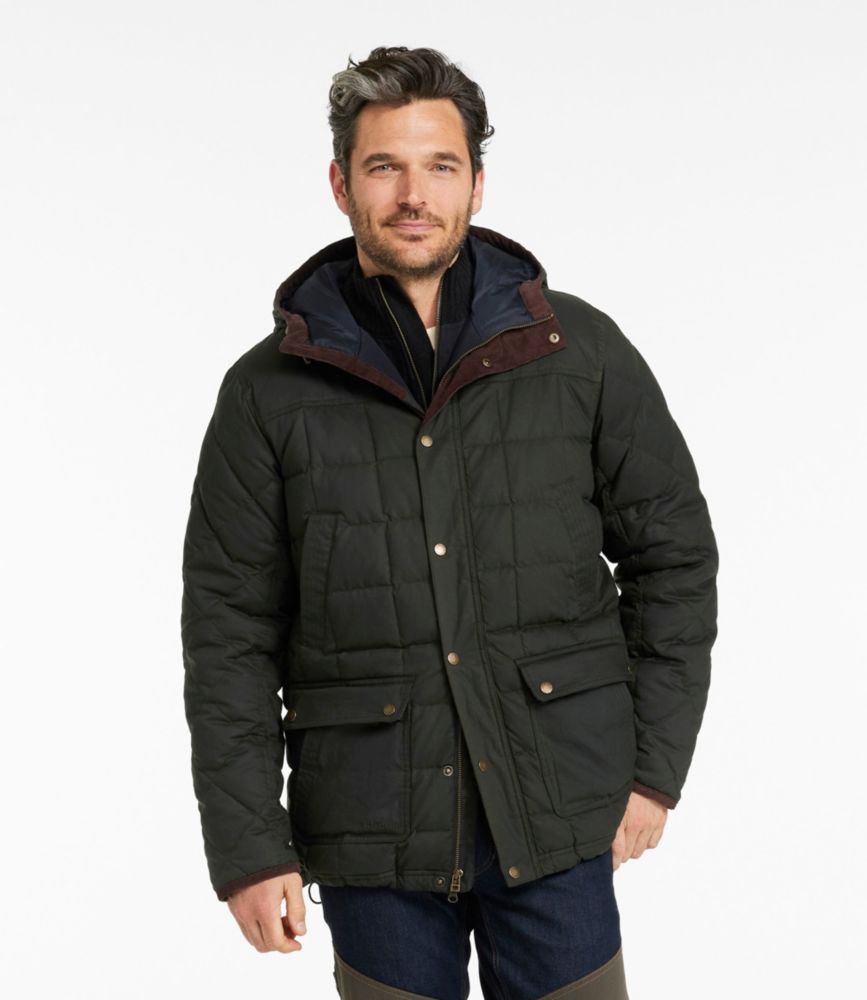
Men's Mountain Classic Down Parka
L.L.Bean Men's Mountain Classic Down Parka
A black, slightly fitted parka with 650-fill DownTek insulation, recycled polyester shell, and adjustable hood.
(1,461)
$200 $200
SALE
What customers like:
High quality
Lightweight
Warmth
Functional hood
Comfortable fit
$200 $200
SALE
Men's Maine Warden's 3-in-1 Parka with GORE-TEX
L.L.Bean Men's Maine Warden's 3-in-1 Parka with GORE-TEX
A rugged black parka featuring a waterproof GORE-TEX nylon shell and a zip-in down-insulated liner.
(0)
$450 $450
SALE
$450 $450
SALE
Men's Mountain Classic Down Parka, Colorblock
L.L.Bean Men's Mountain Classic Down Parka, Colorblock
A weather-resistant, thigh-length parka with 650-fill DownTek™ insulation and adjustable hood for ultimate warmth.
(0)
$200 $200
SALE
$200 $200
SALE
Men's L.L.Bean Upcountry Waxed Cotton Down Sweater
L.L.Bean Men's L.L.Bean Upcountry Waxed Cotton Down Sweater
A rugged dark sable jacket with water-resistant waxed cotton shell and warm 650-fill DownTek insulation.
(0)
$240 $240
SALE
$240 $240
SALE
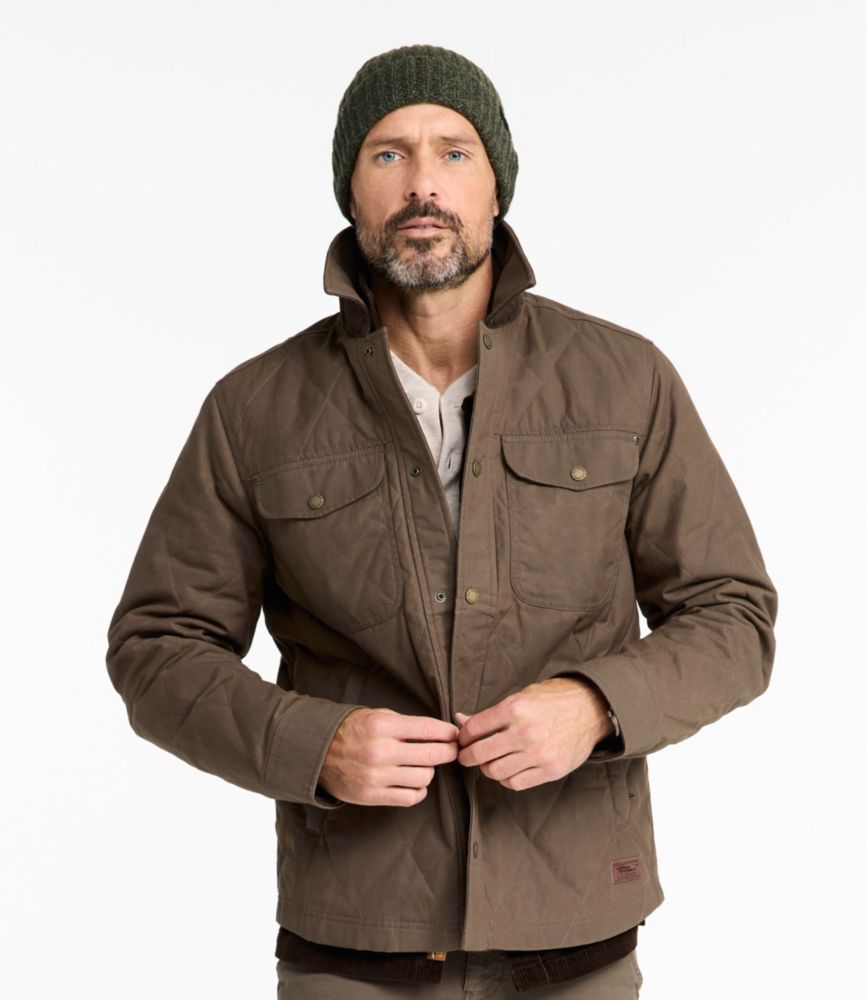
Men's Insulated Waxed Cotton Field Jacket
L.L.Bean Men's Insulated Waxed Cotton Field Jacket
A brown insulated cotton field jacket offering durable protection for outdoor adventures.
(0)
$200 $200
SALE
$200 $200
SALE

Men's Cotton Parkas

Men’s cotton parkas bring a familiar fabric into an outerwear style with a distinct place in a casual wardrobe. The appeal starts with the combination of cotton and a parka silhouette: a look that can feel understated, outdoorsy, and easy to make your own. Within that general category, the details matter. Length, proportions, color, and the arrangement of closures and pockets all help establish a coat’s character, from a simple, uncluttered appearance to a more traditional utility-inspired look. Cotton is an important part of the description, but it is not a complete description of the garment. The listed fabric composition helps distinguish an all-cotton shell from one that includes cotton as part of a blend, while separate information about the rest of the construction provides a fuller picture. A category name alone does not establish the cotton percentage or describe every part of a parka. That distinction is useful when the fabric itself is a central reason for shopping. Close-up photographs can also help reveal the surface appearance, stitching, and finishing details that are harder to see in a full-length image. For someone drawn to straightforward clothing, a restrained design may have the most appeal; someone who enjoys more visible detailing may prefer a different expression of the same general style. Neither approach needs to feel overly dressed up or overly technical. The strongest choice is often the one that looks at home alongside the clothes already in the closet. Picture the overall proportions next to a favorite pair of jeans, a familiar shirt, or a sweater with a shape you like. A parka should feel like a considered addition rather than a reason to rethink an entire wardrobe. For a wider look at the category, the Men's Parkas page provides another place to explore the style beyond a cotton-focused selection.

Fit gives a cotton parka much of its personality, and the size on the label tells only part of that story. The relationship between the shoulders, chest, sleeves, and hem determines whether the overall shape matches the look someone has in mind. A closer outline and a roomier outline can create quite different impressions, even when two garments carry the same general size designation. Published measurements and fit descriptions are more useful than assuming every parka follows the same proportions. Someone who prefers a neatly defined shape may pay particular attention to excess fabric through the body, while someone who likes a relaxed silhouette may be more interested in the space through the chest and upper arms. The clothing worn underneath belongs in that comparison, too. Taking measurements over the kind of shirt or sweater normally worn with outerwear gives the numbers useful context without relying on a guess. Garment measurements and body measurements are not interchangeable, so it helps to check which kind a size chart provides. Length deserves its own consideration: where the hem falls on the person wearing it can look different from where it falls on a model. Sleeve length is similarly personal, especially for someone who often finds standard sleeves too short or too long. If a familiar coat fits well, its measurements can serve as a practical reference when the measurement methods match. Photographs showing the front, side, and back can make the proportions easier to understand, and views with the coat open and closed offer different perspectives on its shape. Details around the neckline, cuffs, and hem are also worth a closer look wherever they are shown. These are the parts a wearer notices repeatedly, not just at the first fitting. Taken together, such considerations make the choice more personal: less about choosing a size in isolation and more about finding the balance of shape, dimensions, and styling that feels right.

Care information and construction details round out the picture when comparing men’s cotton parkas. Cotton content alone does not determine how a finished garment should be cleaned, and a familiar fabric name is not a substitute for the care label. The instructions for the complete parka account for its construction, including any components with different care requirements. Before choosing, it is worth considering whether that routine fits comfortably into the way clothing is already cared for at home. A preference for a particular cleaning method should be checked against the stated directions rather than assumed from the category. The same measured approach applies to durability: cotton by itself does not establish how long a coat will last. Clear construction information, finishing details, and any documented product-specific information provide a better basis for comparison than broad promises. Photographs may show how seams are finished or how closures are attached, while written descriptions can explain details that images leave unclear. Following the recommended cleaning and storage directions keeps care decisions grounded in the garment’s actual requirements. Beyond those practical details, a satisfying outerwear choice has a personal side. A color that works with several familiar outfits, a length that suits the wearer’s proportions, and details that feel natural to their style can all make the decision easier. Men’s cotton parkas may also be a thoughtful gift for someone who has expressed an interest in the fabric or silhouette. The best starting points are that person’s measurements, preferred fit, and established tastes, rather than an assumption about what a coat ought to look like on them. A partner who favors simple lines may appreciate a different design from a father, brother, or friend who enjoys more pronounced detailing. Checking those preferences preserves the personal thought behind the gift while giving fit and care the attention they deserve. Whether chosen for yourself or someone else, a cotton parka is best considered as a whole garment, with its material description, proportions, construction, and upkeep weighed together. That complete view makes room for both the practical details and the quiet pleasure of finding a style that feels like your own.
Read More

FAQs