It's time to upgrade your browser

Your current browser is no longer supported on llbean.com. Please upgrade to one of the following for a smoother, safer shopping experience with us:

Leather Totes

Explore leather totes with timeless style, and compare designs to find the right bag for you. Check each tote’s dimensions, handle details and storage options on its product page to help choose the size and layout you prefer.
Read More
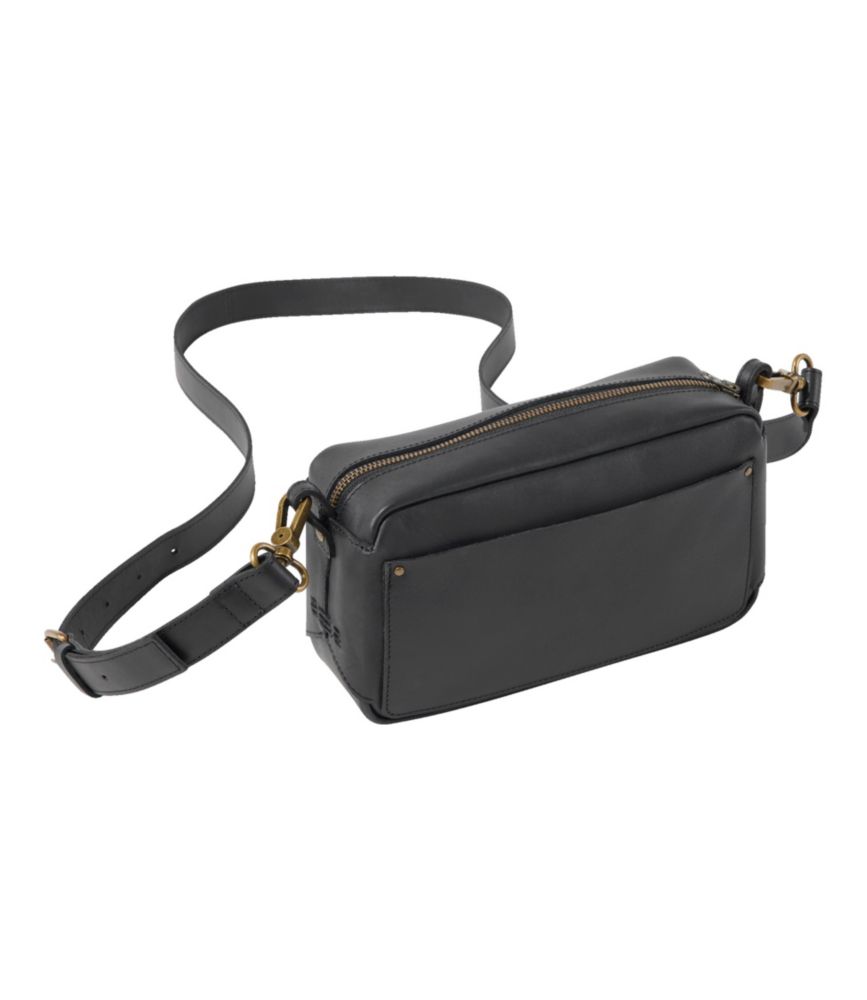
207 Leather Crossbody
L.L.Bean 207 Leather Crossbody
A black full-grain leather crossbody with zip-top security, organized pockets and an adjustable, removable strap.
(0)
$124 $104.99
SALE
$124 $104.99
SALE
207 Leather Tote
L.L.Bean 207 Leather Tote
A black full-grain leather tote with versatile carrying options, zip closure, and interior and exterior pockets.
(0)
$199 $168.99
SALE
$199 $168.99
SALE
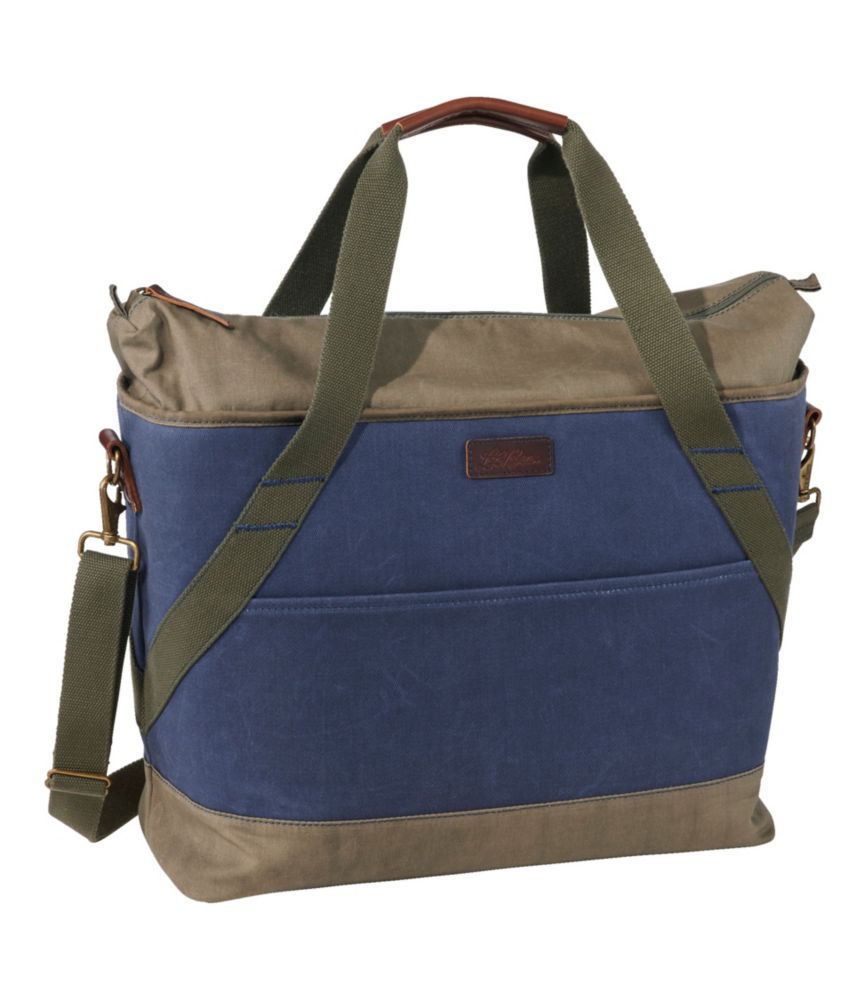
Insulated Waxed-Canvas Tote, Large
L.L.Bean Insulated Waxed-Canvas Tote, Large
A blue insulated tote in rugged waxed canvas with leather trim and a leakproof, food-grade liner.
(184)
$120 $120
SALE
What customers like:
Durable handles
Comfortable shoulder strap
Stylish design
Versatile use
Spacious size
$120 $120
SALE
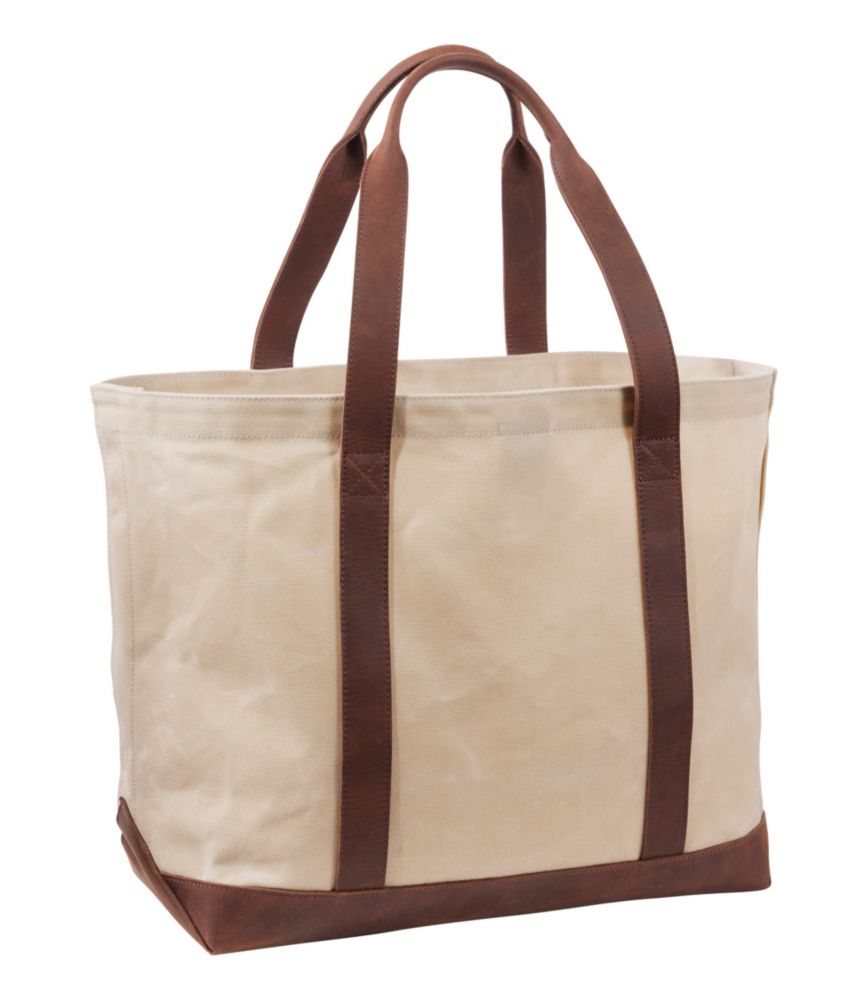
Leather-Trim Waxed Canvas Tote
L.L.Bean Leather-Trim Waxed Canvas Tote
A brown waxed canvas tote with full-grain leather trim, weather-resistant construction, and an interior drop pocket.
(0)
$130 $130
SALE
$130 $130
SALE
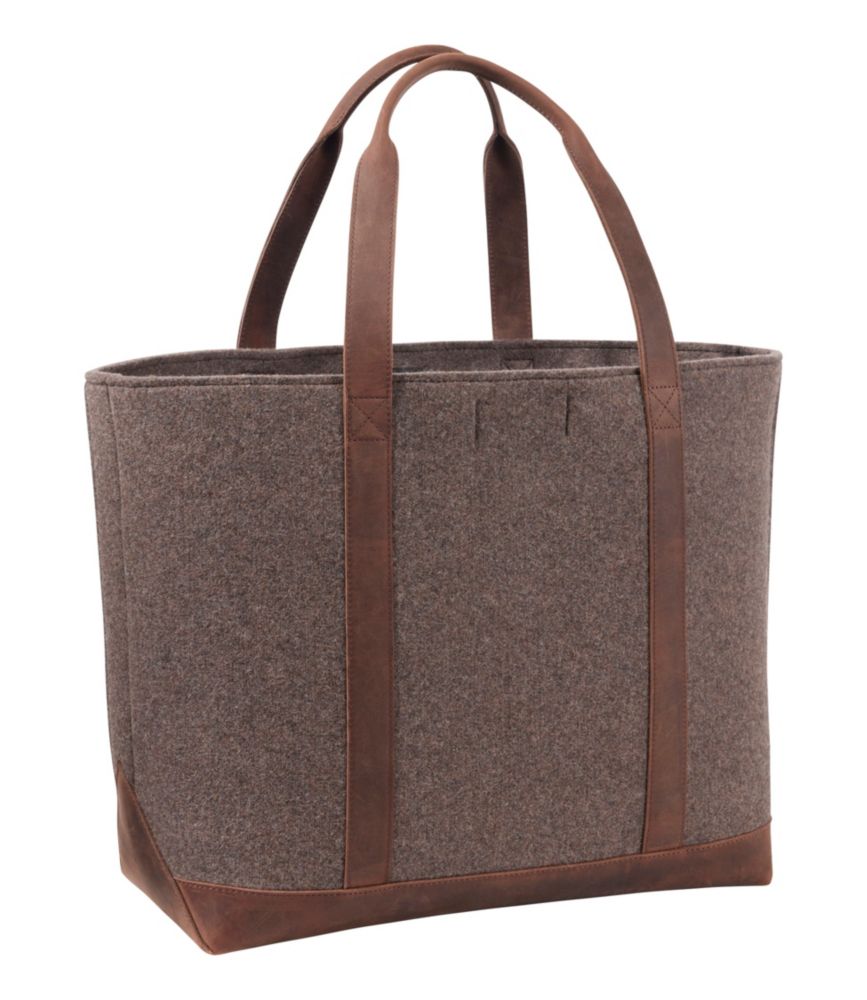
Leather-Trim Wool Tote
L.L.Bean Leather-Trim Wool Tote
A brown felted wool tote with full-grain leather handles, trim, snap closure, and interior pocket.
(0)
$150 $150
SALE
$150 $150
SALE
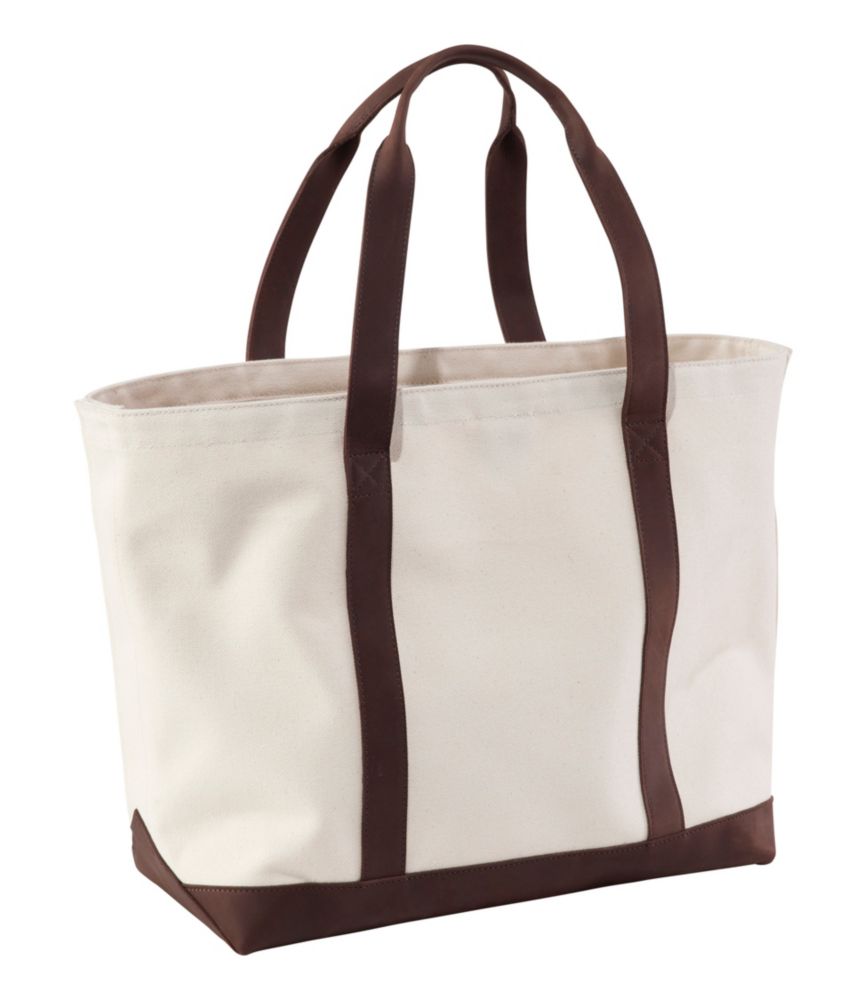
Leather-Trim Canvas Tote
L.L.Bean Leather-Trim Canvas Tote
A multicolor tote in rugged recycled-cotton canvas with full-grain leather trim, handles and interior pocket.
(0)
$130 $130
SALE
$130 $130
SALE

Leather Totes

Leather totes bring a familiar bag shape together with a classic material, leaving plenty of room for personal style. The appeal starts with a straightforward outline: a body framed by paired handles, with proportions that can look understated, relaxed, or more defined. Within that basic shape, small visual differences matter. A taller profile has a different presence from a wider one, while a curved top creates a different impression from a straight edge. Looking at the silhouette first makes it easier to recognize the styles that feel like a natural extension of an existing wardrobe. Someone drawn to simple clothing may prefer little visible ornamentation; someone who enjoys a distinctive accessory may focus on an unusual outline or a prominent handle shape. Neither approach requires following a trend. A thoughtful choice is about the details that remain appealing after the first glance. Consider the relationship between the handles and the body, the placement of visible stitching, and whether the exterior looks clean or more detailed. Where hardware is shown, its shape and finish contribute to the overall design. A small buckle or ring can become a noticeable part of an otherwise simple silhouette. Color deserves the same attention. Rather than considering a shade in isolation, picture it beside the clothes and accessories worn most often. A close match creates a coordinated look, while a deliberate contrast gives the bag more visual emphasis. Exact matching is not essential; the aim is a combination that feels natural rather than forced. Even the balance between a bag’s upper and lower edges can influence its character, making it appear more angular or more rounded. Leather totes offer a useful starting point for exploring those preferences: a recognizable form whose individual details can make a simple design feel distinctly personal.

Proportion is easier to understand when photographs and measurements are considered together. A tote photographed on its own may look quite different when shown beside a person, and a close-up cannot communicate overall scale. Listed height, width, and depth provide a clearer frame of reference than a general size label alone. Comparing those measurements with a bag already owned can make the numbers more meaningful, especially when deciding between a narrow, upright shape and a broader outline. It also helps to check where a width measurement is taken, since the top and base need not have the same dimensions. Exterior measurements and interior dimensions are different details, so one should not be treated as a substitute for the other. Handles deserve a closer look as well. Handle drop generally describes the distance between the top of the bag and the underside of the handle at its highest point; it is a separate measurement from the handle’s full length. That distinction matters when judging where the top edge might sit against the body. Photographs showing the tote held or worn add context that a front-facing image cannot provide. Interior views offer another perspective, revealing the layout rather than just the exterior styling. When comparing designs, note whether the description identifies an open interior, separate sections, pockets, or a closure, rather than inferring those details from the silhouette. An exterior seam, for example, does not necessarily indicate a pocket. The placement and appearance of a closure can also change the overall look, particularly along the top edge. These are individual design choices, not details that need to be identical across every tote. A preference for a visually simple exterior may go along with a preference for a more divided interior, or the reverse. Considering the outside and inside separately gives each part of the design the attention it deserves, without allowing one attractive photograph to stand in for the complete description.

Leather is the starting point for this collection, but individual descriptions provide the more specific information needed to compare materials and construction. For a more focused look at a related category, explore full grain leather tote bags. Material terminology is one part of the comparison; dimensions, handle details, closures, and the overall design remain important parts of the choice. Care information belongs in that conversation, too. The directions supplied with a tote should be the starting point before choosing a cleaner, conditioner, or other treatment. A method recommended for another leather possession is not automatically the right method for a different bag. Keeping the original care information makes it easier to refer back to the appropriate directions later, rather than relying on a general rule. For anyone considering long-term ownership, clear construction and care details offer more useful information than appearance alone. Photographs can show stitching placement and how the handles join the body, while the written description can clarify details that are difficult to judge on screen. Those same considerations are helpful when choosing a leather tote as a gift. Personal taste is often a better starting point than a broad assumption about what someone ought to like. Notice whether the recipient favors rounded or angular shapes, subtle or prominent hardware, and closely coordinated or contrasting accessories. The proportions of a favorite bag can offer a reference without requiring an exact replacement. A birthday, graduation, or personal milestone can be an occasion for a thoughtful choice grounded in those familiar preferences. There is no single silhouette that suits every person, and the largest or most detailed design is not necessarily the most appealing. The strongest choice brings together a pleasing shape, an appropriate scale, and details that feel right to the person receiving it. That balance gives leather totes their enduring style: a familiar form, considered closely enough to reflect an individual point of view.
Read More

FAQs