It's time to upgrade your browser

Your current browser is no longer supported on llbean.com. Please upgrade to one of the following for a smoother, safer shopping experience with us:

Field Jackets For Men

Explore field jackets for men with the classic, utility-inspired look that defines this outerwear staple. Compare individual product details, sizing and fit information to find a jacket that suits your style and wardrobe.
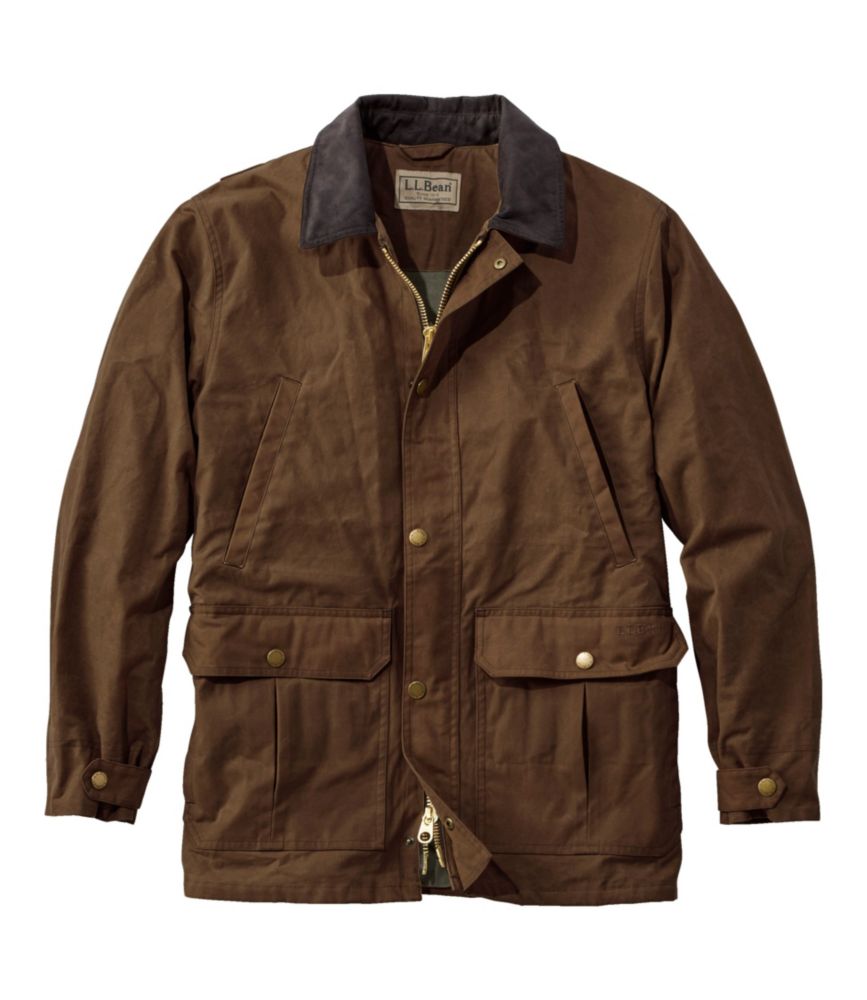
Men's Double L Waxed-Cotton Upland Coat
L.L.Bean Men's Double L Waxed-Cotton Upland Coat
A brown waxed-cotton upland hunting coat with water resistance, articulated mobility, cargo pockets and game pouch.
(145)
$280 $280
SALE
What customers like:
Great fit
Excellent waterproofing
Stylish design
Warm and comfortable
Superb details
$280 $280
SALE
Men's Original Field Coat, Cotton-Lined
L.L.Bean Men's Original Field Coat, Cotton-Lined
A tan cotton-canvas field jacket with corduroy trim, wind and water resistance, and five practical pockets.
(1,331)
$180 $180
SALE
$180 $180
SALE
Men's Original Field Coat with Wool/Nylon Liner
L.L.Bean Men's Original Field Coat with Wool/Nylon Liner
A rugged green field coat in cotton canvas with a button-out wool-nylon liner and weather resistance.
(696)
$220 $220
SALE
What customers like:
Warmth
Durability
Classic style
Versatility
Comfortable fit
$220 $220
SALE
Men's 1924 Field Coat
L.L.Bean Men's 1924 Field Coat
A black waxed-cotton field coat with warm chamois lining, windproof protection and four utility pockets.
(0)
$250 $250
SALE
$250 $250
SALE
Men's Insulated Waxed Cotton Field Jacket
L.L.Bean Men's Insulated Waxed Cotton Field Jacket
A brown insulated field jacket in water-resistant waxed cotton with 60-gram PrimaLoft insulation and windproof design.
(0)
$200 $200
SALE
$200 $200
SALE
Men's Upland Field Jacket
L.L.Bean Men's Upland Field Jacket
A brown nylon field jacket with a dual-entry game bag, multiple utility pockets and adjustable cuffs.
(0)
$220 $220
SALE
$220 $220
SALE

Field Jackets For Men

Men’s field jackets are a classic jacket style with military roots and an enduring place in men’s wardrobes. Their appeal comes from a distinctive balance: an outdoors-inspired character, straightforward lines and details that feel purposeful rather than decorative. The style has evolved beyond its military origins, leaving room for different interpretations without losing its recognizable identity. When comparing field jackets for men, look at the overall silhouette before focusing on individual details. The shape of the collar, arrangement of the pockets, placement of the front closure and length of the jacket all contribute to its appearance. A prominent pocket layout can give a design a stronger heritage character, while a simpler arrangement can create a more understated impression. Neither approach is necessarily better; the right choice depends on the look you enjoy and the clothes already in your closet. Think about a favorite pair of straight-leg jeans, a familiar button-front shirt or the trousers you reach for most often. A jacket that looks natural alongside those pieces is a good starting point for developing your own style. There is no need to recreate a military outfit to appreciate the field jacket’s history. Its character can stand on its own, with the rest of an outfit kept simple. Looking closely at the proportions also helps distinguish a field jacket from another casual jacket that may initially seem similar. Notice where the hem falls, how the collar frames the neckline and whether the front has a balanced or more detailed appearance. Those visual differences can matter more to personal preference than a broad style label. The goal is not to find the most elaborate interpretation, but one whose shape and details feel right to you. A classic field jacket should feel like a considered part of a wardrobe, not a costume or a departure from the way you normally dress.

Fit deserves the same attention as appearance, especially when comparing jackets with different cuts. Start with the size chart and any measurements provided for the jacket rather than assuming that a familiar size will produce an identical fit across every design. A size label is a starting point; the relationship between your measurements and the listed measurements offers more useful context. If a jacket you already own fits the way you like, use it as a point of comparison, following the measurement method given on the page. Pay particular attention to chest measurements, sleeve length and overall length when those details are listed. Consider your preferred silhouette as well. A closer outline and a roomier outline create different looks, and neither should be confused with a universal rule for how a field jacket must fit. When trying one on, wear the kind of shirt you expect to pair with it so the comparison reflects your own wardrobe. Fasten the front, look at the jacket from the side and back, and check where the sleeves and hem sit. A shirt cuff showing beneath the sleeve or a shirt hem extending below the jacket may be part of your preferred look, but those proportions are worth noticing before deciding. Fabric content, construction information and care directions also belong in the comparison, with the details for each jacket serving as the reference. The name “field jacket” alone does not establish what a garment is made from, how it should be cleaned or how long it will last. Read the care label before washing, drying or ironing, and follow any specific directions rather than borrowing a routine from another jacket. If a simple care routine matters to you, make that part of your selection process from the beginning. Keeping the label accessible and noting the recommended cleaning method can help make later decisions more straightforward. Thoughtful comparison means giving these less visible details as much consideration as the first impression.

Personal style is often clearest in the pieces someone already wears, which makes a field jacket an interesting addition to an established wardrobe. Start with familiar combinations rather than building an entirely new look around it. Jeans and a simple shirt let the jacket’s outline and details take the lead; trousers and a button-front shirt create a different visual balance without requiring elaborate styling. If the jacket has a more noticeable pocket arrangement, keeping patterns elsewhere understated can make the outfit feel less busy. If its design is simpler, a patterned shirt can introduce another point of interest. These are possibilities, not rules, and personal preference should remain the deciding factor. Looking at an outfit as a whole is often more helpful than judging each piece separately. Check the relationship between the jacket hem and the shirt underneath, the width of the trousers and the overall balance from shoulder to shoe. Even a small change, such as choosing a different shirt length, can alter the impression. For gift giving, a men’s field jacket may appeal to someone who appreciates classic clothing, military-influenced design or an outdoors-inspired aesthetic. A partner, parent, brother or friend’s existing jackets can offer useful clues about preferred length, collar shape and level of detail. Confirming measurements and care preferences is more reliable than guessing based on appearance alone. It also keeps the focus on the recipient’s taste rather than the giver’s idea of how the jacket should look. If you are comparing other jacket categories alongside this one, explore spring jackets for men as another part of that search. Within the field jacket category, the most useful distinctions remain the ones you can evaluate directly: the silhouette, the listed fit information, the design details and the care requirements. Taking those elements together makes it easier to choose a jacket that reflects your preferences, complements familiar clothing and feels true to your individual style.

FAQs