It's time to upgrade your browser

Your current browser is no longer supported on llbean.com. Please upgrade to one of the following for a smoother, safer shopping experience with us:

Dry Bags For Canoeing

Find dry bags for canoeing with your packing list in mind. Compare each bag’s capacity, dimensions and closure details to choose an option that fits the essentials you’re bringing and the space available in your canoe.

Hunter's Tote Bag, Open-Top
L.L.Bean Hunter's Tote Bag, Open-Top
A black tote bag made from tough 1,200-denier polyester, with a water-resistant coating and reinforced bottom.
(884)
$59.95 $59.95
SALE
What customers like:
Functional
Great size
Durable
Versatile
Waterproof lining
$59.95 $59.95
SALE
Zip Hunter's Tote Bag With Strap
L.L.Bean Zip Hunter's Tote Bag With Strap
A rugged brown zip-top tote with an adjustable strap, made from water-resistant 1,200-denier polyester.
(446)
$69.95 $69.95
SALE
What customers like:
Good for traveling
Plenty of space
Perfect size
Durable
Comfortable strap
$69.95 $69.95
SALE
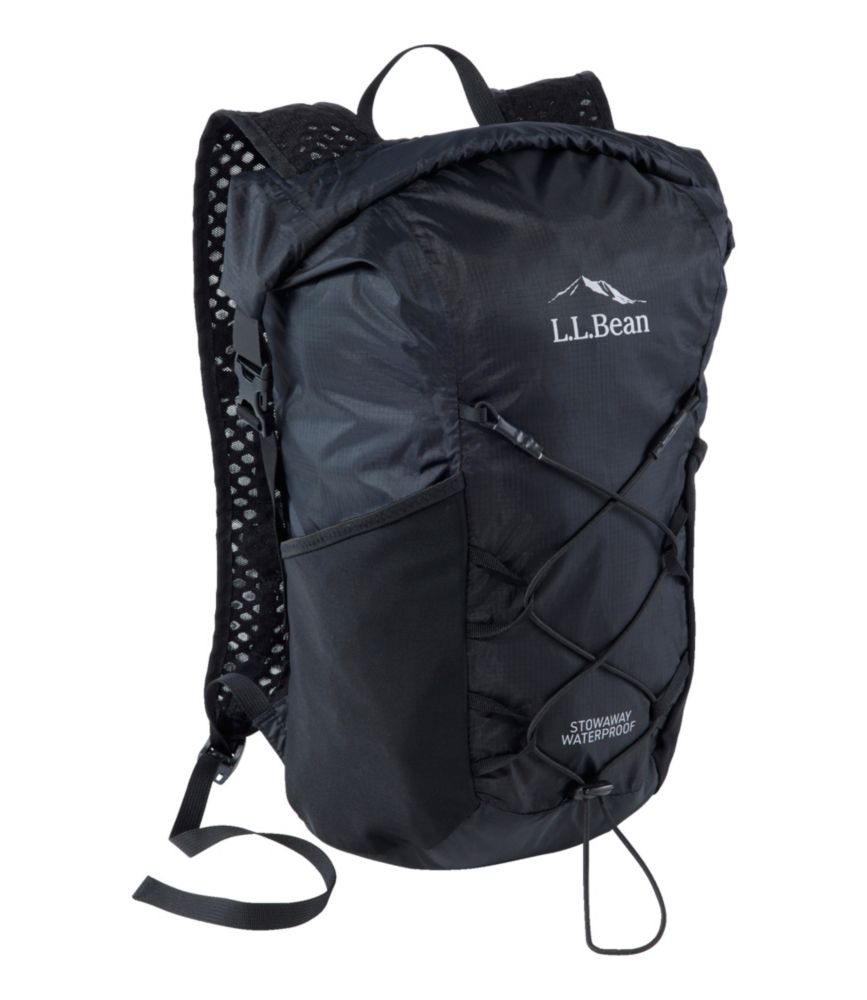
L.L.Bean Waterproof Stowaway Day Pack
L.L.Bean L.L.Bean Waterproof Stowaway Day Pack
A black waterproof day pack with recycled-polyester ripstop, taped seams, roll-top closure, and built-in stowaway pouch.
(0)
$64.95 $64.95
SALE
$64.95 $64.95
SALE
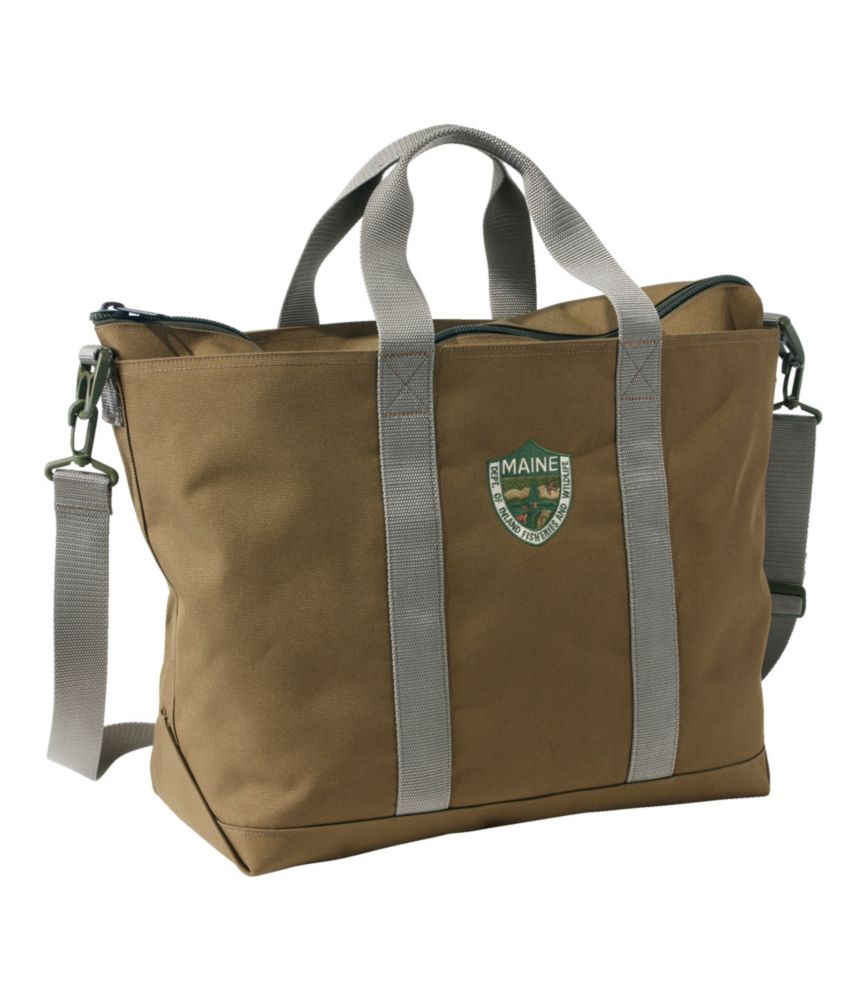
Maine Warden's Tote Bag
L.L.Bean Maine Warden's Tote Bag
A green tote bag with a durable 1,200-denier polyester shell, water-resistant coating, and Maine Warden shield.
(0)
$69.95 $69.95
SALE
$69.95 $69.95
SALE
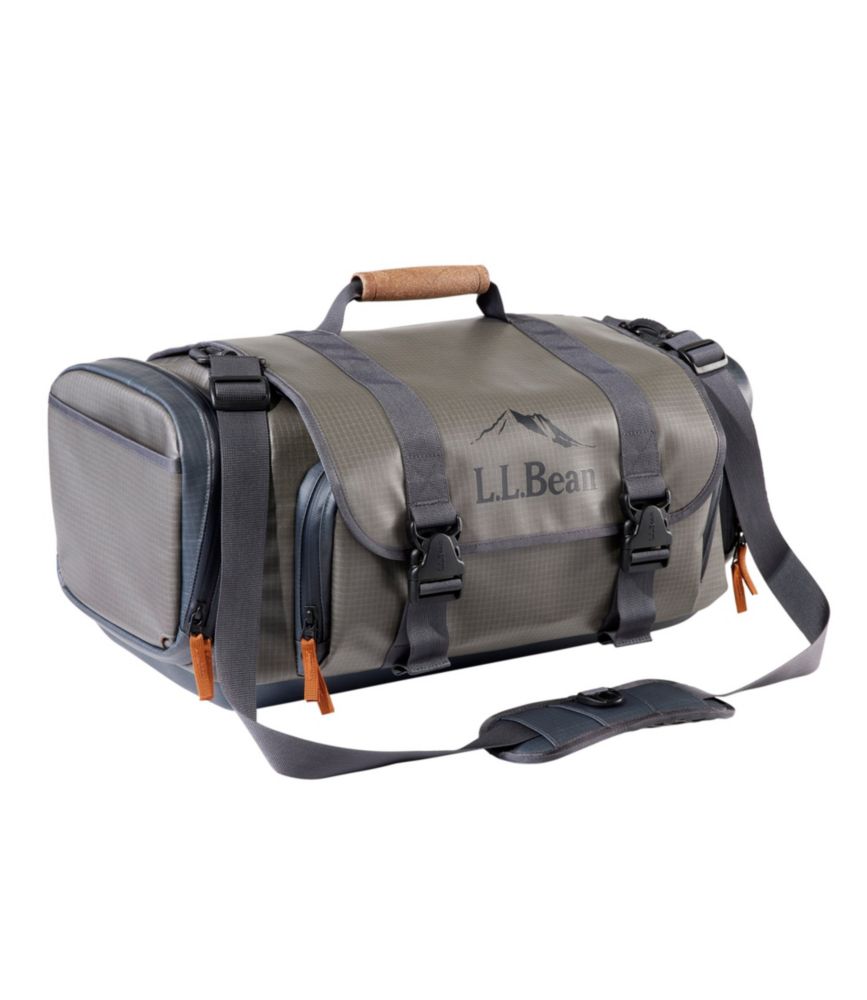
L.L.Bean Fishing Boat Bag
L.L.Bean L.L.Bean Fishing Boat Bag
A gray waterproof nylon duffle with ripstop fabric, gear pockets and a rigid molded bottom.
(0)
$220 $220
SALE
$220 $220
SALE
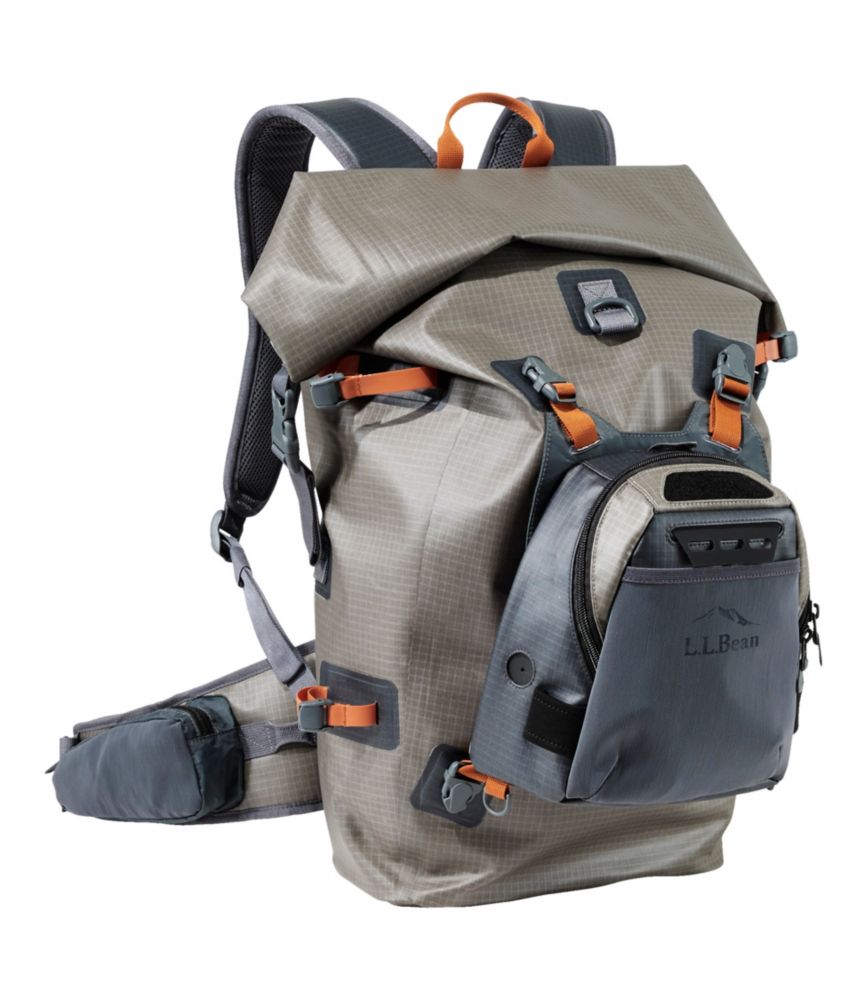
Waterproof Switchpack
L.L.Bean Waterproof Switchpack
A gray nylon fishing pack with a detachable chest pack, waterproof roll-top compartment, and rod-tube straps.
(0)
$220 $220
SALE
$220 $220
SALE
Adventure Duffle, XX-Large, 135L
L.L.Bean Adventure Duffle, XX-Large, 135L
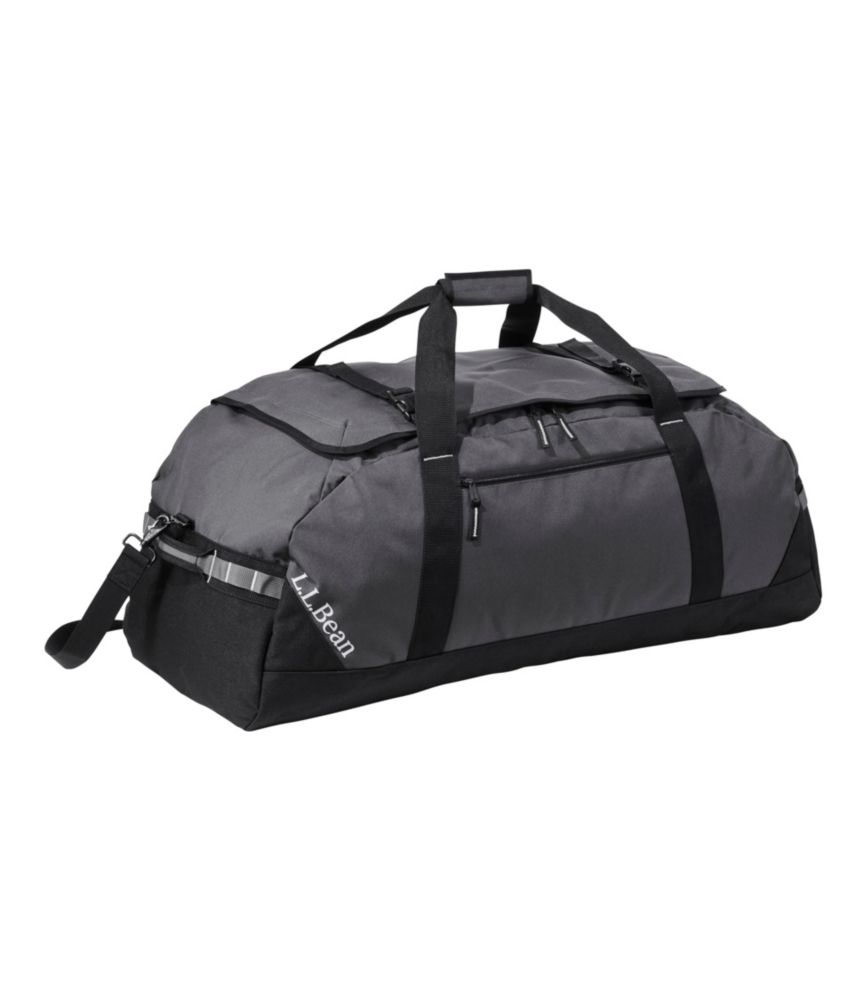
A gray polyester duffle with water-resistant construction, durable base, and a wide-opening U-shaped zipper.
(0)
$120 $120
SALE
$120 $120
SALE
Yeti Hopper M20 Soft Backpack Cooler
Yeti Yeti Hopper M20 Soft Backpack Cooler
A green soft backpack cooler with welded seams, closed-cell foam insulation, and room for 36 cans.
(0)
$325 $325
SALE
$325 $325
SALE
Adventure Duffle, Large, 70L
L.L.Bean Adventure Duffle, Large, 70L
A purple polyester duffle with rugged water-resistant construction, U-shaped access, and a removable shoulder strap.
(0)
$79.95 $79.95
SALE
$79.95 $79.95
SALE

Dry Bags For Canoeing

Dry bags for canoeing are a dedicated packing option for the belongings that accompany time on the water, from a change of clothes to the small essentials shared by the group. Choosing a bag starts with the shape of the outing and the amount each person plans to bring. A few hours canoeing with a friend calls for a different packing arrangement than several days with a full group, and the largest bag is not automatically the most useful choice. Some paddlers prefer to group belongings by person, while others group them by purpose or by when they expect to need them. One bag might hold clothing, while another contains the things needed during a stop along the route. That distinction gives capacity a practical meaning: the right amount of space depends on the contents, not simply on a number in the description. A spare shirt and a few personal belongings occupy a very different amount of room from an entire change of clothes for several people. Shared outings add another consideration, since everyone needs to know which belongings are theirs and where shared supplies have been packed. The appeal of a thoughtful dry bag selection lies in matching those everyday details to the canoeing experience. For someone who likes a clearly defined place for each group of belongings, several bags may suit their routine. Someone who prefers fewer separate pieces may be happier considering a different arrangement. Neither approach needs to become complicated. The most relevant comparison is between the bag’s stated dimensions, its listed capacity and the actual collection of belongings coming along. Dry bags belong in that broader picture of a canoe outing: deciding what matters, leaving unnecessary extras behind and making room for the things that help everyone enjoy being outside together.

Size and fit deserve a closer look than capacity alone can provide. Capacity describes volume, while dimensions help explain the shape of that space. Two bags with similar stated capacities may have different proportions, which matters when comparing them with the belongings to be packed and the space in a canoe. Clothing can be arranged in different ways, but a rigid container or another bulky belonging creates a more specific fit question. The opening matters, too: the width of a bag does not necessarily describe the size of its opening. Product measurements and closure instructions are the best reference for understanding those distinctions. Any space required to close the bag correctly needs to remain part of the packing plan rather than becoming room for one last extra. Material and construction information also belongs in the comparison, without treating a particular fabric name or appearance as proof of performance. The individual description should establish what a bag is made from, how it closes and what limitations apply. A dry bag’s name alone does not establish a rating for submersion, and expectations should follow the stated specifications rather than assumptions. Closure methods can differ, so the directions supplied with the individual bag take precedence over a universal rule about folding, rolling or fastening. For carrying between the car, launch and canoe, listed handle or strap details are worth considering where provided, along with any instructions about their intended function. A fastening point should not be assumed to serve as a carrying handle. These are useful distinctions for comparing quality and suitability without relying on broad promises. They also keep the focus on the actual bag rather than on an imagined version of it. A well-considered choice reflects the contents, the available space and the owner’s preferred packing arrangement, with enough attention to the details that will matter each time it is used for canoeing.

Care, condition and personal preference continue to matter after the initial selection. Cleaning, drying and storage directions should come from the instructions for the individual bag, since one care routine should not be assumed appropriate for every material or construction. Durability is another reason to look closely at product information rather than judge by appearance alone. Before packing, a check of the bag and its closure offers an opportunity to notice wear, damage or a part that needs attention; questions about continued use belong with the manufacturer’s guidance. Thinking about ownership this way makes care part of choosing, not an afterthought. The person who likes to unpack everything immediately after an outing may have different preferences from someone who keeps a dedicated set of canoeing belongings together between trips. Both can benefit from knowing the care requirements before making a decision. Dry bags can also be a thoughtful gift for someone who enjoys canoeing, particularly when the choice reflects a familiar routine. A regular canoeing companion may already know whether the recipient prefers separate bags for clothing and personal belongings or fewer pieces overall. For someone newer to canoeing, knowing what they plan to bring is more helpful than guessing at the largest possible capacity. For an experienced paddler, compatibility with an existing packing arrangement may matter more than adding something entirely different. When canoeing plans include an overnight stay, dry bags can be considered alongside Canoe Camping Gear as part of deciding what comes along and how belongings will be grouped. The bag is one part of that larger plan, not a reason to bring more than the outing calls for. Whether chosen for a family member, a friend or personal use, its value begins with a clear match between the bag’s documented details and the way that person enjoys canoeing. That thoughtful match leaves the focus where it belongs: on the shared experience, the route ahead and time spent outside.

FAQs