It's time to upgrade your browser

Your current browser is no longer supported on llbean.com. Please upgrade to one of the following for a smoother, safer shopping experience with us:

Cold Weather Utility Jackets

Explore cold weather utility jackets with straightforward style and L.L.Bean quality. Compare each jacket’s details, sizing and fit to find an outer layer that suits your wardrobe, allowing room for the layers you plan to wear underneath.
Read More
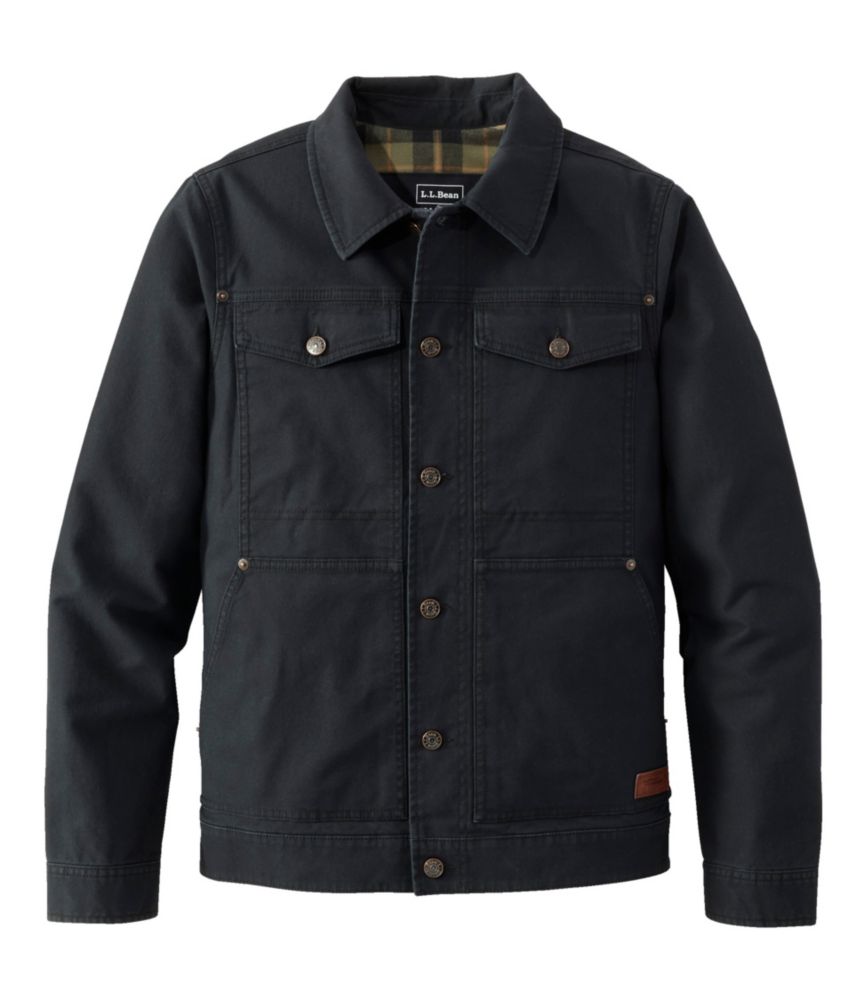
Men's BeanFlex Utility Trucker Jacket
L.L.Bean Men's BeanFlex Utility Trucker Jacket
A rugged yet lightweight black trucker jacket with a touch of stretch for all-day comfort.
(713)
$140 $140
SALE
What customers like:
Great fit
Quality construction
Comfort
Warmth
Versatility
$140 $140
SALE
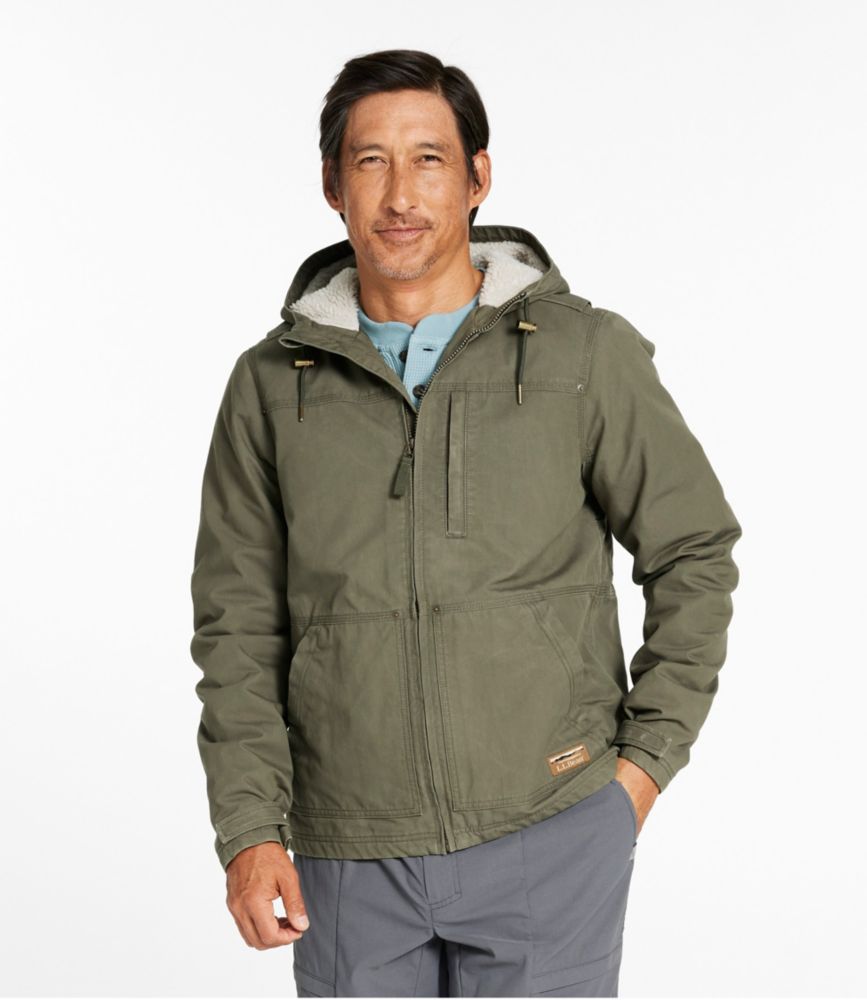
Men's Bean's Insulated Utility Jacket
L.L.Bean Men's Bean's Insulated Utility Jacket
A rugged green utility jacket with recycled polyester insulation and durable water-repellent cotton-nylon blend.
(0)
$200 $200
SALE
$200 $200
SALE
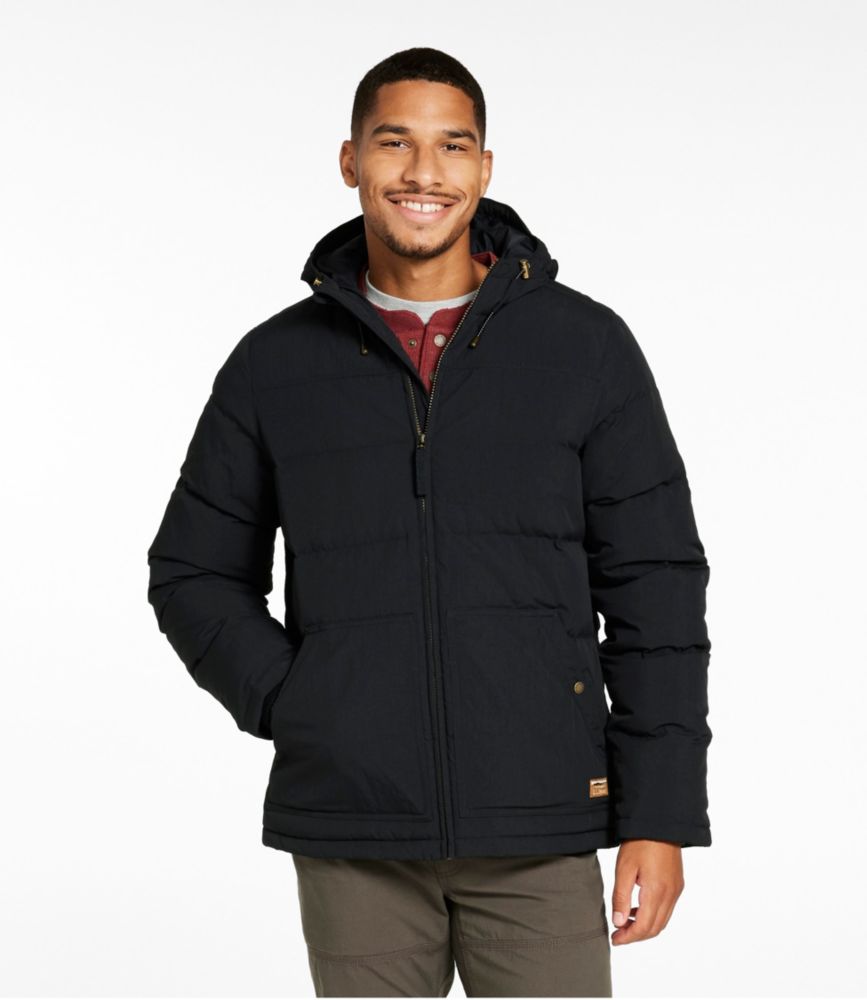
Men's Bean's Utility Puffer Jacket
L.L.Bean Men's Bean's Utility Puffer Jacket
A durable, water-resistant puffer jacket with DownTek™ insulation and Cordura® Naturalle™ nylon shell for active lifestyles.
(0)
$250 $250
SALE
$250 $250
SALE
Men's Bean's Insulated Utility Hoodie
L.L.Bean Men's Bean's Insulated Utility Hoodie
A rugged, weather-resistant hoodie with PrimaLoft insulation, featuring a cotton/nylon shell and fleece-lined hood.
(0)
$220 $220
SALE
$220 $220
SALE

Cold Weather Utility Jackets

Cold weather utility jackets bring a straightforward, outdoor-inspired look to a cool-season wardrobe. Their appeal is rooted in utility style: practical-looking proportions, understated details, and a sense of purpose rather than decoration. It is a look that feels familiar without feeling dated, with room for personal preference in everything from the silhouette to the way a jacket sits over the rest of an outfit. As the air turns cooler and another layer becomes part of getting dressed, the jacket often becomes the most visible piece of clothing a person wears. That makes its overall shape worth considering alongside its individual details. A shorter silhouette creates a different balance than a longer one, while a close-fitting outline has a different character from a relaxed cut. Neither is the better choice for everyone. The right starting point is the clothing already worn most often and the proportions that feel natural with it. Someone who prefers simple outfits may gravitate toward a quiet design with minimal visual contrast; someone drawn to traditional utility styling may pay more attention to the arrangement of seams, closures, and pockets shown in the product photographs. Those details help establish the character of a jacket, but the utility name alone does not establish its construction or performance. Cold weather is a broad description, too, so the individual product information matters more than assumptions based on appearance. A jacket should be considered on its own stated features, not on how substantial it looks in a photograph. Within that practical approach, there is plenty of room for style: a familiar color, an appealing collar shape, or a proportion that works especially well with favorite pants can make the choice feel personal. The result is a wardrobe built around pieces that belong together, rather than an outfit that needs to be reinvented whenever the weather changes.

Fit is one of the most meaningful points of comparison among cold weather utility jackets, especially when the layers underneath change throughout the cooler months. A jacket photographed over a thin shirt may sit differently over the sweater someone actually wears. Looking at the stated fit, garment measurements when provided, and size chart gives a clearer picture than relying on a usual size alone. Shoulder placement, sleeve length, body length, and room through the chest all contribute to the overall fit, and each deserves attention without assuming that a larger size will solve every concern. When trying a jacket on, the familiar motions of reaching forward, bending the elbows, and sitting down can reveal more than standing still in front of a mirror. The hem may shift, the sleeves may pull back, or the front may sit differently once the jacket is closed. These observations help separate a preferred silhouette from a fit that simply is not right. Personal habits matter as well: a person who usually wears a substantial sweater has a different starting point from someone who favors a single shirt underneath. Fabric composition and care information are equally useful comparisons, but they belong to the individual jacket rather than the category as a whole. Reading those details makes it possible to choose according to personal preferences without guessing from texture, color, or the utility description. A fabric can look different on a screen than it feels in hand, and visual heft is not a substitute for stated product information. For a coordinated wardrobe, cold weather utility pants offer a related category to consider alongside jackets. The relationship between the two pieces is primarily about proportion and personal style: similar shades create a more unified look, while a clear color contrast gives each piece its own definition. Exact matching is less important than liking the way the whole outfit comes together.

Long-term satisfaction with a cold weather utility jacket starts with realistic expectations and attention to the details that will matter after the first wear. Quality is not something to judge by the number of visible features, and durability should not be assumed from a rugged-looking design. The construction information, care directions, and stated intended use of an individual jacket provide a more useful basis for comparison. A utility-inspired appearance does not, by itself, establish that a jacket is workwear or appropriate for specialized conditions. That distinction is especially important when shopping for someone else, since an appealing look may be easy to recognize while their actual requirements are less obvious. A recipient’s favorite jacket can provide helpful clues about preferred length, fit, and overall style, but its size label is only a starting point. The clothing they wear beneath it, the colors they return to, and the care routine they prefer can all make a gift more thoughtfully chosen. A person who likes a simple wardrobe may appreciate continuity more than novelty, particularly when a jacket will become a prominent part of their cool-season clothing. Care is another part of that everyday relationship. Following the label on the selected jacket, rather than applying a general routine to all outerwear, helps avoid guesswork about washing, drying, and other upkeep. Checking care requirements before choosing also makes it easier to decide whether they fit naturally into an existing household routine. Small habits, such as emptying pockets before cleaning and checking for loose belongings before putting a jacket away, keep upkeep straightforward. Beyond those practical considerations, the strongest choice is often the one that feels recognizably right to the wearer. It might be the balance of the collar and shoulders, the way the hem meets a favorite pair of pants, or a color that already has a place in the closet. Cold weather utility jackets need not make a bold statement to have a distinct character. Their lasting style appeal comes from a considered, uncomplicated look that leaves room for the person wearing it.
Read More

FAQs