
It's time to upgrade your browser

Your current browser is no longer supported on llbean.com. Please upgrade to one of the following for a smoother, safer shopping experience with us:

25 Liter Hiking Backpacks

Explore 25 liter hiking backpacks to find a pack for your next hike. Compare the available styles, and check each pack’s listed dimensions, fit information and storage details to help choose one that suits your gear and preferences.
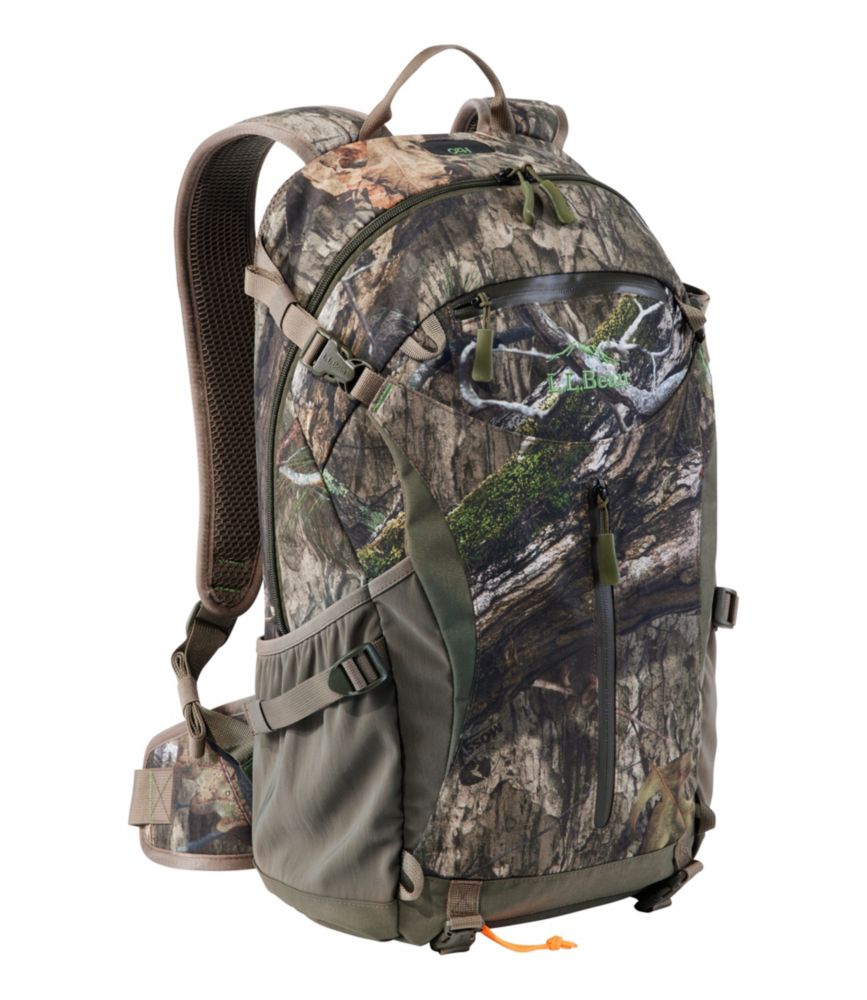
Ridge Runner Pro Hunting Pack II, 25 L
L.L.Bean Ridge Runner Pro Hunting Pack II, 25 L
A hunting pack with recycled ripstop polyester, EVA foam padding, hydration storage and Mossy Oak camouflage.
(0)
$150 $150
SALE
$150 $150
SALE
Bean's Explorer Backpack, 25L, Print
L.L.Bean Bean's Explorer Backpack, 25L, Print
A weatherproof polyester backpack with 25L capacity, laptop compartment, reflective details, and breathable padded straps.
(0)
$59.95 $59.95
SALE
$59.95 $59.95
SALE
Bean's Explorer Backpack, 25L
L.L.Bean Bean's Explorer Backpack, 25L
A multicolor weatherproof nylon-polyester backpack with 25L capacity, laptop compartment, reflective piping, and breathable padded straps.
(0)
$59.95 $59.95
SALE
$59.95 $59.95
SALE

25 Liter Hiking Backpacks

A 25-liter hiking backpack has a stated capacity of 25 liters, or approximately 1,525 cubic inches. That number describes volume, giving hikers a useful starting point for comparing backpacks without making assumptions about exactly what will fit inside. The shape of a pack, the way its space is divided and the dimensions of its openings all deserve attention alongside capacity. A lunch packed in a rigid container takes up space differently from food in a flexible pouch, while a camera case creates a different packing arrangement than a folded trail map and a notebook. Thinking about the belongings that usually come along on a hike makes the 25-liter measurement more meaningful than the number alone. Some hikers like to group smaller belongings together; others prefer to keep each item in a separate place. Neither approach requires the same layout, even when the total capacity is identical. Comparing the listed dimensions and interior details can help connect a backpack’s description with those personal habits. For someone who regularly stops at a trail junction to check a map, its place in the packing arrangement may be an important consideration. For someone who enjoys a leisurely lunch beside the trail, the shape of a favorite food container may influence the choice. These are individual preferences rather than promises attached to a particular capacity. A 25-liter label also does not establish a backpack’s exterior measurements, empty weight or fit, so those details remain important points of comparison. The most useful way to view this collection is as a selection centered on a defined volume and hiking, with the individual descriptions providing the distinctions. That leaves room to consider more than a capacity number: the familiar belongings that come along, the preferred way of organizing them and the details that make one backpack feel more personally suited than another. An existing pack can provide a helpful reference, especially when its dimensions and packing arrangement are already familiar.

Fit is a separate consideration from storage capacity, and two backpacks with the same stated volume should not be assumed to fit the same way. Listed measurements, sizing information and any specified adjustment ranges offer a more useful basis for comparison than appearance alone. A photograph can show proportions and styling, but it cannot establish how a backpack will sit on a particular person. Details about the intended fit deserve particular attention when choosing online or buying for someone else. Where adjustment information is provided, it helps to consider that information alongside the wearer’s measurements rather than treating adjustability as a substitute for checking size. The relationship between the pack and its wearer is personal; a hiking companion’s favorite choice can be a helpful reference without being an automatic match. Materials and construction deserve the same individual attention. The capacity label does not identify fabric composition, construction methods or cleaning requirements, and those details should come from the description of the backpack being considered. Fabric names and percentages, where listed, provide concrete information without requiring assumptions based on a pack’s color, texture or overall appearance. Construction descriptions and photographs can also help explain how a design is put together, while the care instructions establish how it should be cleaned. For shoppers thinking about long-term ownership, that care information belongs in the decision from the beginning. After a hike, emptying compartments, removing forgotten food and checking for loose belongings are straightforward ways to keep track of a pack’s contents. Cleaning should follow the instructions supplied for that backpack rather than a method borrowed from another bag. A care routine that fits comfortably into everyday habits is worth considering alongside the pack itself. Durability cannot be established by capacity or styling, either; specific construction information is more useful than assuming that every backpack in a size category is made alike. These distinctions make the individual details valuable, even when the starting point is the same 25-liter size.

Personal taste brings another dimension to choosing a hiking backpack. Beyond measurements and specifications, there is the appeal of a shape, a simple overall look or a layout that makes sense at a glance. A backpack is something its owner will see, handle and pack repeatedly, so those preferences are worth acknowledging rather than treating them as an afterthought. Familiar routines often reveal what matters most: laying belongings out before leaving, deciding where a notebook belongs or checking that everything has been gathered before heading home. Those small moments give practical meaning to details that might otherwise look similar on a screen. For a gift, the recipient’s hiking habits and preferences make a better starting point than choosing by capacity alone. Someone who already has a favorite packing arrangement may appreciate a similar approach, while someone replacing an older backpack may have clear ideas about what should be different. Knowing the intended wearer’s measurements and the dimensions of a few regularly packed belongings can make that choice more considered. A conversation about the recipient’s existing backpack can be just as helpful as a conversation about favorite trails. Hiking with a partner, meeting friends at a trailhead or taking time to notice the view can all be part of the reason a backpack becomes a meaningful gift, without requiring every hiker to want the same design. For a related selection, Lightweight Hiking Day Backpacks offers another category to explore alongside the individual specifications. Within this collection, the 25-liter capacity remains the common reference point, not a replacement for the details that distinguish each choice. Bringing together capacity, fit information, materials, care requirements and personal preferences creates a clearer picture than relying on any single feature. The result is a thoughtful way to compare hiking backpacks while keeping the focus on the person who will carry one and the experiences that make time on the trail worth setting aside.

FAQs